 Skip to content
Introduction
Abused dogs often carry invisible scars that affect their behavior, emotions, and ability to trust. Fear, anxiety, and withdrawal are common responses to past trauma, and these behaviors can make even everyday interactions—like walks, playtime, or human contact—challenging. For caregivers, helping an abused dog regain confidence is not just about teaching commands or correcting behavior; it’s about restoring trust, creating a sense of safety, and empowering the dog to navigate the world without fear.
Building confidence in abused dogs is a gradual process that requires patience, consistency, and empathy. Each dog responds differently to new experiences, and progress is often measured in small steps rather than dramatic transformations. A tail wag, a tentative approach, or even a calm stance in a previously feared situation are all significant victories.
In this post, we will explore effective strategies for helping abused dogs gain confidence. From understanding the psychological and behavioral effects of abuse to creating a supportive environment, implementing positive reinforcement techniques, and celebrating small milestones, these approaches provide a roadmap for caregivers. With dedication and compassion, it is possible to transform fear into trust, hesitation into curiosity, and anxiety into joy—allowing abused dogs to live fulfilling, confident lives alongside their human companions.
Understanding the Impact of Abuse
Before attempting to build confidence in an abused dog, it’s essential to understand how past trauma can affect their mind, behavior, and body. Awareness of these effects allows caregivers to approach the dog with patience, empathy, and appropriate strategies.

A. Psychological Effects
Abuse can leave deep psychological scars:
- Fear and Anxiety: Dogs may react with caution, trembling, or avoidance in situations that trigger memories of past trauma.
- Hypervigilance: Abused dogs often remain on high alert, scanning their environment for potential threats.
- Difficulty Trusting Humans or Animals: Even well-meaning gestures may be interpreted as threatening, slowing the bonding process.
B. Behavioral Effects
Trauma influences how dogs act and interact:
- Avoidance or Withdrawal: Dogs may hide, refuse attention, or isolate themselves from family members.
- Aggression or Reactivity: Fear can manifest as snapping, growling, or barking when the dog feels cornered or stressed.
- Regression in Learned Behaviors: Commands or routines the dog once knew may be ignored due to fear or insecurity.
C. Physical Effects
The stress of abuse can also affect a dog’s physical well-being:
- Muscle Tension or Sensitivity to Touch: Dogs may flinch or react to handling, especially in areas that were previously harmed.
- Stress-Related Health Issues: Chronic anxiety can contribute to digestive problems, skin conditions, or lethargy.
- Sleep Disturbances: Fearful dogs may struggle to rest, leading to fatigue and irritability.
By understanding the psychological, behavioral, and physical effects of abuse, caregivers can tailor their approach to each dog’s unique needs. This awareness ensures that confidence-building strategies are compassionate, effective, and safe for both the dog and the family.
Creating a Safe and Supportive Environment
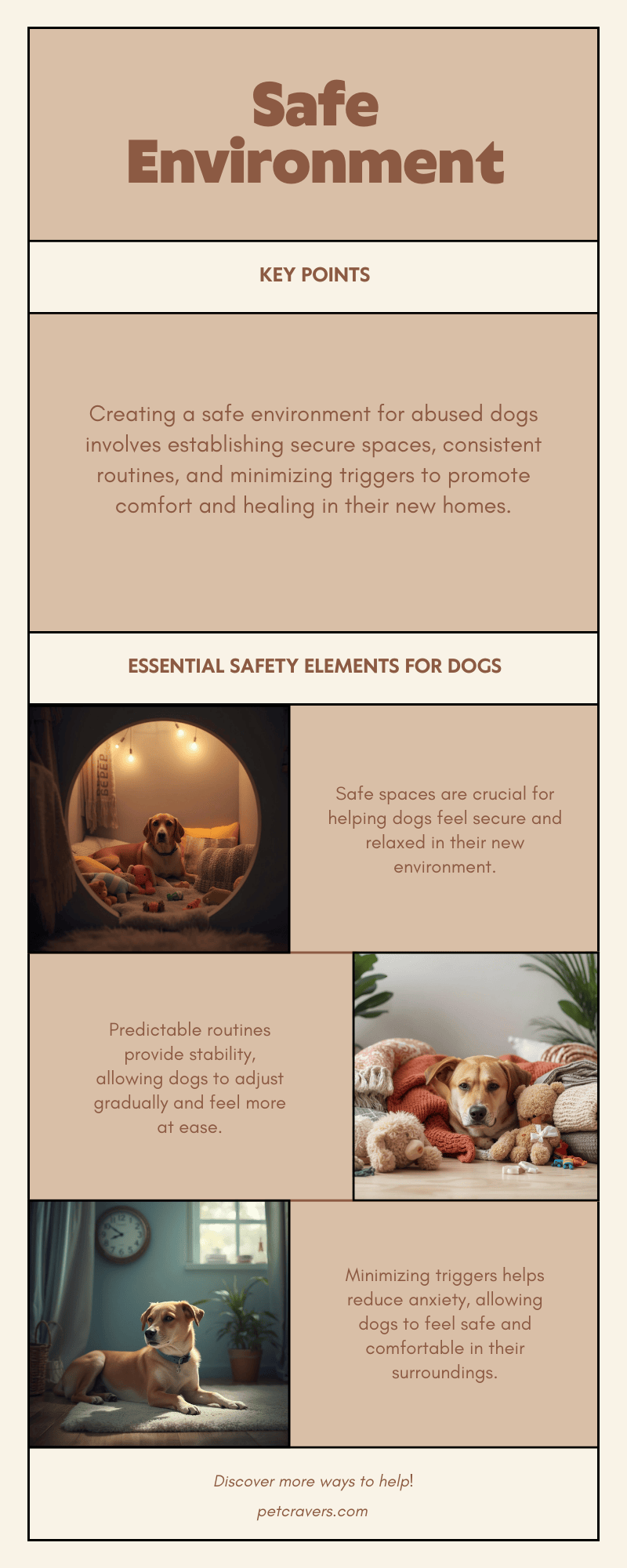
A safe and structured environment is the foundation for helping an abused dog regain confidence. When a dog feels secure, they are more likely to explore, engage, and respond positively to training and social interactions.
A. Safe Spaces
- Designate a Quiet Area: Provide a specific room or corner where the dog can retreat if feeling stressed.
- Comfort Items: Include a soft bed, favorite toys, and blankets. Familiar scents, such as items from a previous home or shelter, can provide reassurance.
- Calm Atmosphere: Keep noise, bright lights, and high-traffic areas to a minimum. This reduces overstimulation and promotes relaxation.
B. Predictable Routines
- Consistency in Daily Life: Feeding times, walks, play sessions, and rest periods should be predictable. Dogs feel safer when their environment is structured.
- Clear Expectations: Establish household rules, such as areas that are off-limits or designated potty spots, to reduce confusion and stress.
- Gradual Changes: Introduce new routines slowly to avoid overwhelming the dog.
C. Minimizing Triggers
- Identify Stressors: Observe the dog for reactions to certain noises, objects, or movements.
- Modify the Environment: Reduce exposure to triggers where possible, such as loud appliances or unfamiliar visitors.
- Controlled Exposure: When introducing unavoidable stimuli, do so gradually and pair with positive reinforcement.
By creating a safe and supportive environment, caregivers give abused dogs the security and confidence to start exploring their surroundings, engage with family members, and respond positively to training. A calm, predictable, and enriched home sets the stage for meaningful progress in building trust and self-assurance.
Techniques for Building Confidence
Helping an abused dog regain confidence involves consistent, patient strategies that focus on positive experiences, gentle encouragement, and opportunities for the dog to explore the world safely.
A. Positive Reinforcement Training
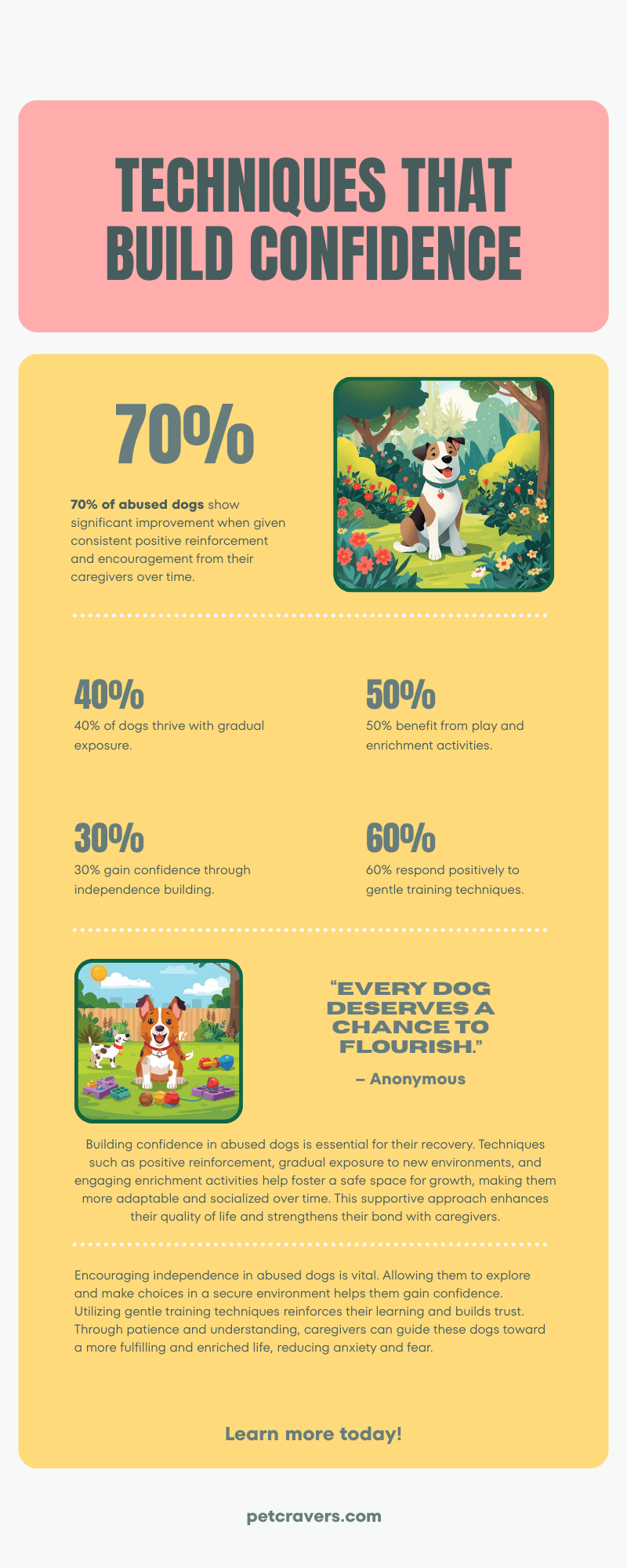
- Reward Desired Behavior: Offer treats, praise, or gentle petting when the dog shows bravery, curiosity, or calm behavior.
- Avoid Punishment: Negative reinforcement can reinforce fear and reduce trust. Focus on encouraging what you want the dog to do, rather than correcting mistakes harshly.
- Short, Frequent Sessions: Keep training sessions brief and enjoyable to prevent stress and fatigue.
B. Gradual Exposure
- Step-by-Step Introduction: Slowly introduce new people, animals, or environments. Begin with low-stress situations and gradually increase complexity.
- Pair with Positive Experiences: Use treats, toys, or praise to create a positive association with previously frightening situations.
- Respect Boundaries: Let the dog approach at their own pace and retreat when needed. Forcing interactions can increase anxiety.
C. Play and Enrichment
- Interactive Toys and Puzzles: Stimulate the dog mentally and encourage problem-solving.
- Gentle Games: Activities like fetch, tug, or hide-and-seek can boost confidence and strengthen the bond between dog and caregiver.
- Exploration Opportunities: Allow the dog to investigate new spaces and objects safely, which fosters curiosity and self-assurance.
D. Encouraging Independence
- Choice and Control: Let the dog make decisions, such as when to interact, explore, or rest.
- Confidence-Building Challenges: Gradually introduce new tasks or experiences that encourage autonomy, like navigating obstacles or learning new commands.
- Celebrate Successes: Even small acts of bravery—like approaching a new person or exploring an unfamiliar room—should be acknowledged and rewarded.
Using these techniques consistently helps abused dogs replace fear with curiosity, hesitation with courage, and anxiety with confidence. Over time, these positive experiences accumulate, allowing the dog to feel more secure and self-assured in everyday life.
Handling Setbacks and Fearful Behavior
Progress in abused dogs is rarely linear. Even with careful training and a supportive environment, setbacks and fearful behavior are normal. How caregivers respond during these moments significantly impacts the dog’s confidence-building journey.
A. Recognizing Signs of Stress or Regression
- Body Language Cues: Watch for cowering, tail tucking, ears back, lip licking, yawning, or avoiding eye contact.
- Behavioral Changes: Regression may appear as increased hiding, refusal to engage, barking, or snapping in situations that were previously manageable.
- Physical Signs: Trembling, pacing, or reluctance to eat or move can indicate heightened anxiety.
B. Avoiding Punishment
- Do Not Scold: Punishing fearful behavior can reinforce anxiety and erode trust.
- Stay Calm: Respond with patience and reassurance rather than frustration or force.
- Redirect and Reward: Encourage positive behaviors with treats, praise, or gentle guidance rather than focusing on negative actions.
C. Patience and Consistency
- Small Steps Matter: Understand that confidence grows gradually; even minor improvements are progress.
- Consistent Routines: Maintaining predictable schedules reduces stress and provides a sense of control.
- Reinforce Successes: Celebrate incremental achievements, which motivates the dog to continue exploring and learning.
D. Knowing When to Seek Professional Guidance
- Persistent Aggression or Anxiety: If fear or aggression persists despite consistent efforts, consult a certified dog trainer or veterinary behaviorist.
- Specialized Techniques: Professionals can provide tailored interventions such as desensitization, counter-conditioning, or behavior modification plans.
- Health Assessment: Sometimes physical pain or medical conditions contribute to fear-based behavior and should be evaluated by a veterinarian.
Handling setbacks with empathy and strategy helps maintain the dog’s trust and reinforces the confidence-building process. Caregivers who respond calmly, patiently, and positively create an environment where the dog can overcome fear and develop resilience.
Celebrating Small Wins
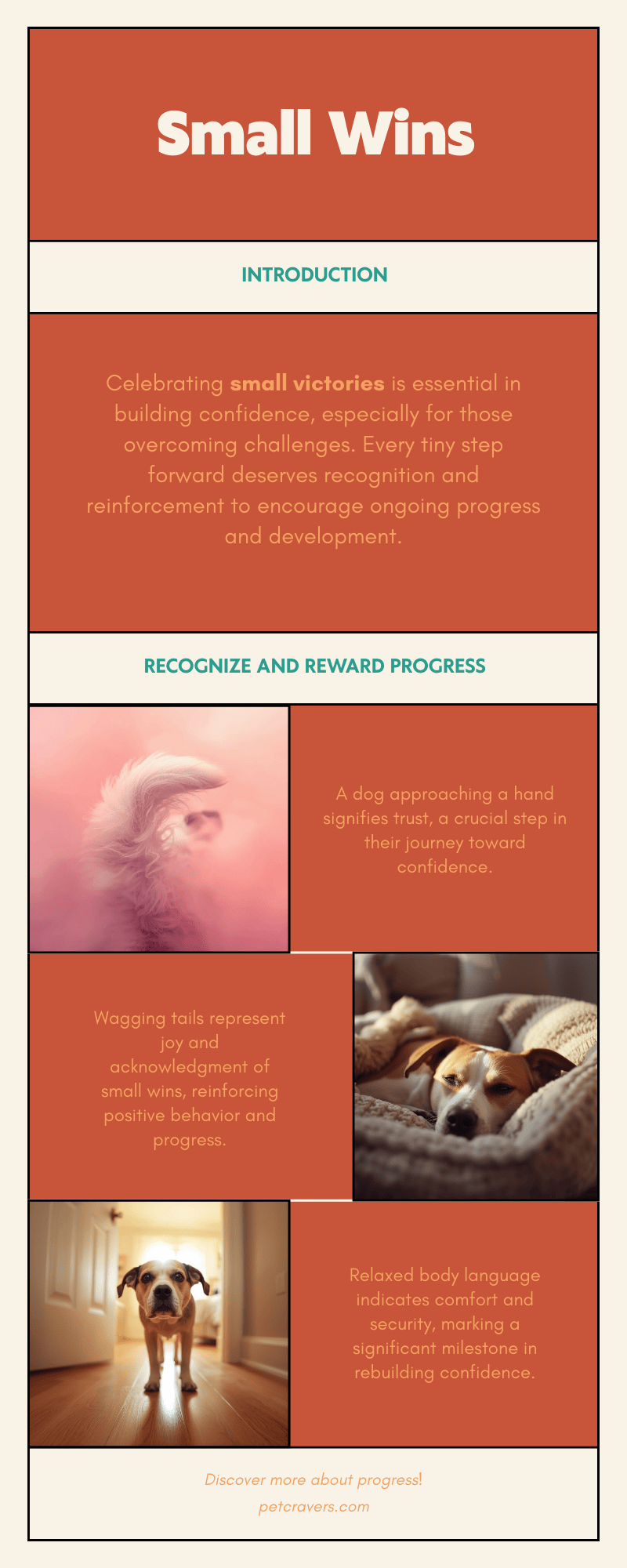
Building confidence in abused dogs is a gradual process, and every small step toward bravery or engagement deserves recognition. Celebrating these milestones reinforces positive behavior, strengthens trust, and motivates both the dog and caregiver to continue making progress.
A. Recognizing Incremental Progress
- Observation: Pay attention to subtle signs of confidence, such as approaching a new person, exploring a room, or accepting gentle petting.
- Document Milestones: Keeping a journal of small victories helps track progress and maintain perspective during challenging periods.
- Behavioral Improvements: Even minor changes—like reduced trembling, wagging the tail, or increased curiosity—are meaningful indicators of growing confidence.
B. Reinforcing Positive Experiences
- Immediate Rewards: Use treats, praise, or play immediately after the dog demonstrates brave or calm behavior.
- Consistency: Reinforce similar behaviors consistently to help the dog understand that confidence and exploration are safe and rewarding.
- Encouragement Without Pressure: Celebrate progress without pushing the dog beyond their comfort zone, maintaining trust and security.
C. Boosting Long-Term Confidence
- Gradual Challenges: Once initial milestones are achieved, introduce slightly more complex tasks or environments to continue building resilience.
- Positive Associations: Associate new experiences, people, and places with enjoyable outcomes to strengthen confidence.
- Patience and Optimism: Understanding that confidence grows over weeks or months allows caregivers to remain supportive and encouraging, even when setbacks occur.
Acknowledging and celebrating small wins ensures that abused dogs feel successful in their efforts, creating a positive feedback loop that promotes courage, trust, and self-assurance. Over time, these incremental victories accumulate, transforming hesitant or fearful dogs into confident, happy companions.
Building a Lasting Bond
Building confidence in an abused dog goes hand in hand with forming a deep, trusting relationship. Trust is the foundation for all positive interactions, and a strong bond encourages the dog to explore, learn, and feel secure in their environment.
A. Trust as the Foundation
- Respect Boundaries: Allow the dog to set the pace for interactions, avoiding forced contact or overwhelming situations.
- Reliability: Consistently meeting the dog’s needs for food, comfort, and attention strengthens their sense of safety.
- Predictable Responses: Responding calmly and positively to behavior—both desirable and undesirable—reinforces trust.
B. Emotional Support and Affection
- Gentle Interaction: Petting, soothing words, and soft tones help the dog associate humans with comfort and security.
- Non-Verbal Communication: Eye contact, posture, and body language can convey reassurance without pressure.
- Quality Time: Spending regular, calm, and enjoyable time together builds emotional bonds and reinforces confidence.
C. Reciprocal Benefits
- Mutual Growth: As the dog gains confidence, their willingness to engage, play, and learn increases, which in turn deepens the caregiver’s emotional connection.
- Shared Joy: Positive experiences, like successful walks, play sessions, or new achievements, strengthen the bond and create lasting memories.
- Long-Term Commitment: A confident, secure dog is more likely to thrive socially and emotionally, leading to a fulfilling and enduring partnership.
By focusing on trust, patience, and consistent emotional support, caregivers can cultivate a strong, lasting bond with their abused dog. This bond not only promotes confidence but also ensures that the dog feels loved, safe, and valued as a cherished member of the family.
Conclusion
Helping an abused dog build confidence is a journey that requires patience, empathy, and consistency. Each dog comes with a unique history, personality, and pace of adjustment, which makes understanding their past experiences and current needs essential. By creating a safe environment, implementing positive reinforcement techniques, and celebrating even small victories, caregivers can help their dogs overcome fear and anxiety.
Setbacks are a normal part of the process, and responding with calmness, encouragement, and understanding strengthens the trust between dog and caregiver. Gradual exposure, structured routines, play, and mental enrichment all contribute to building self-assurance while maintaining the dog’s sense of safety.
Ultimately, the goal is to foster a lasting bond based on trust and mutual respect. As abused dogs gain confidence, they become more curious, relaxed, and willing to engage with their surroundings and family members. With dedication and compassion, it is possible to transform fear into courage, hesitation into exploration, and anxiety into joy—allowing abused dogs to lead happier, more confident lives.





Leave a Reply