
Introduction
Have you ever noticed your dog waiting by the door just before you get home, or eagerly anticipating mealtime down to the minute? It often feels as if dogs have an internal clock—and in many ways, they do. But how exactly do dogs perceive time? Do they understand it the way humans do, or is their sense of time based entirely on learned behavior and routine?
In this post, we’ll explore the fascinating science behind how dogs perceive time, the signs that show they are aware of passing hours, and what this means for training, routines, and strengthening the bond with your canine companion. By understanding your dog’s unique perception of time, you can better anticipate their needs and make their world feel predictable and secure.
Understanding Time Perception in Animals
Time perception in animals differs significantly from humans. While humans rely on clocks and calendars, animals—including dogs—use biological and environmental cues to gauge the passage of time.
1. Biological Clocks
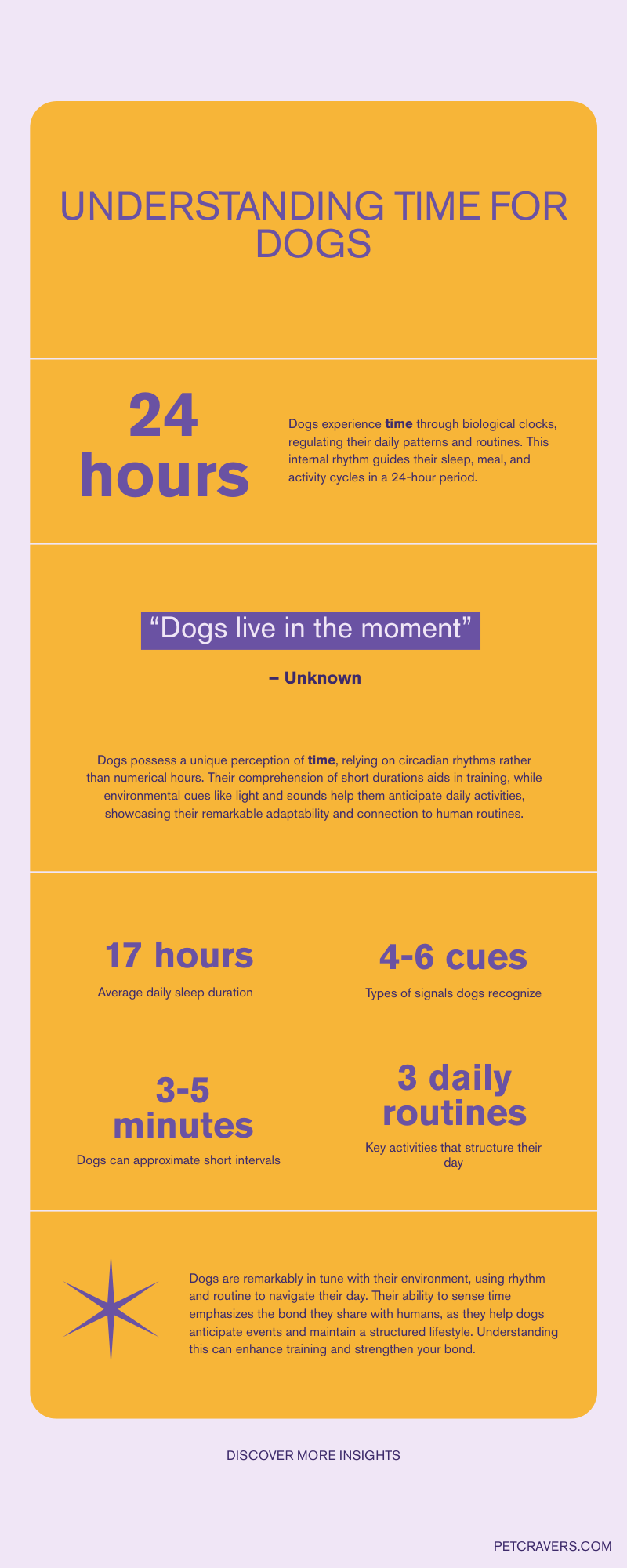
- Dogs have circadian rhythms, internal cycles that help regulate sleep, feeding, and activity patterns.
- These rhythms allow dogs to anticipate daily events, like morning walks or meal times, without any conscious counting.
2. Interval Timing
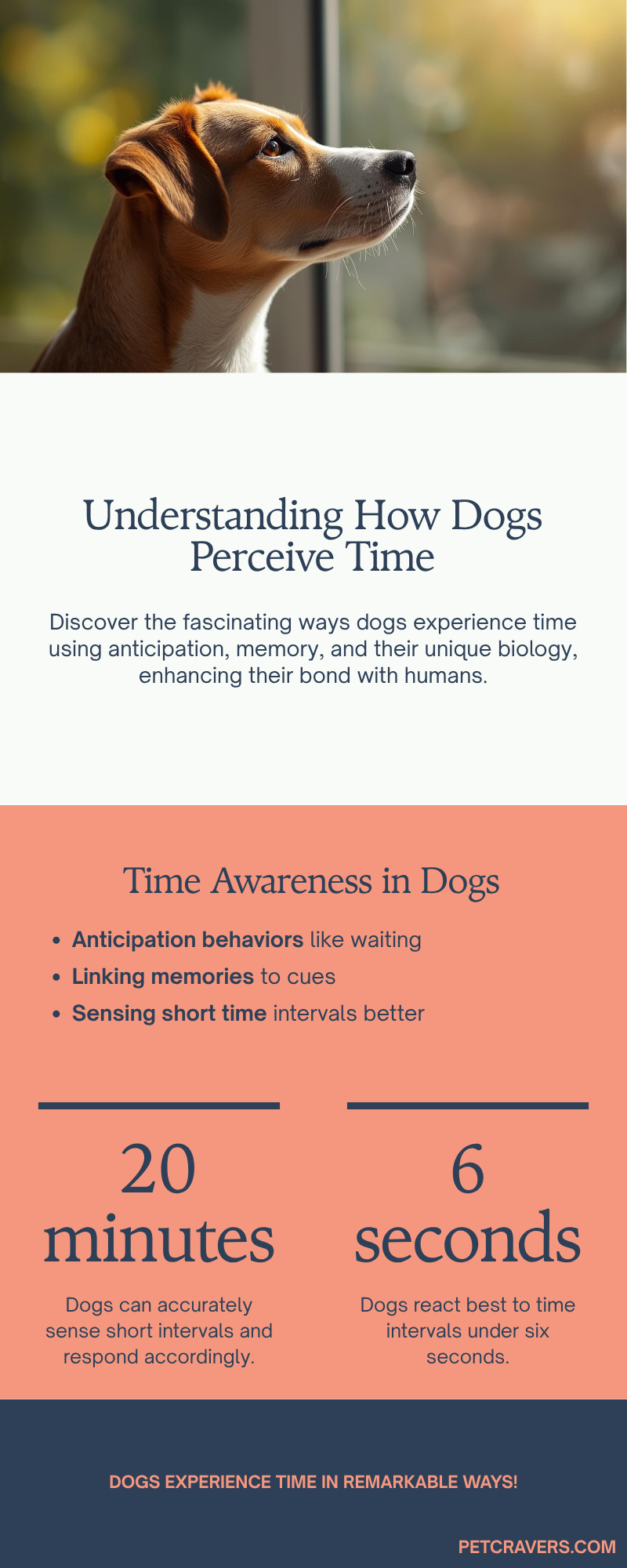
- Beyond daily routines, dogs can sense short-term intervals, like seconds or minutes, which helps them learn commands, anticipate play sessions, or wait for treats.
- Their ability to measure time is often tied to memory and associative learning, connecting specific actions with outcomes.
3. Environmental Cues
- Light changes, sounds, and household activities help dogs gauge longer periods, such as how long an owner has been gone.
- Dogs often rely on subtle signals, like the time of day or familiar patterns of household behavior, to sense when events will occur.
Understanding these mechanisms shows that while dogs don’t perceive time exactly as humans do, they have sophisticated ways to track and respond to it.
Scientific Studies on Dogs and Time
Researchers have conducted several studies to understand how dogs perceive and react to the passage of time. These studies reveal that dogs are far more aware of timing than we might think.
1. Anticipation of Events
- Experiments have shown that dogs can anticipate regular events, such as feeding times or walks, even when humans are absent.
- Dogs often exhibit behaviors like waiting by the door or becoming restless as the expected event approaches, demonstrating an internal sense of timing.
2. Memory and Interval Timing
- Dogs can remember short intervals between actions and outcomes, which is why they respond effectively to training when rewards are given immediately.
- Longer intervals, such as hours or even days, are often gauged through environmental cues and learned routines rather than conscious tracking.
3. Distinguishing Short-Term vs. Long-Term Events
- Studies suggest dogs are better at measuring short-term intervals, like waiting a few minutes for a treat, than understanding abstract long-term periods like weeks or months.
- However, dogs do show evidence of long-term anticipation, such as excitement when a usually absent family member returns after several days.
Scientific research confirms that dogs’ perception of time combines innate biological rhythms with learned behaviors, allowing them to navigate both daily routines and unique events.
Signs That Dogs Sense Time
Dogs may not read clocks, but they display remarkable behaviors that indicate a sense of timing. Observing these signs helps us understand how attuned they are to the passing hours.
1. Routine-Based Behaviors
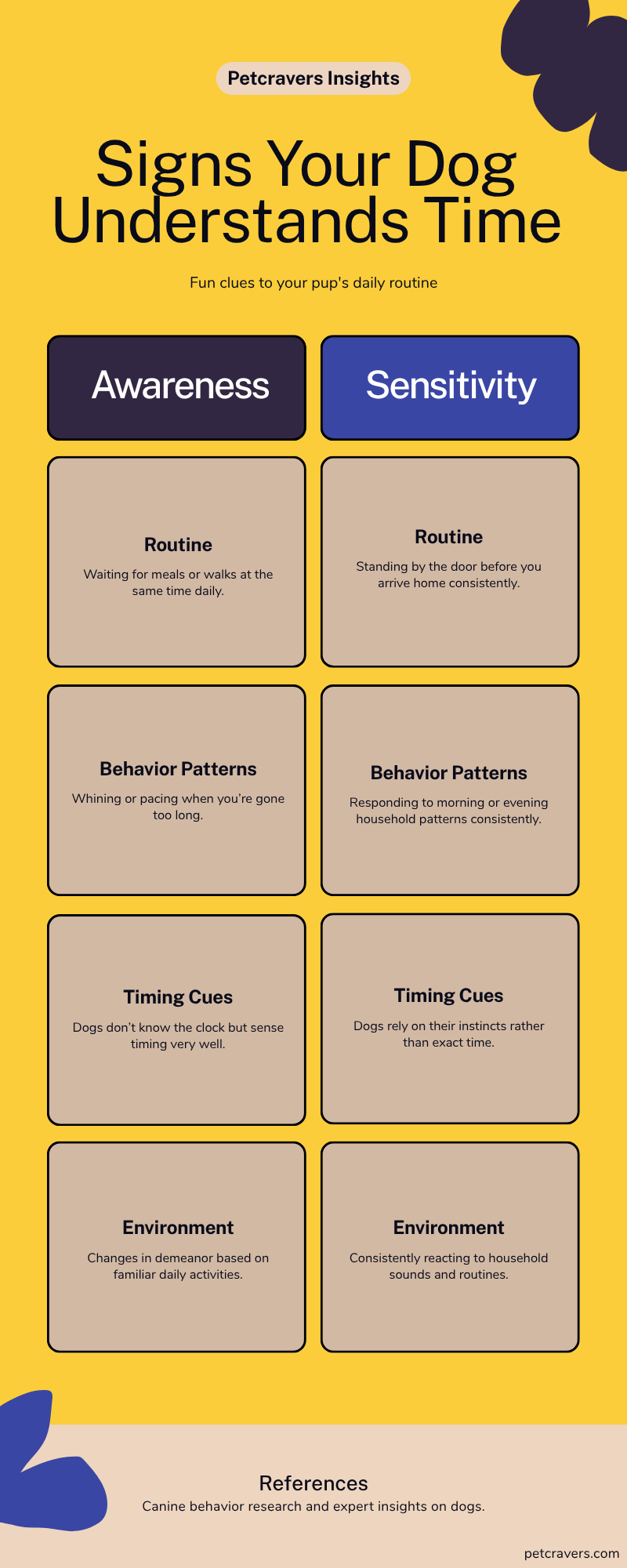
- Dogs often wait at specific times for meals, walks, or play, showing that they anticipate events based on internal or learned cues.
- Some dogs will even appear at the door minutes before a family member returns home.
2. Response to Absence
- Many dogs exhibit separation behaviors, such as pacing, whining, or increased alertness, that reflect their awareness of how long their owner has been away.
- This behavior suggests that dogs have an internal sense of elapsed time and can detect changes in routine.
3. Environmental Cues
- Dogs rely on light, sounds, and household activity to gauge the time of day.
- The subtle routine of humans—like morning alarms or evening TV sounds—helps them anticipate events and adjust their behavior accordingly.
By recognizing these behaviors, dog owners can better understand how their pets experience time and plan activities that align with their natural rhythms.
How Dogs Measure Short vs. Long Time Intervals
Dogs perceive time differently depending on whether the interval is short or long. Understanding this distinction can help explain their behavior and improve training.
1. Short Intervals (Seconds to Minutes)
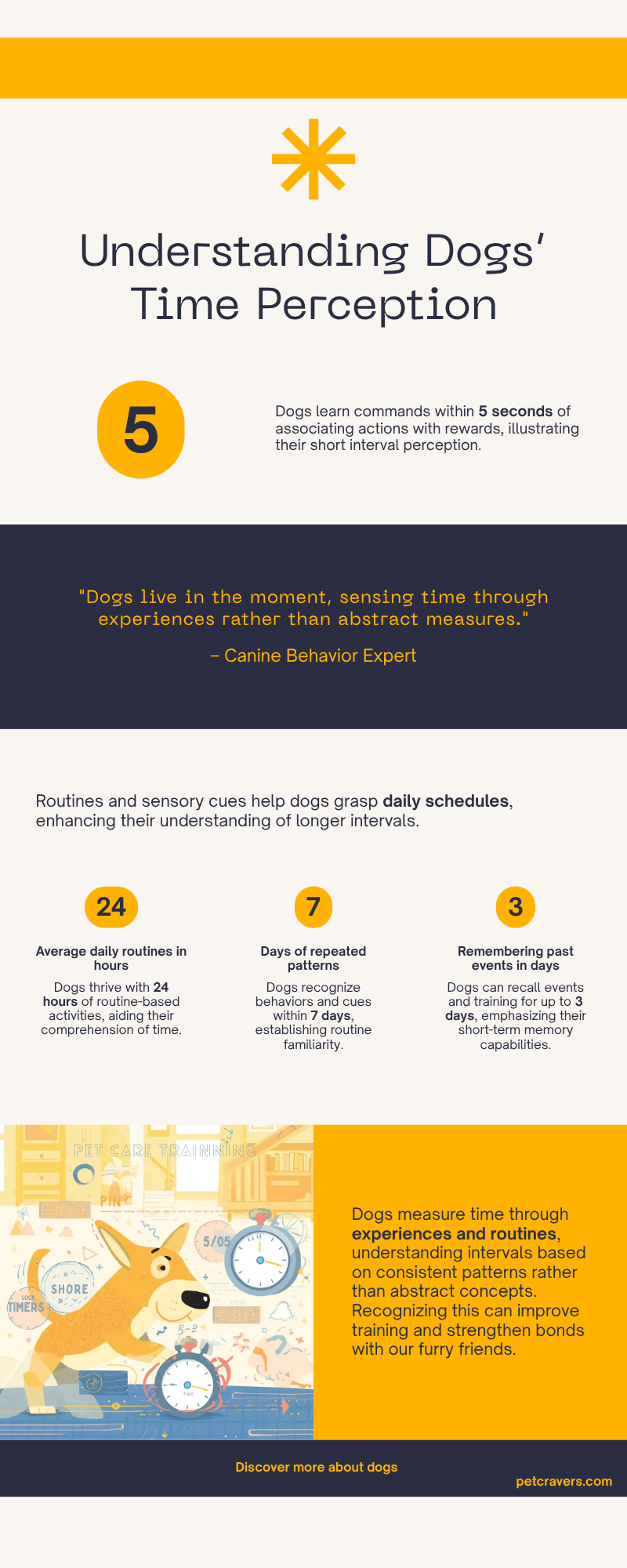
- Dogs excel at tracking short-term intervals, which is crucial for learning commands and anticipating immediate rewards.
- For example, they quickly learn that sitting when told leads to an immediate treat, but a delayed reward may weaken the connection.
2. Long Intervals (Hours to Days)
- Dogs also exhibit an awareness of longer periods, such as how long an owner has been away.
- This is often less precise than short-term timing and relies heavily on environmental cues, routine, and memory.
- Behaviors like waiting by the window or excitement when a long-absent family member returns indicate a sense of extended time intervals.
3. Limitations Compared to Humans
- Dogs do not perceive abstract concepts of time like calendars or clocks.
- Their perception is based on experience, routine, and associative learning rather than conscious measurement.
By recognizing these differences, owners can tailor training, routines, and expectations to match how dogs naturally perceive time.
Emotional Connection and Time Perception
Dogs’ sense of time is closely linked to their emotions and attachment to their owners. The stronger the bond, the more aware they seem of the passage of time.

1. Attachment Influences Anticipation
- Dogs eagerly awaiting a loved one’s return may show heightened excitement or restlessness, reflecting their emotional attachment.
- The intensity of their anticipation often increases with the duration of separation.
2. Emotional Memory and Time
- Dogs can associate past experiences with time intervals, remembering not just events but how long it has been since they occurred.
- For example, a dog may become anxious if a walk is delayed beyond the usual schedule, indicating awareness of elapsed time.
3. Coping with Absence
- Dogs that experience prolonged separation can exhibit stress or anxiety, highlighting that their perception of time affects their emotional well-being.
- Understanding this helps owners manage absences and provide comfort through routines, toys, or companionship.
Emotions and attachment not only influence how dogs perceive time but also shape their behavior during waiting periods, making this a key aspect of their daily life and interaction with humans.
Practical Implications for Owners
Understanding how dogs perceive time can help owners create better routines, reduce stress, and improve training outcomes.

1. Use Their Sense of Time for Training
- Schedule commands, treats, and play at consistent intervals to reinforce learning.
- Dogs respond best to immediate rewards, so timing is key for effective training.
2. Reduce Separation Anxiety
- Knowing that dogs are aware of long absences, owners can gradually increase time apart to help dogs adjust.
- Providing toys, puzzles, or familiar scents can make waiting periods less stressful.
3. Establish Predictable Routines
- Consistent feeding, walking, and play schedules help dogs feel secure and reduce behavioral issues.
- Predictability supports both short-term and long-term perception of time, making daily life less confusing for your pet.
4. Observe and Respect Their Natural Rhythms
- Dogs are attuned to environmental cues and daily routines, so aligning activities with their natural rhythms improves well-being.
- Avoid sudden changes in schedule that could cause stress or confusion.
By applying these insights, owners can strengthen their bond with their dogs and make daily life more comfortable and predictable.

Conclusion
Dogs perceive time in a unique way, blending biological rhythms, environmental cues, and emotional memory. While they may not read clocks or calendars, they excel at anticipating events, understanding routines, and reacting to the absence or presence of loved ones.

Their sense of time is shaped by both short-term intervals, like seconds or minutes for training, and longer intervals, such as hours or days when anticipating your return. Emotional attachment plays a significant role, influencing their behavior and how they cope with waiting or separation.
By understanding how dogs perceive time, owners can create predictable routines, improve training effectiveness, and reduce stress for their pets. Appreciating this aspect of canine cognition deepens our connection with dogs, allowing us to better meet their physical, emotional, and behavioral needs.




Leave a Reply