Introduction
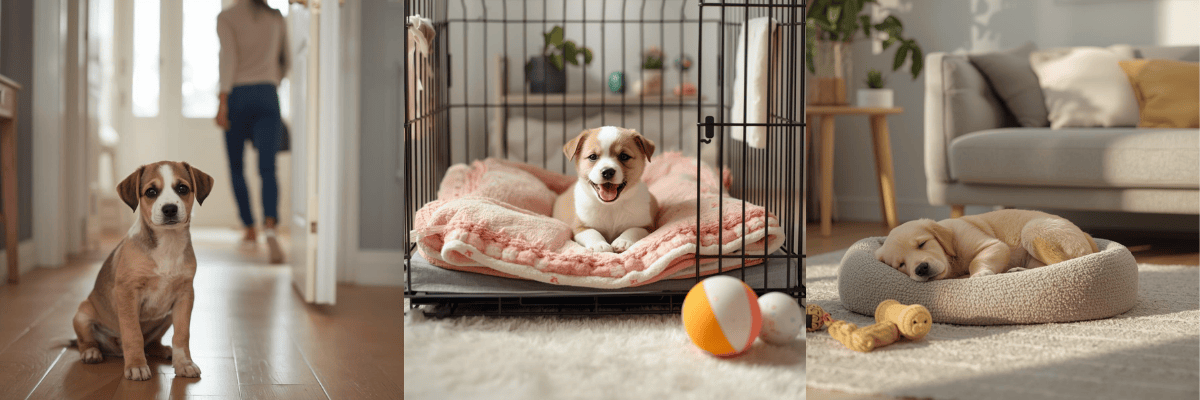
Bringing a new puppy home is an exciting and joyful experience—but it can also come with challenges. One of the most common issues many new dog owners face is separation anxiety, where a puppy becomes stressed, anxious, or even destructive when left alone. While a little whining or following you around is normal, severe anxiety can lead to behavioral problems, damage to your home, and stress for both you and your puppy.
The good news is that separation anxiety can often be prevented if you start early and teach your puppy to feel safe and secure even when you’re not around. Puppies are highly adaptable during their early weeks and months, and with patience, consistency, and the right techniques, you can help your puppy develop independence, confidence, and a healthy relationship with being alone.
In this post, we’ll explore what separation anxiety is, why prevention is crucial, and actionable strategies to help your puppy feel calm, happy, and confident even when you step out the door.
What Is Separation Anxiety?
Separation anxiety in puppies is more than just missing their owner—it’s a behavioral condition where a puppy experiences intense stress or panic when left alone or separated from their primary caregiver. While some clinginess is normal in young dogs, true separation anxiety can cause serious distress for both the puppy and the owner.

Common signs of separation anxiety include:
- Vocalization: Excessive barking, whining, or howling when you leave.
- Destructive behavior: Chewing furniture, scratching doors, or digging at carpets.
- Accidents indoors: Urinating or defecating even if potty trained.
- Pacing or restlessness: Repetitive movements, circling, or inability to settle.
- Attempts to escape: Trying to get out of crates, doors, or windows.
Causes of separation anxiety can include:
- Genetics: Some breeds are more prone to anxiety.
- Early experiences: Puppies taken from their litter too soon or lacking early socialization may struggle with independence.
- Sudden changes in routine: Moving homes, changes in family members, or inconsistent schedules can trigger stress.
- Over-attachment: Puppies who are constantly carried, held, or doted on may have difficulty coping when alone.
It’s important to distinguish separation anxiety from normal puppy behavior. Whining or following you around occasionally is typical; persistent, intense distress when left alone is a sign that your puppy needs guidance and training to feel secure.
Why Prevention Is Better Than Treatment
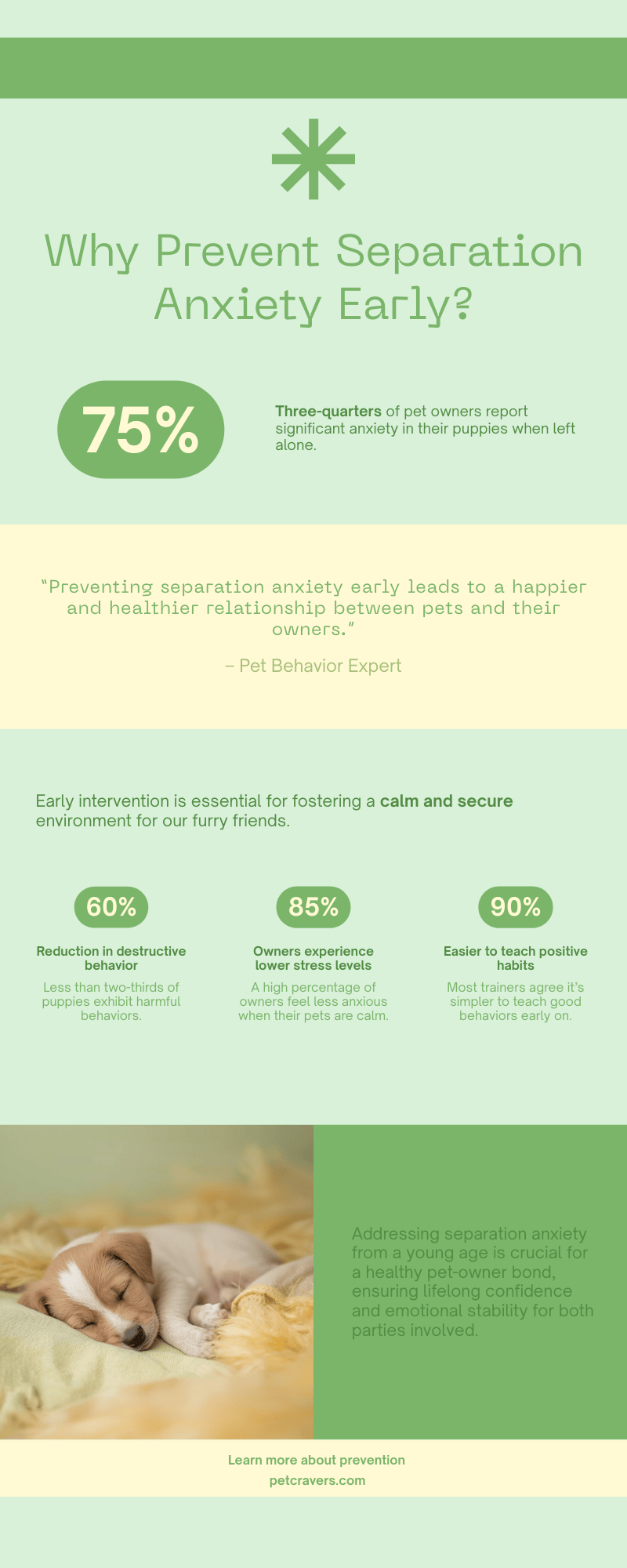
When it comes to separation anxiety, prevention is always easier than trying to fix the problem later. Puppies are highly impressionable during their early months, and the habits and coping mechanisms they develop now can last a lifetime.
Addressing separation anxiety after it has fully developed is often more challenging and time-consuming, requiring a combination of behavior modification, professional training, and sometimes even medications prescribed by a veterinarian. Puppies who learn to be comfortable alone from the start, on the other hand, are much more likely to grow into confident, independent adult dogs.
Key reasons prevention is crucial:
- Early habits shape long-term behavior: Puppies who are gradually exposed to short periods of alone time learn that being alone is normal and safe.
- Reduces stress for both puppy and owner: A calm, independent puppy is less likely to develop destructive behaviors or constant anxiety.
- Saves time and effort later: Preventing anxiety avoids the need for extensive retraining, behavior consultations, or environmental modifications.
- Builds confidence and resilience: Puppies who can cope with brief separations learn to adapt to new situations, changes in routine, and even travel.
In short, taking steps to prevent separation anxiety isn’t just about avoiding problems—it’s about helping your puppy develop the emotional tools they need to thrive, creating a happier life for both of you.
Tips for Preventing Separation Anxiety
Preventing separation anxiety is all about gradually teaching your puppy to feel safe and comfortable when alone. With patience, consistency, and positive reinforcement, you can help your puppy develop independence while still feeling secure in your presence.

1. Start Alone Time Gradually
- Begin with very short absences—just a few minutes at first.
- Slowly increase the duration over days and weeks, allowing your puppy to adjust.
- Use a crate or a safe space where your puppy feels secure.
2. Create a Safe and Comfortable Environment
- Provide toys, chew items, or puzzle feeders to keep your puppy engaged.
- Make the space cozy with blankets or items that smell like you.
- Avoid leaving them in stressful areas, like busy hallways or outdoors, during training.
3. Keep Departures and Arrivals Low-Key
- Avoid dramatic goodbyes or overexcited greetings.
- This helps your puppy learn that your leaving and returning are normal, calm events.
- Encourage calm behavior before and after you leave.
4. Establish a Consistent Routine
- Feeding, playtime, walks, and bedtime on a regular schedule reduce uncertainty.
- Predictable routines give your puppy confidence that everything is okay even when you’re gone.
5. Encourage Independence
- Allow your puppy to spend time alone even when you’re at home, using a separate room or a crate.
- Reward calm behavior during these moments.
- Avoid constantly hovering or giving attention whenever they whine or demand it.
6. Use Positive Reinforcement
- Reward relaxed, independent behavior with treats, praise, or toys.
- Never punish anxious behavior—it reinforces fear and worsens anxiety.
- Gradual, positive experiences teach your puppy that being alone is safe and enjoyable.
By following these steps, you help your puppy build trust and confidence, teaching them that your absence is temporary and not something to fear.
Signs Your Puppy May Be Developing Anxiety
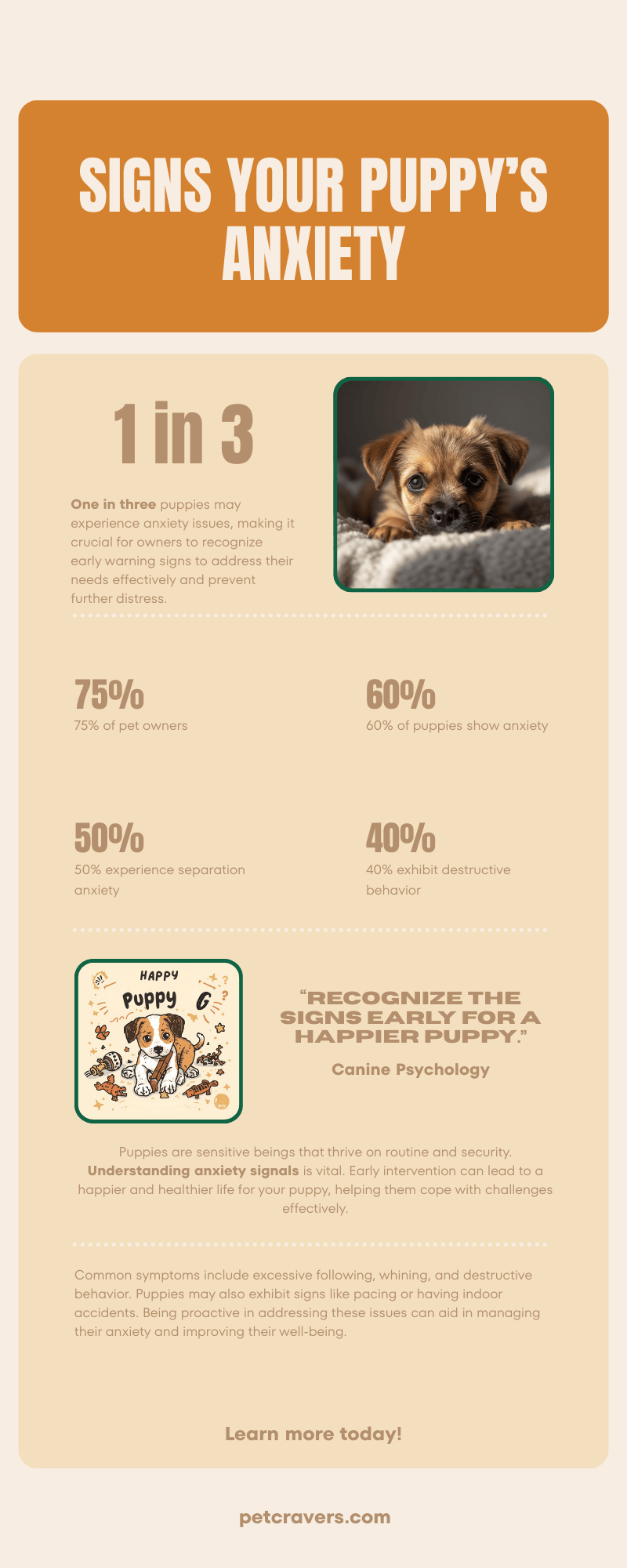
Catching early warning signs of separation anxiety can help you address the issue before it becomes severe. Puppies may show subtle behaviors that indicate stress when left alone, and recognizing these signs allows you to intervene with training and reassurance.
Common signs to watch for include:
- Excessive following: Constantly trailing you from room to room, even for brief separations.
- Vocalization: Whining, barking, or howling when you prepare to leave or are out of sight.
- Destructive behavior: Chewing furniture, scratching doors, or digging at floors when alone.
- Restlessness or pacing: Circling, pacing, or unable to settle down even in a safe space.
- Accidents indoors: Urinating or defecating despite being potty trained, often when you’re away.
- Attempts to escape: Scratching at doors, trying to break out of crates, or jumping on windowsills.
When to seek professional help:
- If the anxiety is intense, persistent, or worsening despite gradual training.
- If your puppy’s behaviors put them at risk of injury or damage.
- Certified trainers, veterinary behaviorists, or puppy behavior specialists can provide tailored guidance.
Recognizing these early cues allows you to take proactive steps, preventing anxiety from escalating and ensuring your puppy remains confident and secure.
Mistakes to Avoid
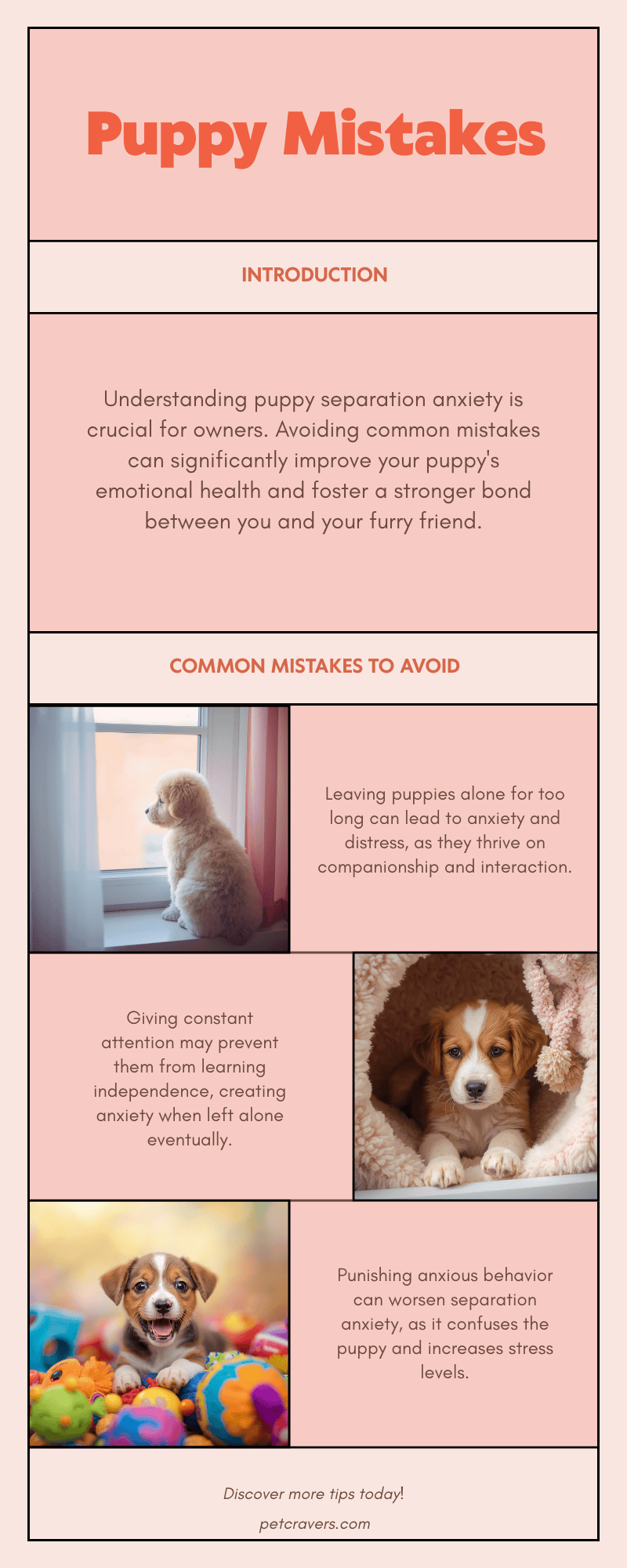
Even with the best intentions, many puppy owners inadvertently contribute to separation anxiety. Avoiding these common pitfalls can make a big difference in preventing stress and promoting independence:
1. Avoid Sudden Long Absences Too Early
- Leaving a very young puppy alone for extended periods before they are comfortable can trigger anxiety.
- Gradually build alone time in short increments to teach them that your absence is temporary and safe.
2. Don’t Give Constant Attention or Cling Too Much
- Over-coddling or constantly carrying your puppy can make them overly dependent.
- Encourage independent exploration and reward calm behavior rather than always responding to clinginess.
3. Punishing Anxious Behavior
- Scolding, yelling, or punishing a puppy for whining or destructive behavior reinforces fear and worsens anxiety.
- Focus on positive reinforcement for relaxed, independent behavior instead.
4. Inconsistent Routine
- Irregular feeding, playtime, and departure schedules can increase stress.
- A predictable routine helps your puppy understand what to expect, reducing anxiety.
5. Forcing Interactions
- Forcing a puppy to remain alone before they are ready or exposing them to stressful situations abruptly can backfire.
- Let your puppy progress at their own pace, always pairing new experiences with positive reinforcement.
By being mindful of these common mistakes, you can create a calm, supportive environment that encourages independence and prevents separation anxiety from developing.
Tools and Resources
Using the right tools and resources can make preventing separation anxiety easier, safer, and more effective. While training and patience are key, certain aids and professional guidance can support your efforts.
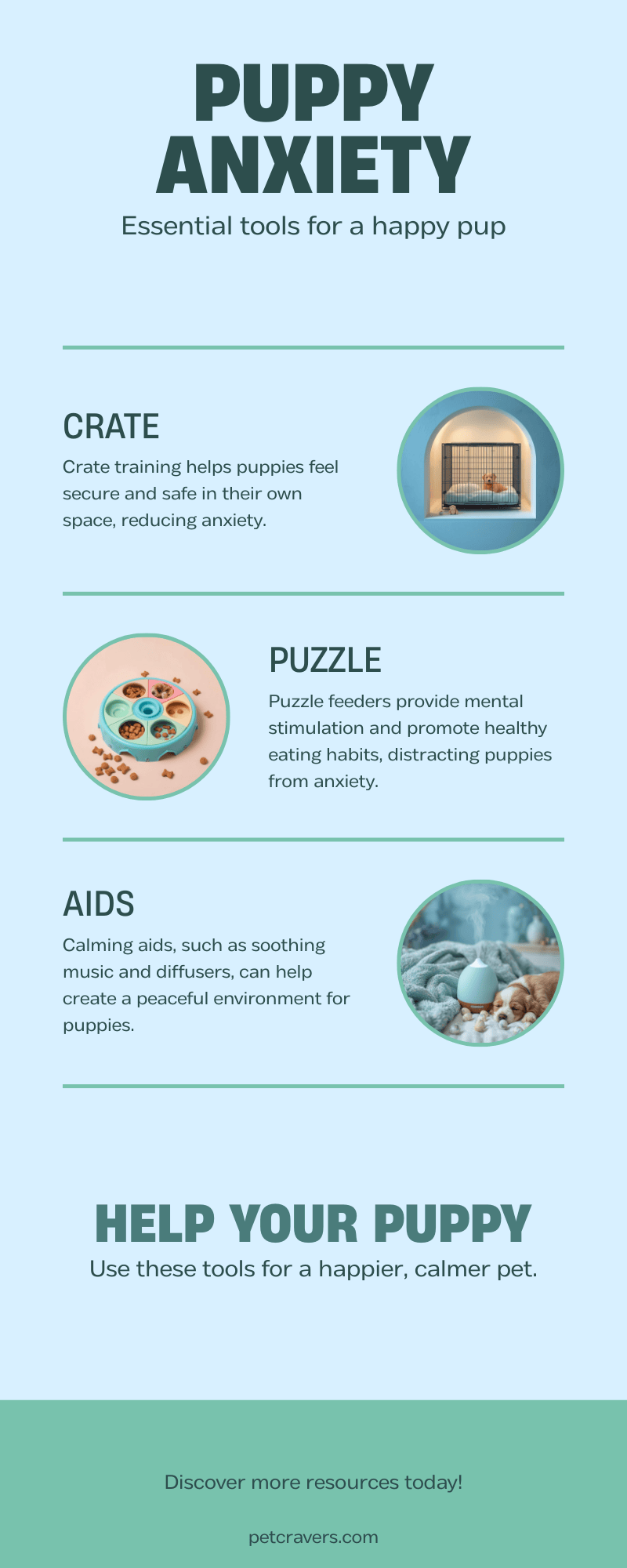
1. Crate Training
- A properly introduced crate can serve as a safe, comfortable space for your puppy.
- Helps them feel secure during alone time and prevents destructive behavior.
- Always pair the crate with positive experiences like treats, toys, and calm introductions.
2. Interactive Toys and Puzzle Feeders
- Keep your puppy mentally stimulated while you’re away.
- Puzzle feeders, treat-dispensing toys, and chew toys can distract and engage them.
- Rotating toys keeps novelty and interest high.
3. Calming Aids
- Products like pheromone diffusers, calming sprays, or anxiety wraps can reduce stress.
- Should be used in conjunction with training, not as a substitute for it.
4. Professional Trainers and Behaviorists
- Certified trainers and veterinary behaviorists provide tailored advice and structured programs.
- Puppy classes can also promote socialization and independence.
5. Online Resources and Guides
- Reputable websites, blogs, and videos offer tips, step-by-step training routines, and expert advice.
- Examples: American Kennel Club (AKC), ASPCA, and certified dog trainers’ websites.
Using these tools alongside gradual training, consistency, and positive reinforcement increases your puppy’s chances of developing confidence and enjoying alone time without stress.
Final Thoughts
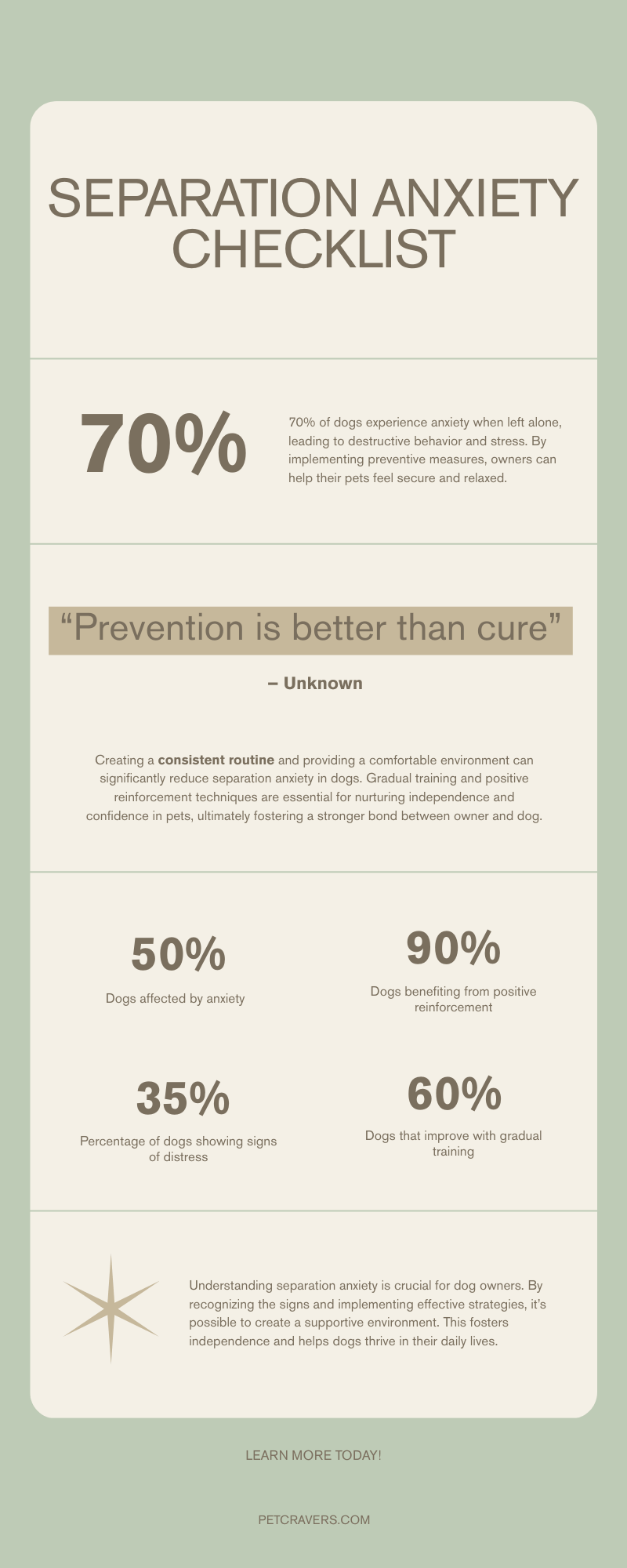
Separation anxiety is one of the most common behavioral challenges in puppies—but the good news is that it’s largely preventable with the right approach. By starting early, being consistent, and using positive reinforcement, you can help your puppy learn that being alone is safe, comfortable, and even enjoyable.
Key takeaways:
- Gradually introduce alone time in short, positive increments.
- Create a safe, comfortable environment with toys, a crate, and soothing cues.
- Keep departures and arrivals calm to reduce stress.
- Establish a consistent routine and encourage independence.
- Watch for early signs of anxiety and seek professional guidance if needed.
Preventing separation anxiety is about building confidence and emotional resilience. Puppies who learn to cope with brief separations grow into relaxed, adaptable, and happy adult dogs.
Start today: small, positive steps now can prevent years of stress later. Your puppy will thank you with trust, loyalty, and a calm, confident demeanor that makes life together truly joyful.



Leave a Reply