 Skip to content
Introduction
Have you ever noticed your dog nudging you, barking, or even trying to get between you and another pet when you give attention elsewhere? It often seems like dogs can feel jealousy, but is it really the same emotion humans experience, or just a behavior shaped by instincts and learned responses?

In this post, we’ll explore what science says about jealousy in dogs, how to recognize it, the factors that trigger these behaviors, and strategies to manage and reduce jealousy in multi-pet households. Understanding canine jealousy can help you foster a happier, more balanced relationship with your furry companions.
Understanding Emotions in Dogs
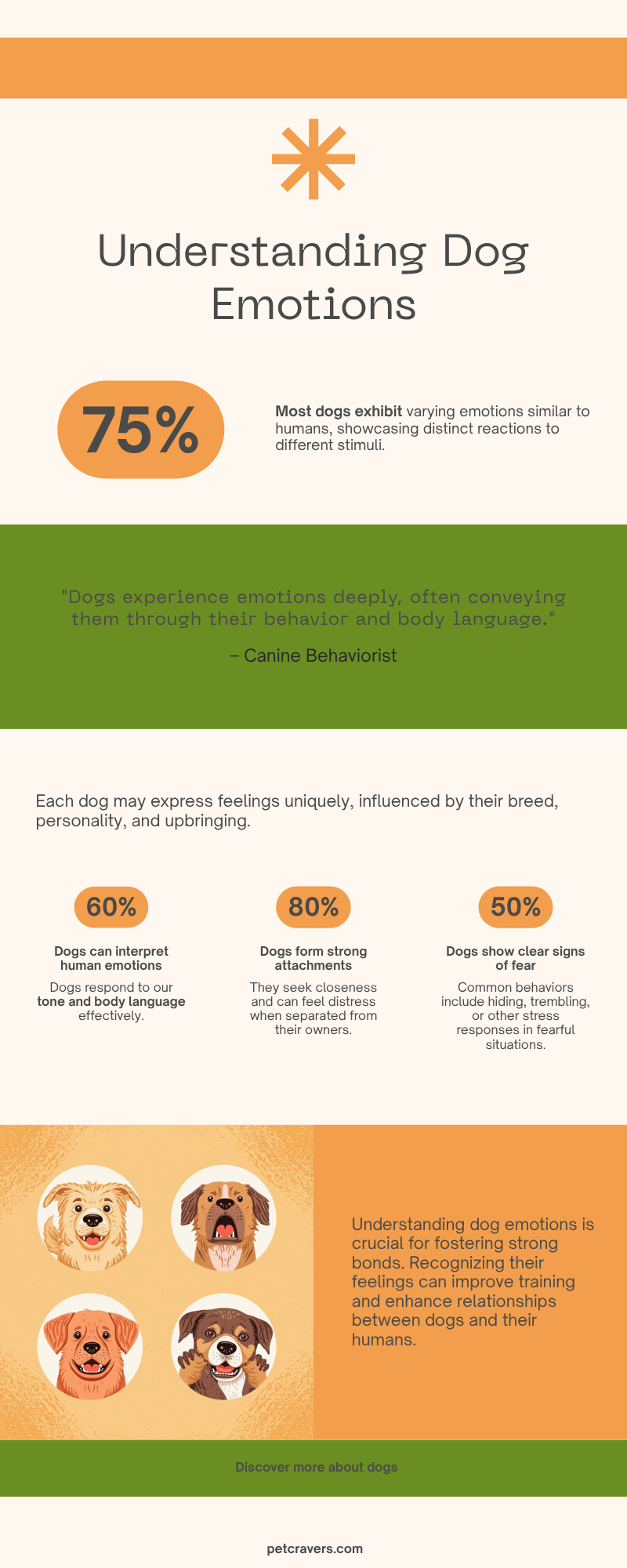
To understand jealousy in dogs, it’s important to first recognize that dogs experience emotions, though not always in the same way humans do.
Basic Emotions in Dogs
- Happiness: Wagging tails, relaxed body posture, playful behavior.
- Fear: Cowering, trembling, or avoiding certain situations or objects.
- Anger or Aggression: Growling, snapping, or defensive posturing.
- Attachment: Seeking closeness with their human companions and showing distress when separated.
Canine Emotional Intelligence
- Dogs are highly attuned to human emotions and social cues.
- Their reactions are often guided by both instinct and learning, allowing them to respond to attention, affection, or perceived threats to their bond with their owner.
Understanding these emotions provides a foundation for interpreting behaviors that may resemble jealousy, helping owners distinguish between instinctive reactions and complex emotional responses.
Scientific Evidence on Canine Jealousy
Researchers have studied whether dogs actually experience jealousy or if their behaviors are simply responses to competition for attention and resources.
Key Studies
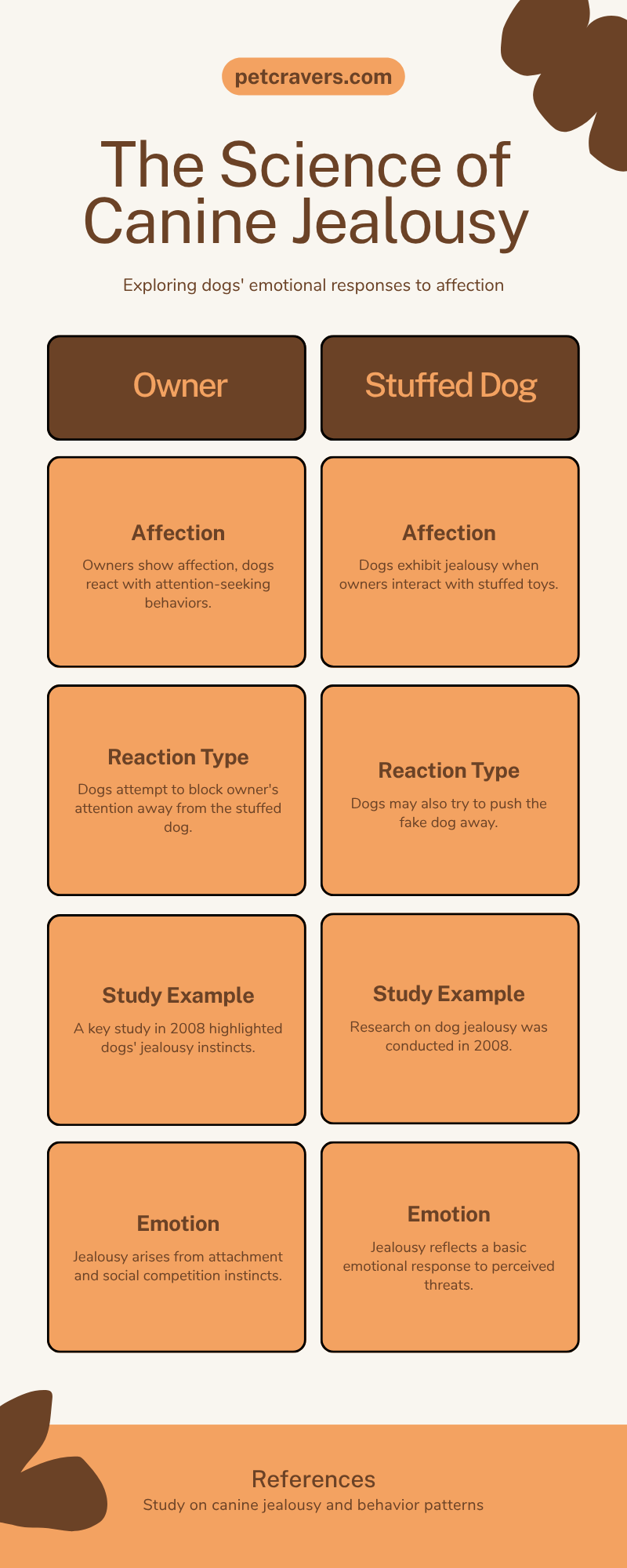
- A notable study in 2008 observed dogs reacting when their owners showed affection to what appeared to be another dog (a stuffed dog in the experiment). Many dogs displayed jealousy-like behaviors such as nudging their owner, pushing the “rival” away, or trying to get between the owner and the object.
- Other research indicates that dogs are sensitive to social rivalries and may act to protect their bond with their owners, suggesting an emotional component rather than purely learned behavior.
Instinct vs. Complex Emotion
- Some scientists argue that dogs’ responses may stem from instinctive protective behaviors rather than complex human-like emotions.
- However, repeated observations of attention-seeking, resource guarding, and rival-directed behaviors indicate that dogs likely have a form of jealousy adapted to their social environment.
Scientific evidence suggests that while dogs may not feel jealousy exactly as humans do, they are capable of jealousy-like behaviors driven by attachment, social awareness, and emotional sensitivity.
Signs Your Dog May Be Jealous
Recognizing jealousy in dogs helps owners address the behavior effectively and maintain harmony in multi-pet or multi-person households.
1. Attention-Seeking Behaviors
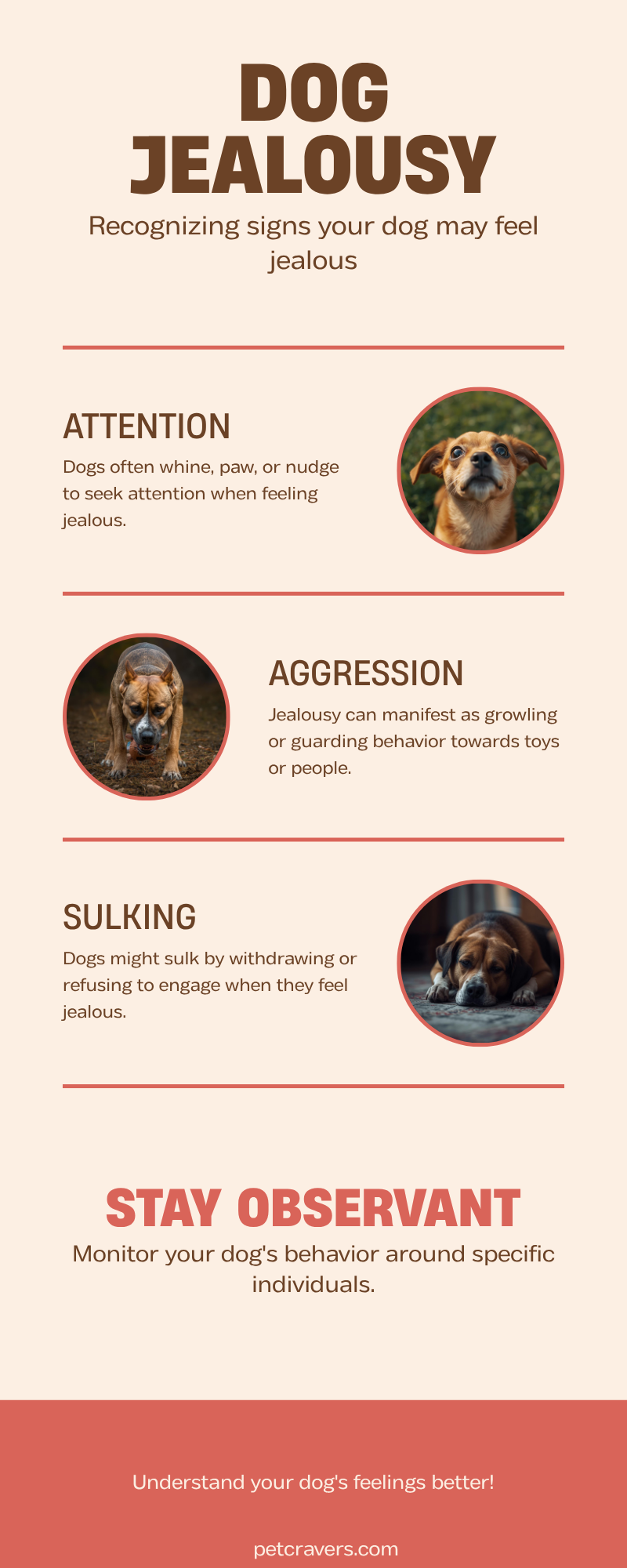
- Barking, whining, or nudging when you give attention to another pet or person.
- Pushing themselves between you and the “rival” to regain focus.
2. Aggression or Snapping
- Growling, snapping, or showing teeth toward other pets or even humans who appear to compete for your attention.
- Resource guarding, such as defending toys, food, or favorite spots on furniture.
3. Withdrawal or Sulking
- Some dogs respond by retreating, lowering their heads, or avoiding interaction temporarily.
- This “sulking” can be a subtle expression of jealousy or frustration at perceived exclusion.
4. Destructive or Excessive Behavior
- Chewing, digging, or knocking things over when attention is focused elsewhere.
- These behaviors are often attempts to regain notice or disrupt the situation.
By observing these signs, owners can better interpret whether their dog’s behavior stems from jealousy, anxiety, or another underlying emotional need.
Factors That Influence Jealousy in Dogs
Several factors can affect whether a dog exhibits jealousy-like behaviors. Understanding these influences can help owners manage and prevent conflicts.
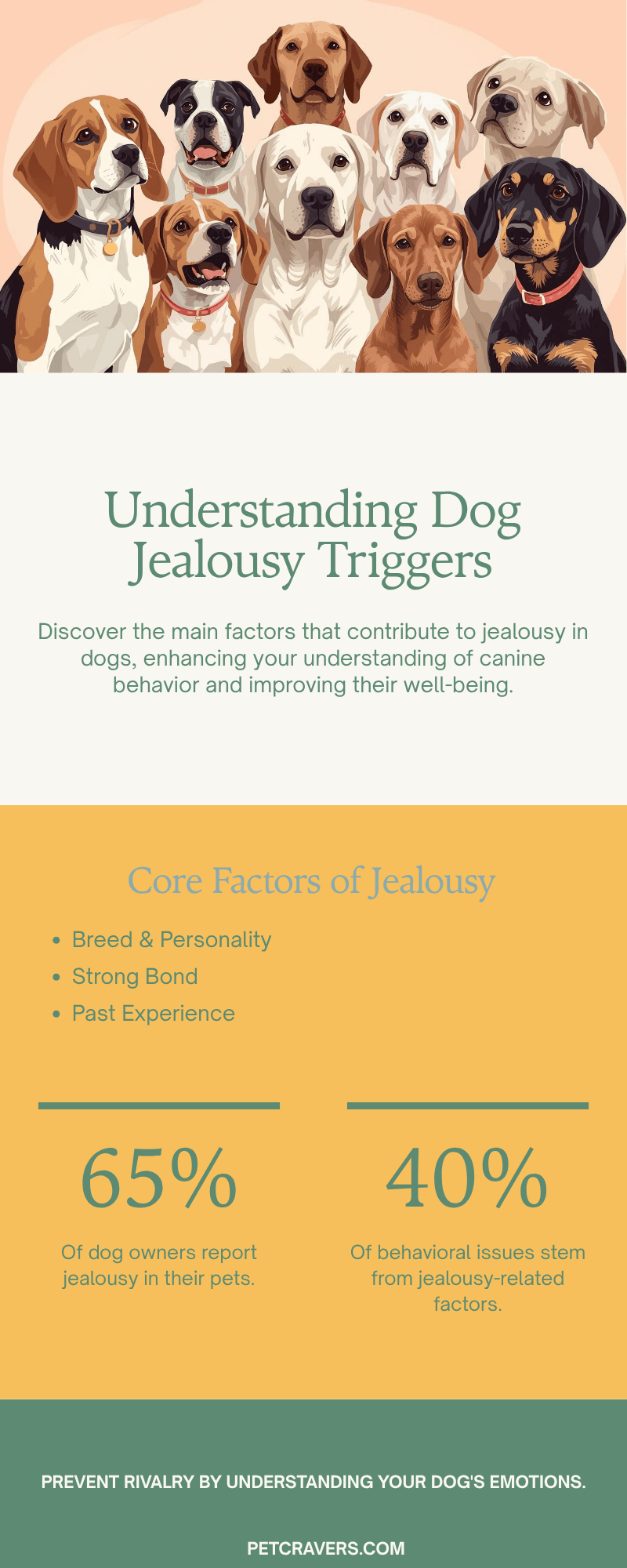
1. Breed Tendencies and Personality
- Some breeds are naturally more socially sensitive or possess stronger attachment behaviors, making them more prone to jealousy.
- Individual personality also plays a role; confident dogs may be less prone to jealousy than insecure or anxious ones.
2. Strength of Bond with the Owner
- Dogs with a strong attachment to their owner are more likely to respond emotionally when attention is diverted.
- Jealousy often arises from fear of losing access to affection or resources.
3. Past Experiences or Insecurity
- Dogs that have experienced neglect, inconsistent attention, or competition in multi-pet environments may develop stronger jealousy behaviors.
- Insecurity or low confidence can amplify reactions to perceived rivalry.
Recognizing these factors allows owners to tailor interventions, reinforce security, and promote positive interactions with both people and other pets.
How Dogs Express Jealousy
Dogs may display jealousy in subtle or obvious ways, depending on their personality, environment, and relationship with their owner.
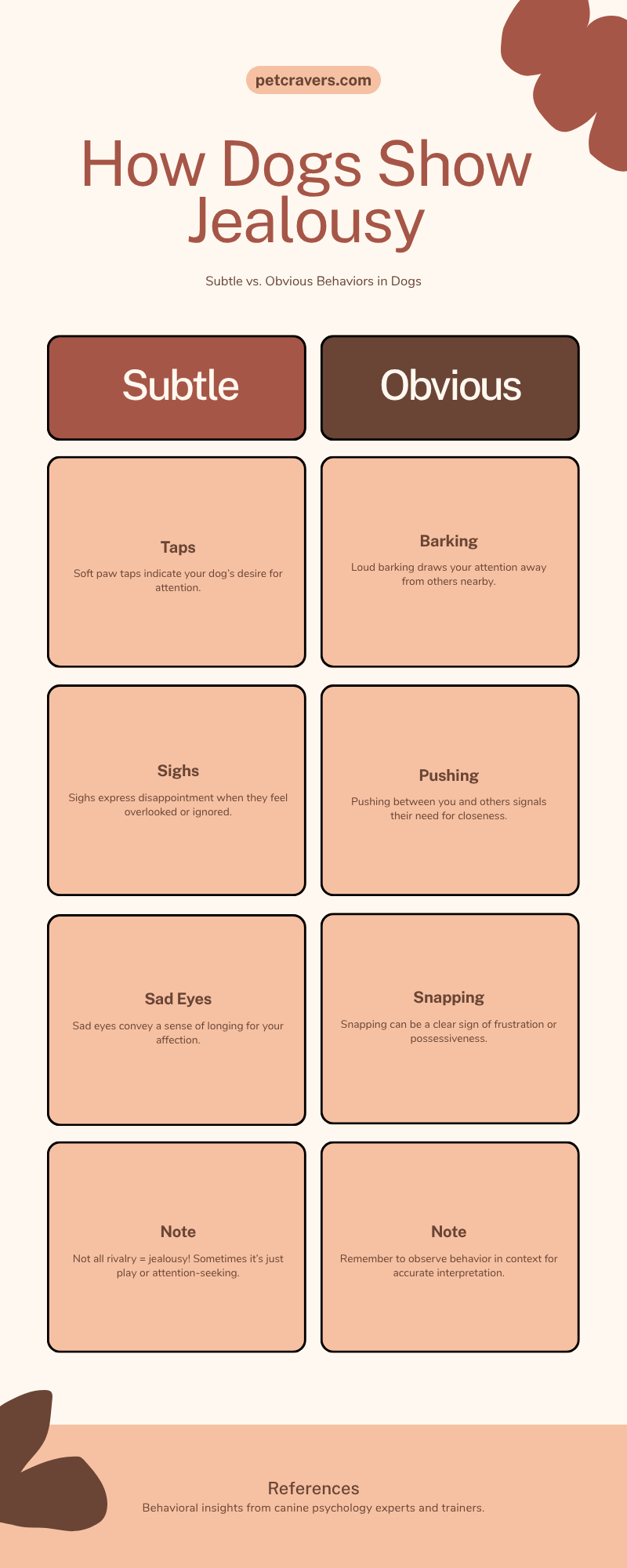
1. Subtle Cues
- Lowering their head, sighing, or giving you prolonged looks when you interact with another pet.
- Pawing at you gently or positioning themselves between you and the “rival.”
2. Obvious Behaviors
- Barking, growling, snapping, or lunging toward the rival or even the owner.
- Interrupting interactions by nudging, jumping, or placing themselves physically in between.
3. Playful Rivalry vs. Genuine Jealousy
- Some behaviors may appear competitive but are part of normal play or attention-seeking, not true jealousy.
- Genuine jealousy is often consistent, triggered specifically by perceived threats to the dog’s bond with their owner, and may involve repeated attempts to regain attention.
4. Interaction with Other Pets or Humans
- Dogs may target other pets, children, or even adults who compete for affection.
- Observing the context and frequency of these behaviors helps distinguish jealousy from normal social behavior.
By recognizing these expressions, owners can respond appropriately, ensuring that jealous behavior doesn’t escalate into aggression or stress.
Managing and Reducing Jealousy
While some degree of jealousy is natural in dogs, owners can take steps to reduce it and maintain harmony in the household.
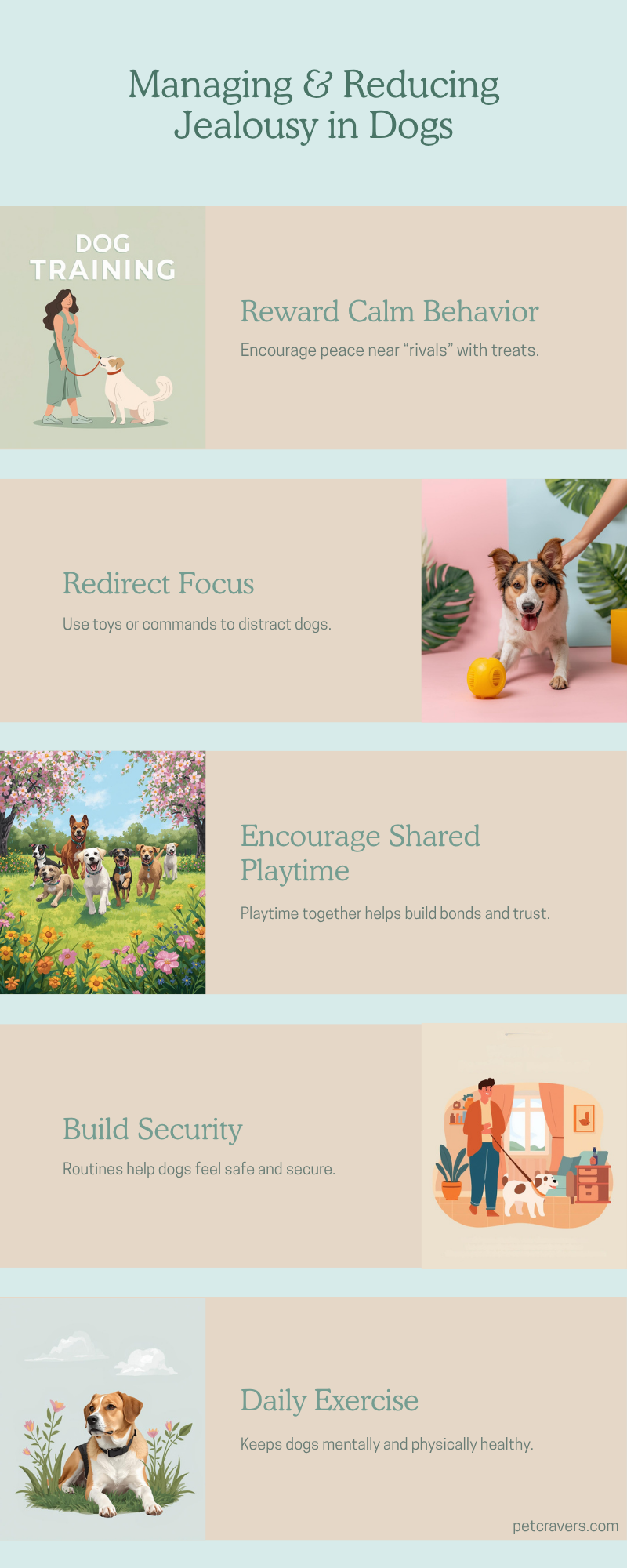
1. Training Techniques
- Reward calm behavior: Praise and treat your dog when they stay relaxed while attention is given to another pet or person.
- Redirect attention: Encourage your dog to focus on toys, games, or commands instead of the perceived rival.
- Consistency is key to reinforcing positive behaviors.
2. Socialization Tips for Multi-Pet Households
- Gradually introduce new pets or family members in a controlled, positive environment.
- Encourage shared play or activities to reduce competition and build positive associations.
3. Maintain Fairness and Consistent Attention
- Ensure all pets receive affection and attention to prevent feelings of neglect.
- Avoid showing favoritism, which can trigger jealousy or rivalry.
4. Address Underlying Anxiety or Insecurity
- Provide mental stimulation, exercise, and routine to build confidence in dogs prone to jealousy.
- Consult a professional trainer or behaviorist if jealousy leads to aggression or significant stress.
By using these strategies, owners can reduce jealousy-related conflicts, promote emotional balance, and strengthen the bond with their dogs.
Conclusion
Dogs can indeed exhibit jealousy-like behaviors, though their experience of jealousy may differ from humans. These behaviors often arise from attachment, social awareness, and emotional sensitivity rather than complex human emotions.
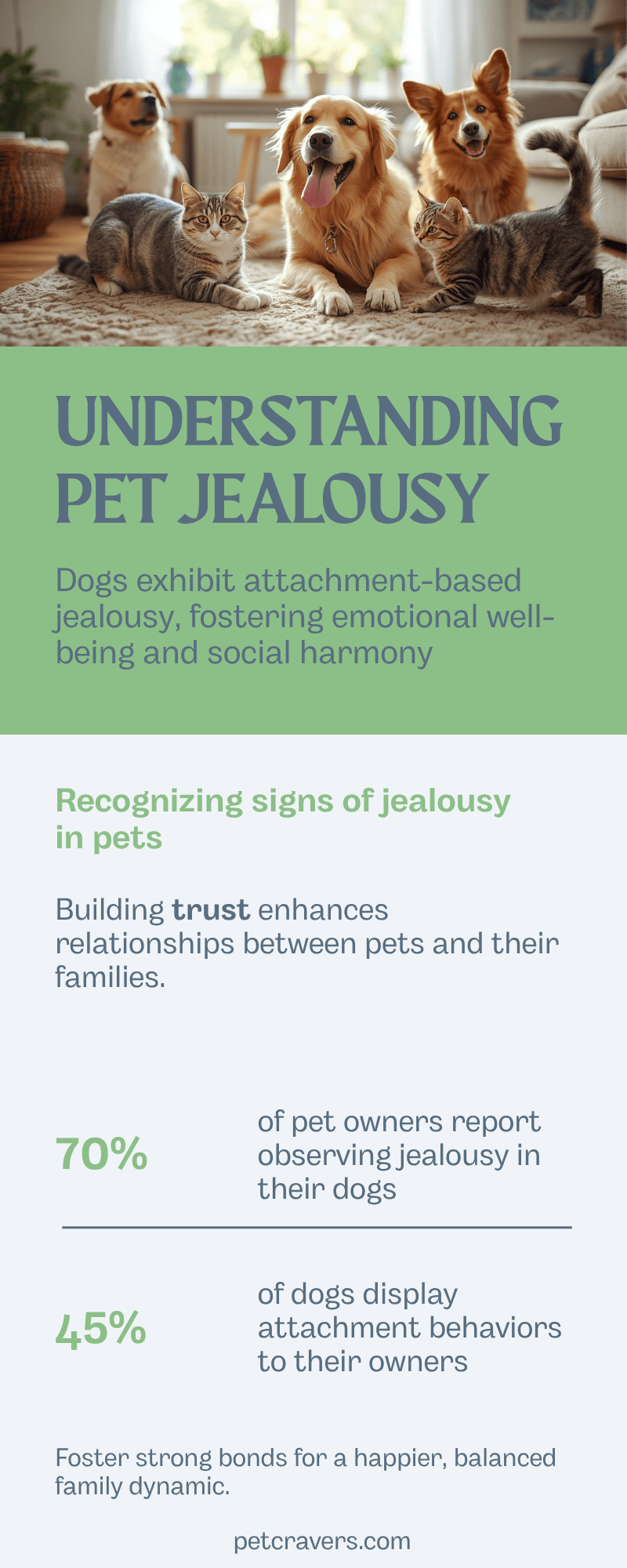
Recognizing the signs—such as attention-seeking, subtle cues, or even mild aggression—helps owners understand their dog’s needs and respond appropriately. Factors like breed, personality, attachment strength, and past experiences all influence the intensity of jealousy.
By managing attention fairly, reinforcing positive behaviors, and providing consistent routines, owners can reduce jealousy, prevent conflicts, and strengthen the bond with their canine companions. Understanding this aspect of canine behavior allows for a happier, healthier, and more harmonious household for both pets and people.




Leave a Reply