
Introduction
Have you ever noticed your dog acting strangely right before a storm hits, an earthquake occurs, or a stranger enters your property? Many dog owners swear their pets seem to sense danger long before humans notice any threat. But is this just coincidence, or do dogs truly possess an extraordinary ability to detect danger before we do?
In this post, we’ll explore the science behind dogs’ remarkable senses, the ways they can detect threats, documented cases of early-warning behavior, and the limits of their abilities. Understanding how dogs perceive danger can deepen our appreciation for their instincts and even help us better protect ourselves in risky situations.
Understanding Dogs’ Senses
Dogs experience the world very differently from humans. Their heightened senses allow them to detect subtle changes in their environment, often long before humans notice anything unusual.

Olfactory Abilities
- Dogs have an extraordinary sense of smell, with up to 300 million olfactory receptors compared to humans’ 5 million.
- They can detect chemical changes in the air, such as pheromones released by stressed animals or humans, which may signal danger.
Auditory Abilities
- Dogs hear higher frequencies and quieter sounds than humans.
- This allows them to detect distant storms, approaching predators, or intruders that are imperceptible to us.
Visual Abilities
- Dogs notice subtle movements and changes in light or environment that might go unnoticed by humans.
- Their peripheral vision and motion detection help them monitor surroundings for potential threats.
By combining these superior senses, dogs can often sense danger before humans, whether it’s an approaching storm, a natural disaster, or even a threat to their family.
Scientific Studies on Dogs and Danger Detection
Researchers have investigated dogs’ abilities to detect danger, and many studies support the idea that dogs can sense threats earlier than humans.
Natural Disasters
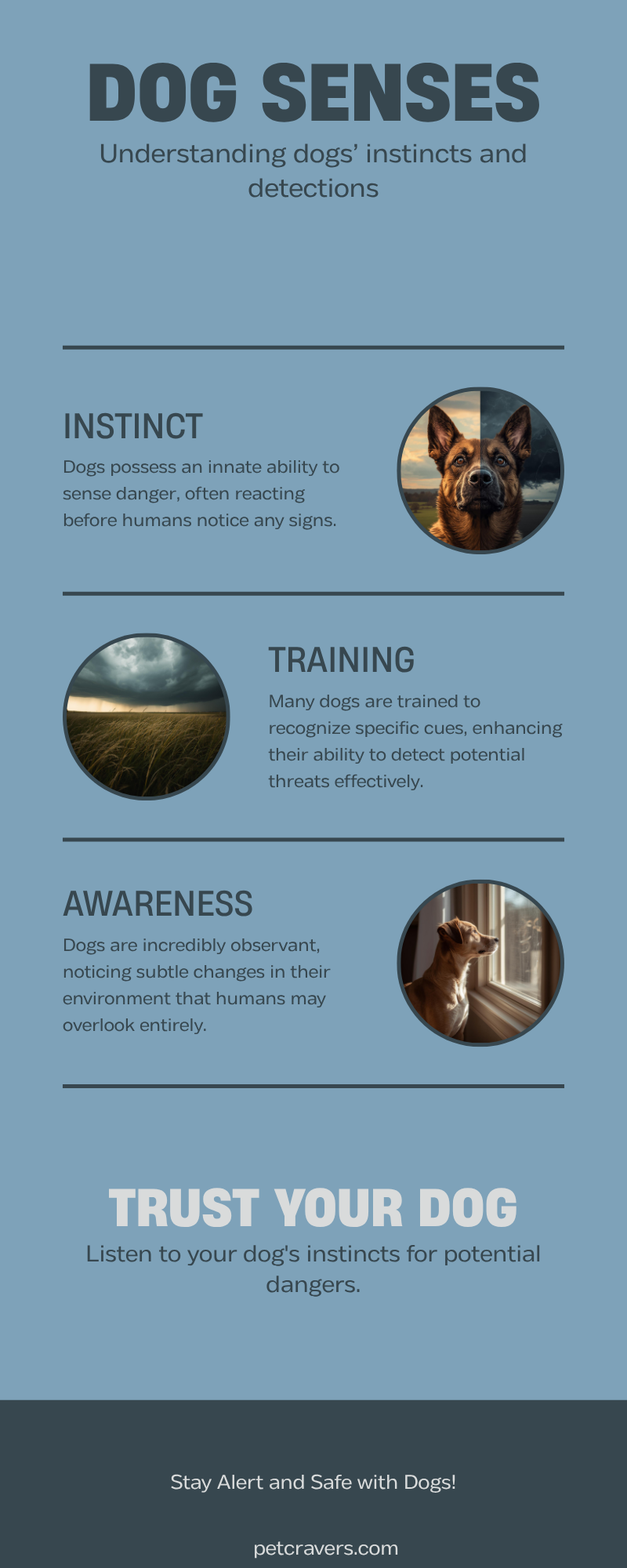
- Studies and anecdotal reports show dogs reacting before earthquakes, tsunamis, or storms.
- Dogs may pick up subtle vibrations, changes in air pressure, or unusual scents that precede natural disasters.
Medical Emergencies
- Some dogs are trained to alert owners to seizures, low blood sugar, or heart issues.
- These dogs can detect chemical changes in human scent or subtle behavioral cues before the person is aware of the danger.
Intruders and Threats
- Dogs’ heightened senses make them effective at detecting unfamiliar people or animals approaching a home.
- Alert behaviors, such as barking or increased vigilance, often occur before humans sense any threat.

Scientific evidence suggests that dogs’ extraordinary sensory abilities, combined with instinct and training, make them capable of detecting danger in ways humans cannot.
How Dogs Detect Danger
Dogs rely on their exceptional senses and instincts to detect threats in their environment. Understanding these mechanisms helps explain why they often sense danger before humans.
Olfactory Cues
- Dogs can smell chemical changes in the air, such as pheromones released by stressed animals or humans.
- This allows them to anticipate natural disasters, medical emergencies, or fearful behavior in others.

Auditory Cues
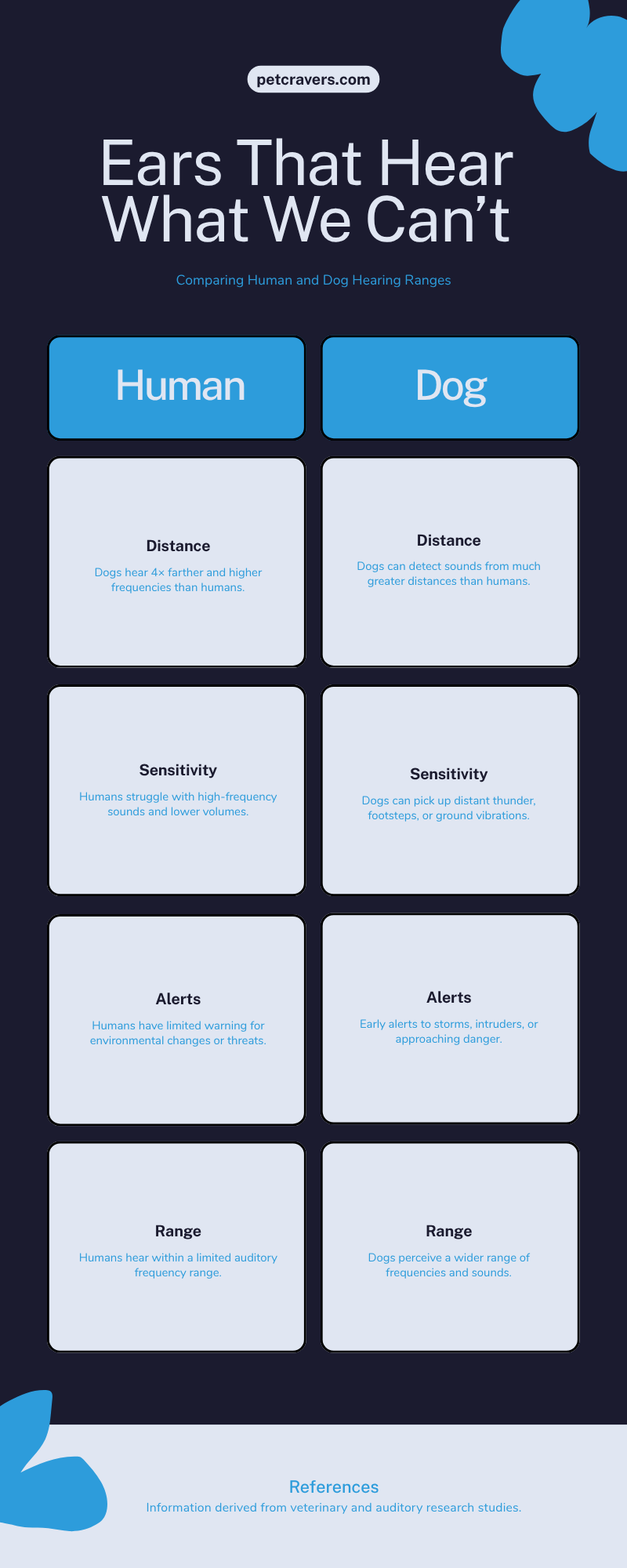
- Dogs hear high-frequency sounds and distant noises that humans cannot detect.
- Subtle sounds, like distant thunder, the footsteps of an intruder, or vibrations in the ground, alert them to potential danger.
Visual Cues
- Dogs notice small movements or changes in the environment that may signal a threat.
- Their superior peripheral vision and motion detection help them identify unusual activity, even in low light.

By combining olfactory, auditory, and visual information, dogs can respond to threats more quickly than humans, often giving early warning of danger.
Anecdotal Evidence and Famous Cases
While scientific studies provide strong support, many dog owners have shared compelling stories of their pets sensing danger before it happened.

Natural Disasters
- Numerous reports describe dogs acting unusually minutes or even hours before earthquakes, storms, or tsunamis.
- Dogs may bark excessively, pace, or attempt to lead their owners to safety, often before any visible signs of danger appear.
Medical Emergencies
- Service dogs have been trained to predict seizures, low blood sugar, or heart attacks.
- Some dogs alert their owners with subtle behaviors—nudging, pawing, or barking—before symptoms become severe.
Intruders and Home Security
- Many dogs exhibit alert behaviors when strangers approach a home, even before humans notice them.
- Stories of dogs waking owners during attempted break-ins highlight their natural protective instincts.
These anecdotes, alongside scientific research, demonstrate that dogs’ extraordinary sensory abilities and instincts allow them to detect danger early, sometimes even saving lives in the process.
Limitations and Skepticism
While dogs have remarkable abilities to detect danger, it’s important to understand their limitations and avoid overestimating their powers.

Not All Dogs Detect Danger Reliably
- Sensory perception varies by breed, age, and individual temperament.
- Some dogs may not notice subtle cues or may react inconsistently to potential threats.
Potential for Misinterpretation
- Owners may misread normal behaviors—like restlessness, barking, or pacing—as a sign of sensing danger.
- Correlation does not always imply causation; not every anxious or alert behavior indicates imminent danger.
Instinct vs. Training
- Many behaviors can result from instinct or previous experience rather than a conscious awareness of danger.
- Trained service or alert dogs provide more consistent early-warning behavior than untrained pets.
Understanding these limitations helps owners interpret their dog’s behavior accurately and combine it with other safety measures for protection.
Training Dogs to Sense Danger
Dogs can be trained to enhance their natural abilities to detect danger, making them reliable partners in safety and emergency situations.

Search and Rescue
- Dogs are trained to locate missing people during natural disasters, avalanches, or accidents.
- Training focuses on honing their scent detection, agility, and responsiveness in challenging environments.
Medical Alert Dogs
- Some dogs are trained to detect seizures, low blood sugar, or heart irregularities in humans.
- They learn to alert owners through specific behaviors like pawing, nudging, or barking when changes are detected.
Security and Protection
- Dogs can be trained to detect intruders, suspicious activity, or unusual environmental changes.
- Training enhances their alertness, obedience, and appropriate response to potential threats.

By combining natural instincts with professional training, dogs can serve as early-warning systems for both humans and other animals, making them invaluable in various emergency situations.
Conclusion
Dogs possess extraordinary sensory abilities that allow them to detect danger before humans in many situations. Their heightened sense of smell, acute hearing, and keen vision, combined with instinct and training, enable them to respond to natural disasters, medical emergencies, and potential intruders.

While not every dog detects danger reliably, scientific studies, anecdotal reports, and trained service dogs demonstrate that canines often provide early-warning signals that can save lives. Understanding these capabilities helps us appreciate their instincts and, when properly trained, harness their skills to enhance safety for humans and other animals alike.





Leave a Reply