 Skip to content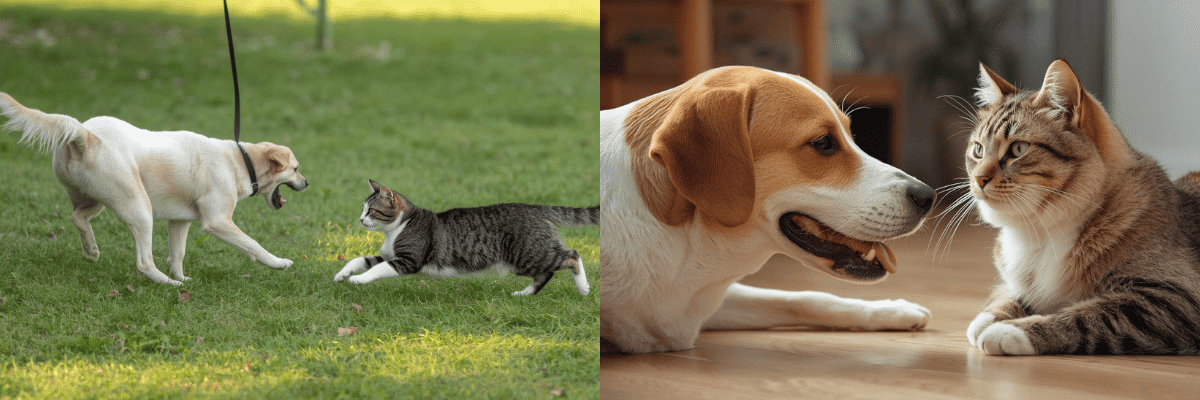
Introduction
One of the most common and sometimes frustrating behaviors dog owners witness is their dog chasing a cat. Whether it happens in the backyard, on walks, or even inside the house, this behavior can be alarming and sometimes dangerous for both pets. However, understanding the psychology behind why dogs chase cats reveals that it is often driven by instinct, excitement, or learned behavior rather than aggression or malice.
Dogs are descendants of hunters, and their predatory instincts remain strong in many breeds. Even well-behaved and gentle dogs may suddenly bolt after a cat, triggered by movement or curiosity. At the same time, past experiences, socialization, and environmental factors can reinforce this behavior, making it more persistent.
In this post, we’ll explore the instincts, psychological motivations, and environmental triggers behind dogs chasing cats. You’ll also learn practical strategies to manage or redirect this behavior safely, helping dogs and cats coexist peacefully. Understanding your dog’s perspective is the first step toward reducing stress, preventing injuries, and maintaining harmony between your furry companions.
Instinct vs. Learned Behavior
Understanding whether chasing behavior is instinctual or learned is essential to managing it effectively. Dogs may chase cats due to deep-rooted instincts or habits formed through experience, and sometimes both factors are at play.

1. Predatory Instincts
- Dogs are natural hunters, and the chase is a hardwired behavior inherited from their wild ancestors.
- Quick movements, such as a cat darting across a yard, can trigger this instinct, even in otherwise calm dogs.
- This instinct is more pronounced in breeds historically used for hunting, herding, or small game tracking.
2. Breed Tendencies
- Certain breeds are genetically more prone to chasing due to their original roles:
- Terriers: Bred to hunt small animals, making them natural diggers and chasers.
- Hounds: Strong prey drives make them alert to movement and more likely to give chase.
- Shepherds & Retrievers: High energy and herding instincts can also manifest as chasing behavior.
- Breed tendencies don’t guarantee chasing behavior, but they influence the likelihood and intensity.
3. Learned Behavior
- Dogs may learn to chase cats from past experiences, even without predatory intent.
- Playful interactions with cats, or reinforcement when chasing (attention, excitement, or rewards), can make the behavior habitual.
- Environmental cues, such as the presence of a cat or a small moving object, can trigger learned chasing behavior even in dogs with low natural prey drive.
Understanding whether your dog’s chasing is driven by instinct, breed tendencies, or learned behavior helps determine the most effective management strategies, whether it’s training, redirection, or environmental adjustments.
Psychological Motivations
Beyond instinct, dogs chase cats for several psychological reasons. Understanding these motivations helps owners address the behavior more effectively while keeping both pets safe.

1. Excitement & Playfulness
- Dogs often see cats as moving targets for fun, especially when young or highly energetic.
- Chasing can be a form of play rather than aggression, with dogs exhibiting wagging tails, playful barks, and bounding movements.
2. Territorial Behavior
- Dogs may chase cats to protect their perceived territory, such as the home, yard, or favorite resting spots.
- This behavior is often more pronounced if the cat enters the dog’s personal space or frequent areas.
3. Social Hierarchy & Dominance
- Some dogs chase to assert control or test boundaries with other animals.
- Chasing can reflect an attempt to establish social hierarchy, though it does not always involve aggression.
4. Frustration or Attention-Seeking
- Dogs may chase cats when bored or seeking interaction, especially if previous chasing resulted in attention from the owner.
- In some cases, the act of chasing itself becomes self-reinforcing, providing excitement or stimulation.
5. Curiosity & Exploration
- Dogs are naturally curious animals and may chase cats to investigate movement, unfamiliar scents, or new behaviors.
- This type of chasing is usually more controlled and exploratory rather than predatory.
By identifying the psychological motivation behind chasing, owners can choose targeted interventions—such as training, enrichment, or structured play—to reduce chasing while addressing the dog’s underlying needs.
How Dogs Perceive Cats
A dog’s perception of a cat plays a crucial role in chasing behavior. Dogs do not see cats in the same way humans do; their interpretation is shaped by instincts, past experiences, and socialization.

1. Cats as Prey
- Some dogs instinctively view cats as small, fast-moving prey.
- Sudden movements, quick dashes, or high-pitched sounds from cats can trigger the chase instinct, especially in breeds with strong hunting drives.
2. Cats as Competitors
- Dogs may see cats as competitors for resources, territory, or attention.
- This perception often leads to chasing as a way to assert control or maintain dominance in shared spaces.
3. Cats as Playmates
- Well-socialized dogs may perceive cats as play partners rather than prey.
- Playful chasing is usually more controlled, with both animals engaging safely without aggression.
4. Body Language Cues
- Dogs read cats’ body language to decide how to react:
- Tail flicks or raised fur may indicate stress or threat, increasing the dog’s arousal.
- Arched backs or hissing signal the dog to be cautious or back off.
- Misreading these cues can escalate the chase or create tension between pets.
5. Environmental Perception
- The dog’s surroundings influence how they perceive cats:
- Open yards or lack of barriers may make chasing more likely.
- Confined spaces may trigger stress or frustration, increasing chasing attempts.
Understanding how dogs perceive cats helps owners anticipate behavior, create safe environments, and use appropriate training techniques to reduce chasing while supporting positive interactions.
Common Triggers for Chasing
Dogs don’t chase cats randomly—certain triggers can prompt this behavior. Identifying these triggers helps owners manage and prevent chasing incidents effectively.
1. Sudden Movement by Cats
- Quick dashes, jumps, or running motions naturally stimulate a dog’s chase instinct.
- Even a calm dog may suddenly bolt if a cat darts across the yard or house.
2. Lack of Leash Control During Walks
- Unleashed dogs have more freedom to chase passing cats.
- Strong pullers or reactive dogs are especially prone to lunging at moving cats during walks.
3. Cats Entering Dog’s Personal Space or Territory
- Dogs may chase cats that invade their yard, favorite resting spots, or areas they consider “theirs.”
- Territorial instincts can make dogs react defensively or assertively.
4. Environmental Stimuli
- Other moving objects, such as squirrels, birds, or even toys, can trigger chasing behavior.
- Dogs may generalize the chase instinct from one type of moving target (like a cat) to other objects, reinforcing the habit.
5. High Excitement or Energy Levels
- Dogs with excess energy, lack of exercise, or mental stimulation are more likely to chase when they encounter a cat.
- Even well-trained dogs can have difficulty controlling impulses in high-arousal situations.
By recognizing these common triggers, owners can proactively prevent chasing through controlled environments, leash management, and training techniques tailored to reduce reactivity.
Managing & Redirecting Chasing Behavior
Effectively managing a dog’s tendency to chase cats requires a combination of training, socialization, and environmental control. The goal is to satisfy the dog’s instincts while keeping both pets safe.

1. Early Socialization
- Introduce dogs and cats gradually in a controlled environment.
- Use barriers such as baby gates or crates to allow visual contact without direct interaction initially.
- Reward calm behavior during early interactions to encourage positive associations.
2. Training Commands
- Teach commands like “leave it,” “stay,” or “come” to redirect attention away from cats.
- Practice these commands in low-distraction environments before using them around cats.
- Consistent reinforcement strengthens obedience and impulse control.
3. Leash & Boundary Management
- Keep dogs on a leash during walks or when cats are nearby.
- Use fences, gates, or enclosed areas to prevent unsupervised interactions.
- Gradually allow controlled freedom as the dog demonstrates reliability with commands.
4. Mental & Physical Stimulation
- Ensure the dog receives enough exercise and playtime to reduce excess energy that fuels chasing.
- Interactive toys, puzzle feeders, and training sessions help satisfy mental stimulation needs.
5. Positive Reinforcement
- Reward calm behavior when the dog notices a cat but does not chase.
- Treats, praise, or playtime can reinforce self-control and create positive associations with cats.
- Avoid punishment, which may increase stress or worsen chasing behavior.
6. Gradual Desensitization
- Slowly expose the dog to cats at a distance, gradually decreasing the gap as the dog remains calm.
- Combine with training commands and rewards to strengthen control in real-life situations.
By using structured training, controlled exposure, and enrichment, owners can reduce chasing behavior, strengthen their dog’s impulse control, and help dogs and cats coexist safely.
When Chasing Becomes Problematic
While occasional playful chasing is normal, some situations indicate that the behavior has become problematic and may require professional intervention. Recognizing these signs early can prevent injuries and reduce stress for both pets.
1. Aggression Toward Cats
- Chasing that escalates into growling, snapping, or biting is a clear warning sign.
- Aggressive chasing can injure cats and create unsafe interactions, requiring immediate management.
2. Persistent Stress or Anxiety
- Dogs may exhibit signs of stress when a cat is nearby, such as pacing, whining, or barking excessively.
- Cats may also become stressed, leading to tension or conflict in the household.
3. Repeated, Uncontrollable Chasing
- Dogs that chase cats despite training and environmental management may have strong instinctual drives or behavioral issues.
- Persistent chasing can become compulsive, increasing the risk of injury to both pets.
4. Injury Risk
- Dogs or cats may be hurt if chasing leads to collisions, falls, or scratches.
- Human family members are also at risk if they try to intervene during intense chases.
5. Signs You Need a Professional
- Inability to redirect the dog using commands.
- Escalating aggression or anxiety-related chasing.
- Behavioral patterns that affect the dog’s or cat’s overall well-being.
Seeking help from a professional dog trainer, behaviorist, or veterinarian ensures that chasing behavior is addressed safely and effectively. Professionals can create customized strategies for training, desensitization, and environmental management, improving long-term harmony between dogs and cats.
Conclusion
Chasing behavior is a natural part of many dogs’ instincts, rooted in predatory drives, excitement, curiosity, and social motivations. While it can sometimes be playful, unmanaged chasing can lead to stress, injuries, or conflict between pets. Understanding why dogs chase cats is the first step toward managing this behavior effectively and keeping both dogs and cats safe.
Key Takeaways:
- Recognize the Motivation: Chasing may be instinctual, learned, playful, territorial, or attention-seeking. Identifying the cause helps tailor management strategies.
- Breed & Personality Influence Behavior: High-energy and hunting breeds are more prone to chasing; age, energy levels, and prior experiences also matter.
- Use Training & Positive Reinforcement: Commands like “leave it,” consistent reward-based training, and structured exposure reduce chasing incidents.
- Control the Environment: Leashes, barriers, and designated safe zones prevent unsupervised chases and protect both pets.
- Seek Professional Help When Needed: Persistent aggression, compulsive chasing, or anxiety-driven behavior may require guidance from a trainer, behaviorist, or veterinarian.
By combining understanding, structured training, and environmental management, owners can reduce unwanted chasing while allowing dogs to express their natural instincts safely. With patience and consistency, dogs and cats can coexist peacefully, creating a harmonious home for all pets.






Leave a Reply