 Skip to content
Introduction
Bringing a rescue dog into your home can be one of the most rewarding experiences, but it also comes with its unique challenges. Many rescue dogs carry the weight of past trauma—whether it’s neglect, abuse, or abandonment—and learning to trust again doesn’t happen overnight. Trust is not just about obedience; it’s an emotional bond that forms gradually as a dog begins to feel safe, understood, and valued in their new environment.
For rescue dogs, trust is a monumental milestone. It is often marked by subtle behaviors that may go unnoticed by the untrained eye, such as softening eyes, leaning into a touch, or even choosing to stay nearby rather than retreating. These small but significant actions are signs that a dog is starting to feel secure and is willing to connect emotionally with a human again.
Understanding how rescue dogs show trust for the first time is crucial for caregivers, both new and experienced. By recognizing these early signals and responding with patience and empathy, you not only strengthen the bond with your dog but also provide them with the confidence and security they need to thrive. This post will guide you through the behaviors, signs, and milestones that indicate a rescue dog is beginning to trust, helping you celebrate each step of their emotional journey.
Understanding the Background
Before a rescue dog can begin to show trust, it’s important to understand where they’re coming from. Many dogs that end up in rescue situations have experienced trauma that profoundly affects how they perceive the world and interact with humans. Knowing the roots of their hesitation can help caregivers respond with patience, empathy, and appropriate strategies.
A. Trauma and Past Experiences
Rescue dogs may have endured neglect, abuse, abandonment, or inconsistent care. These experiences can leave deep emotional scars, making them naturally wary of new people and environments. A dog who has been mistreated may associate human touch with pain, loud noises with danger, or confinement with fear.
Even dogs that appear physically healthy may carry invisible wounds. Anxiety, hypervigilance, or sudden flinching are often remnants of past experiences. It’s important to remember that trust issues are rarely about “bad behavior” but rather a protective mechanism rooted in survival instincts.
B. Signs of a Hesitant Dog
Recognizing the early signs of hesitation is the first step in fostering trust. Rescue dogs communicate their discomfort in subtle ways, and understanding these signals can prevent misunderstandings or escalation. Common signs include:
- Physical Cues:
- Cowering, lowered body posture, or tucked tail.
- Avoiding eye contact or turning the head away.
- Shaking or trembling when approached.
- Behavioral Cues:
- Freezing in place or retreating when someone approaches.
- Growling, snapping, or barking as a warning.
- Subtle avoidance behaviors, like walking away or hiding.
By recognizing these signals, caregivers can approach their dogs in ways that are supportive rather than threatening. Patience, gentle movements, and respect for boundaries are key in helping a dog feel safe enough to take the first steps toward trust.
Understanding the background of a rescue dog is not about dwelling on the past—it’s about equipping yourself to be the stable, calm presence they need. This foundation sets the stage for creating the safe environment and consistent routine that are essential for trust to blossom.
The First Steps Toward Trust
Building trust with a rescue dog is a gradual process that requires patience, empathy, and consistency. Dogs that have experienced trauma may be cautious or fearful, so the first steps toward forming a bond are often small and subtle. Understanding how to approach this stage can make a significant difference in how quickly a dog feels safe and secure.
A. Creating a Safe Environment
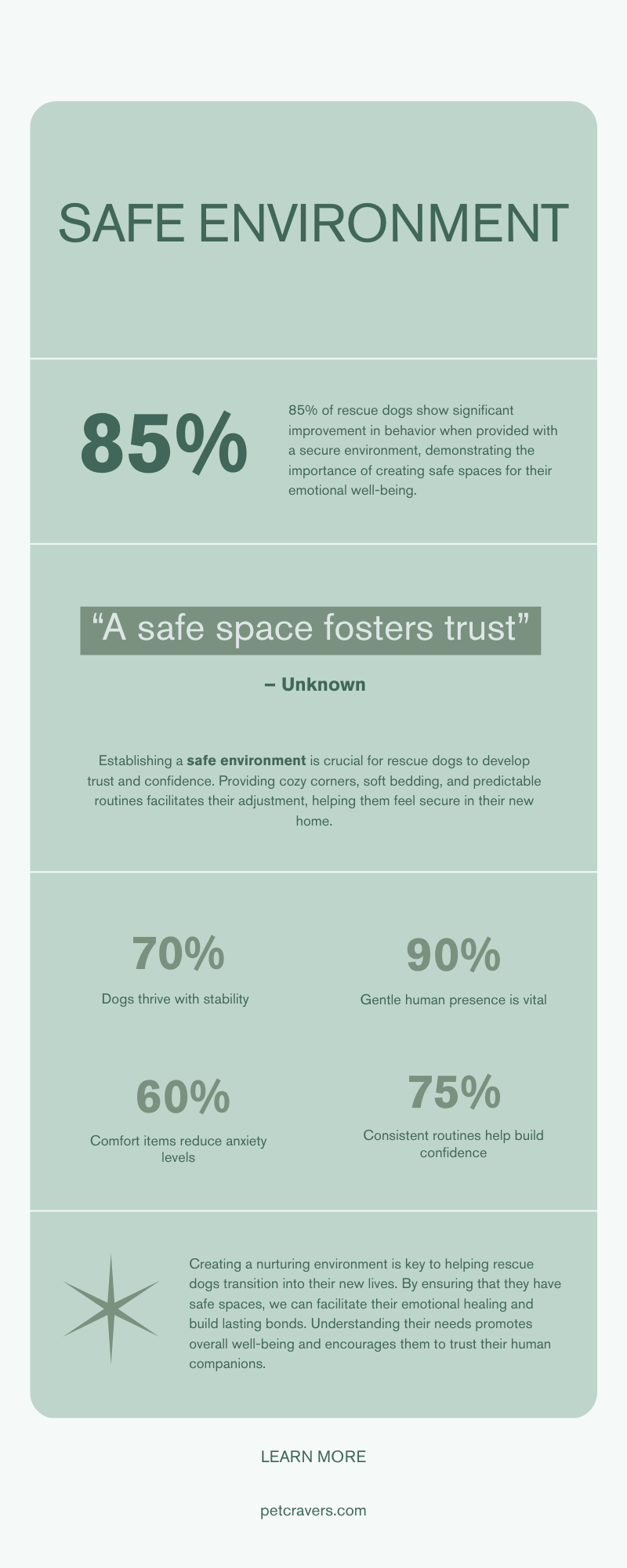
Safety is the cornerstone of trust. A rescue dog needs a space where they can relax without feeling threatened or overwhelmed. This may be a quiet corner of a room, a crate, or a designated area in the home where the dog feels secure. Limiting loud noises, sudden movements, or chaotic environments helps reduce stress and encourages the dog to explore at their own pace.
Providing comfort items such as soft bedding, toys, or even a piece of clothing with your scent can make a big difference. A calm, predictable environment communicates to the dog that they are no longer in danger and can begin to let their guard down.
B. Respecting Boundaries
One of the most important lessons in gaining a rescue dog’s trust is to let them set the pace. Forcing interactions or expecting immediate affection can be counterproductive and may reinforce fear. Instead:
- Allow the dog to approach you first.
- Observe body language for signs of comfort or stress.
- Avoid looming over the dog, sudden reaching, or direct staring, which can be intimidating.
Respecting boundaries sends a clear message: “You are safe, and your choices are respected.” Over time, this approach helps the dog associate your presence with security rather than threat.
C. Consistency and Routine
Predictability is incredibly comforting to rescue dogs. Consistent feeding times, walks, and play sessions create a sense of structure that reduces anxiety and fosters trust. Dogs learn that certain events are reliable and that their needs will be met without fear or confusion.
Routine also helps the dog anticipate positive interactions with you. For instance, if a dog knows that every evening brings a gentle walk or treat, they begin to associate your presence with good experiences. This consistency lays the groundwork for emotional bonding and makes the dog more likely to take the next steps in showing trust.
Recognizing Early Signs of Trust
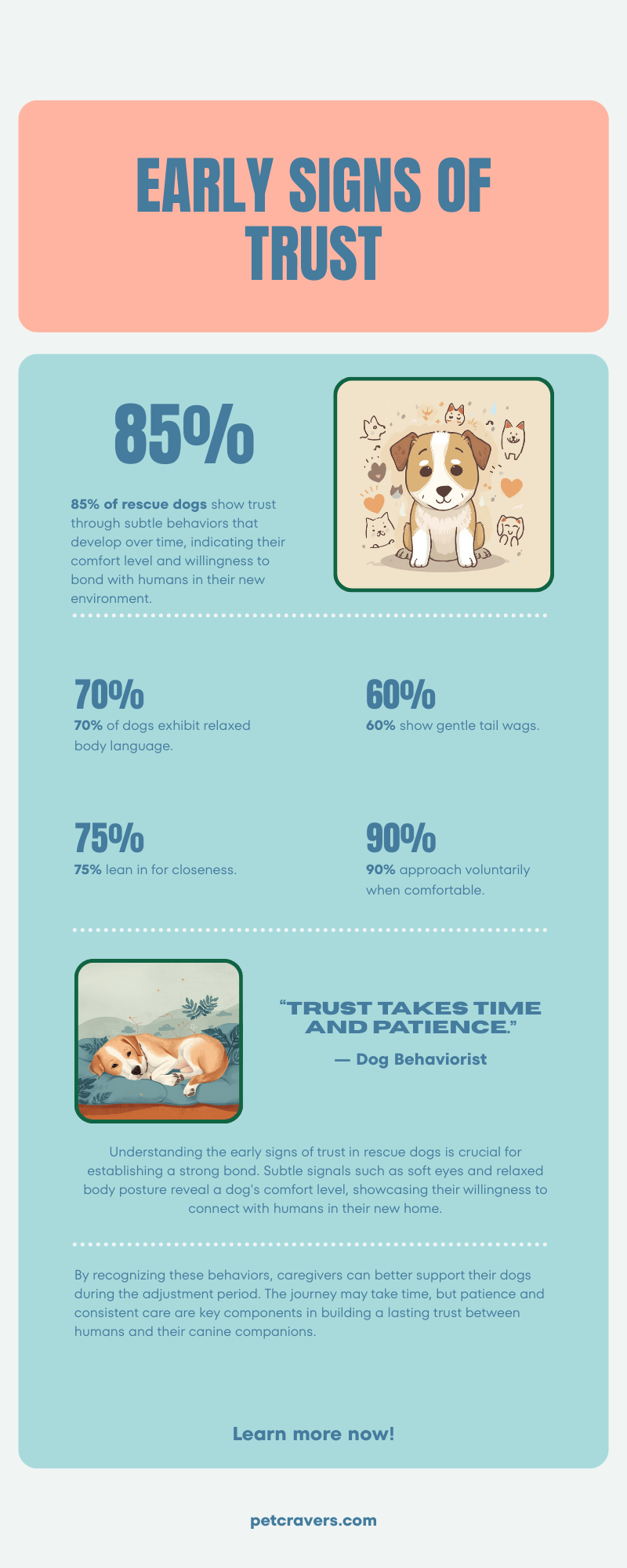
Once a rescue dog begins to feel safe, their trust is often revealed through subtle changes in both behavior and body language. Recognizing these early signals is key for caregivers, as responding positively reinforces trust and strengthens the bond. Every small action is a milestone in the dog’s emotional journey.
A. Physical Signals
Rescue dogs often communicate trust through body language. Some common physical signs include:
- Relaxed Body Posture: The dog may stop tensing up or holding themselves rigidly. Relaxed ears, loose muscles, and a soft gaze indicate growing comfort.
- Tail Movement: A tail held in a natural, wagging, or gently curved position suggests the dog is feeling safe. Even subtle wagging can be a huge sign of trust for a previously fearful dog.
- Leaning or Nudging: When a dog leans into your hand, body, or lap, it shows they are seeking contact and feel secure in your presence.
- Softening Eyes: A dog that averts staring or blinks slowly at you is signaling calmness and acceptance, a behavior often called “eye softening” in canine communication.
B. Behavioral Signals
In addition to physical cues, early behaviors often reflect a willingness to engage and connect:
- Approaching Voluntarily: If the dog chooses to come closer instead of retreating, it’s a strong sign of emerging trust.
- Accepting Treats or Praise: Taking treats gently from your hand or responding to praise without fear shows that the dog is associating you with positive experiences.
- Following Commands Willingly: A dog that begins to respond to basic commands demonstrates both cognitive engagement and confidence in your guidance.
- Seeking Attention or Play: Showing interest in toys, play, or physical affection signals that the dog feels safe enough to engage in joyful interactions.
C. Subtle Signs Matter
For rescue dogs, trust may appear in very small, almost imperceptible ways. Choosing to stay in the same room while you move around, allowing you to touch their fur briefly, or even just looking at you calmly can all indicate progress. Caregivers who notice and celebrate these small wins reinforce trust and encourage further bonding.
Recognizing early signs of trust is about paying close attention and responding appropriately. Encouragement, gentle praise, and patience help the dog understand that their comfort and safety are respected, paving the way for deeper emotional connection.
The Role of Positive Reinforcement
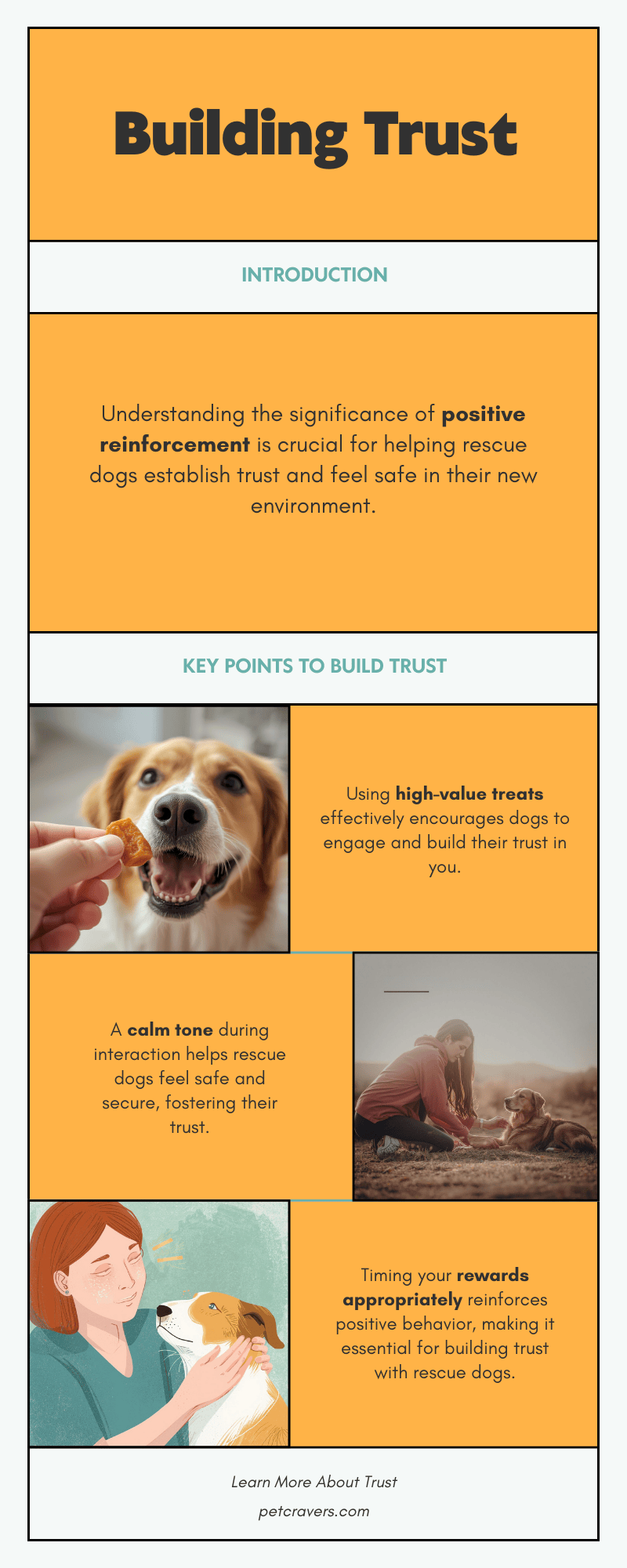
Positive reinforcement is one of the most effective tools for building trust with a rescue dog. By rewarding calm, confident, and friendly behavior, caregivers communicate that these actions are safe, desirable, and appreciated. Over time, this approach encourages the dog to repeat positive behaviors, creating a cycle of trust and confidence.
A. Rewarding Calm and Approachable Behavior
Every small step toward trust deserves recognition. For instance, if a dog allows you to gently pet them for the first time, or approaches you without hesitation, rewarding that behavior reinforces the idea that human interaction can be safe and enjoyable.
- Types of Rewards:
- Treats: High-value, healthy treats that the dog loves.
- Praise: Soft, gentle words and a calm tone.
- Physical Affection: Slow petting or gentle strokes if the dog is comfortable.
The key is timing—rewards should immediately follow the desired behavior so the dog can connect the action with the positive outcome.
B. Avoiding Punishment
Punishing fearful or hesitant behavior can be extremely damaging. Negative reactions—such as scolding, yelling, or forceful handling—can reinforce fear and slow the trust-building process. Instead, caregivers should focus on guiding the dog gently, redirecting unwanted behavior, and celebrating positive steps.
C. Gradual Socialization
Introducing a rescue dog to new people, pets, or environments should be done slowly and intentionally. Positive reinforcement plays a crucial role in this process:
- Rewarding calm interactions with new people.
- Allowing the dog to explore new spaces at their own pace.
- Using treats, praise, and gentle encouragement to associate new experiences with positive outcomes.
Gradual socialization ensures that the dog doesn’t feel overwhelmed, building confidence while reinforcing the sense that their world is safe and predictable.
Positive reinforcement is not just about treats—it’s about creating a consistent pattern of safety, encouragement, and reward. When applied thoughtfully, it helps a rescue dog feel secure and appreciated, laying the foundation for deeper trust and emotional connection.
First “Breakthrough Moments”
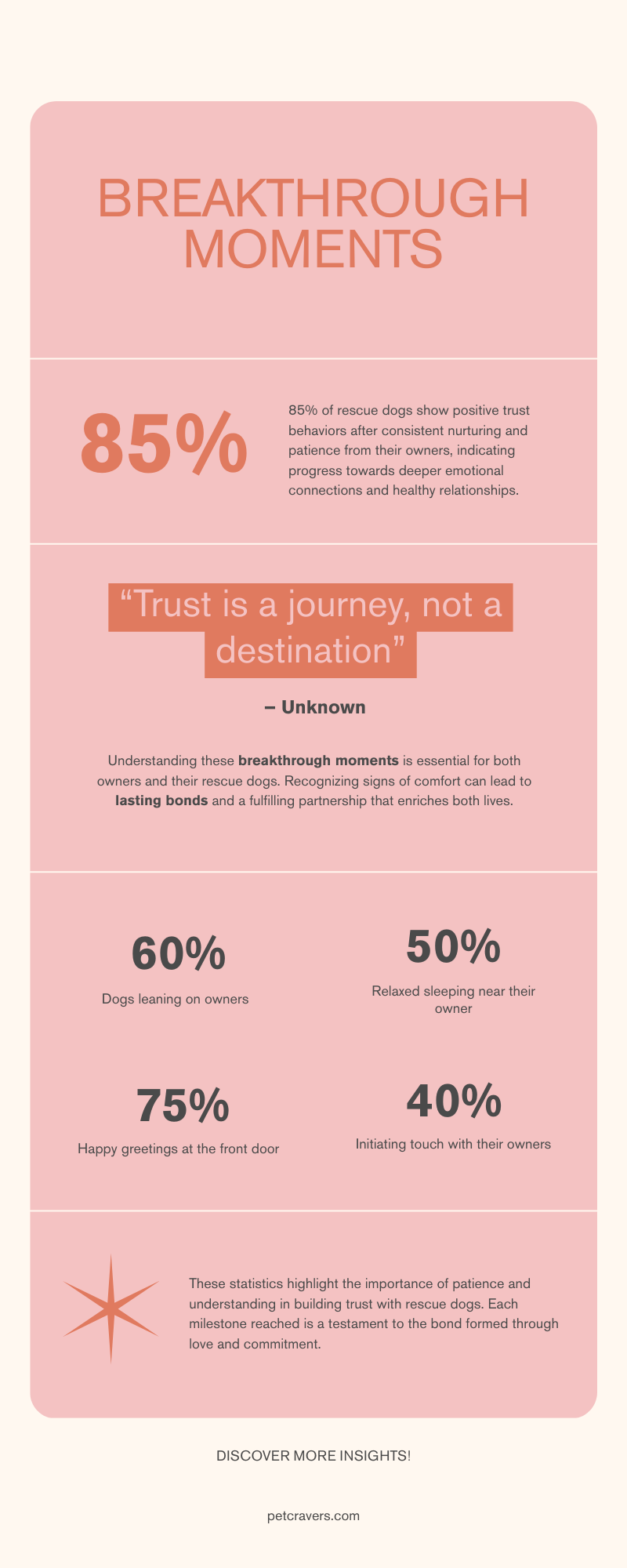
The journey to trust is filled with small victories, but certain moments stand out as clear signs that a rescue dog is beginning to truly open up. These “breakthrough moments” are deeply rewarding for caregivers, as they reflect genuine emotional progress and the formation of a bond built on safety and understanding.
A. Examples of Milestone Behaviors
- Sitting on Your Lap or Close Contact: A dog who chooses to sit near you or lean against you is demonstrating vulnerability in a positive way—a huge step in trust.
- Initiating Physical Contact: When a dog nudges your hand, rests a paw on you, or seeks gentle petting, they are actively seeking connection rather than avoiding it.
- Showing Excitement at Your Arrival: Tail wagging, playful bounces, or happy vocalizations when you enter the room indicate anticipation and positive emotional association.
- Relaxing Around You: A dog lying down comfortably nearby, exposing their belly, or closing their eyes in your presence shows that they feel safe and unthreatened.
B. Why These Moments Matter
These milestones are more than cute behaviors—they are the dog’s way of saying, “I trust you, and I feel safe with you.” For a dog who has experienced fear, unpredictability, or trauma, taking these steps requires courage and emotional effort.
Each breakthrough is also an opportunity for caregivers to reinforce trust: respond with calm praise, gentle touch, or a favorite treat. Acknowledging and celebrating these moments strengthens the bond, encourages repetition, and helps the dog understand that their trust is valued and respected.
C. Emotional Impact on the Caregiver
Witnessing a dog’s first true signs of trust can be profoundly moving. It represents the culmination of patience, consistency, and empathy. These moments validate the caregiver’s efforts and create a foundation for a lasting, loving relationship.
Common Mistakes to Avoid
Building trust with a rescue dog is a delicate process, and even well-meaning caregivers can unintentionally slow progress. Awareness of common mistakes helps prevent setbacks and ensures that each interaction contributes positively to the dog’s sense of safety and confidence.
A. Forcing Interactions Too Soon
One of the most frequent errors is expecting a dog to engage on your terms. Pushing a dog to be affectionate, play, or accept handling before they are ready can increase fear and resistance. It’s crucial to let the dog take the lead in initiating contact, giving them control over their environment and interactions.
B. Misreading Nervous Behavior as Aggression
Fear and anxiety often manifest as growling, snapping, or avoidance, which can be mistaken for aggression. Punishing these behaviors can reinforce the dog’s mistrust. Instead, caregivers should interpret them as signs of discomfort and respond with patience, understanding, and gentle redirection.
C. Inconsistency in Care or Routine
Rescue dogs thrive on predictability. Sudden changes in feeding times, walks, or daily routines can create confusion and stress, making the dog less likely to trust. Maintaining a consistent schedule reassures the dog that their world is stable and their needs will be met reliably.
D. Overstimulation or Rapid Socialization
Introducing too many people, pets, or new environments at once can overwhelm a rescue dog. Gradual exposure, coupled with positive reinforcement, ensures that socialization is a safe and enjoyable experience rather than a source of anxiety.
By avoiding these common mistakes, caregivers create an environment that supports trust, fosters emotional growth, and encourages positive interactions. Every step taken thoughtfully helps a rescue dog feel secure and confident, accelerating the journey toward a strong, lasting bond.
Encouraging Continued Trust
Building trust with a rescue dog is not a one-time achievement—it’s an ongoing process that requires consistency, patience, and reinforcement. Even after initial breakthroughs, dogs may still face moments of fear or hesitation, so maintaining and deepening trust is essential for a stable, loving relationship.
A. Building on Small Victories
Every step forward, no matter how minor, is significant. Whether your dog allowed a brief touch, followed you to a new room, or approached you for the first time, acknowledging these milestones reinforces the behavior. Celebrating small victories helps your dog understand that their trust is welcomed and valued, motivating them to continue engaging positively.
B. Maintaining Patience and Consistency
Consistency is key to sustaining trust. Maintaining regular routines for feeding, walks, playtime, and training provides a sense of predictability that keeps anxiety at bay. Patience is equally important; setbacks may occur, and the dog may retreat or hesitate, but a calm, steady presence reassures them that your relationship is dependable and safe.
C. Reinforcing Positive Behaviors
Use rewards such as treats, praise, or gentle affection to reinforce behaviors that indicate trust. Over time, these positive associations help the dog feel more confident and secure in your presence. It’s important to reward behaviors as they happen, so the dog connects their actions with positive outcomes.
D. Encouraging Independence Within Safety
While trust involves closeness, it also grows when a dog feels safe exploring independently. Allowing your dog to make choices—whether approaching you, exploring a new room, or interacting with toys—strengthens their confidence and reinforces the bond by showing that you respect their autonomy.
By continually nurturing trust with patience, reinforcement, and consistency, caregivers help rescue dogs transition from cautious survivors to confident companions. This ongoing effort ensures that trust is not just established—it is strengthened and maintained, forming the foundation for a lifelong, loving relationship.
Conclusion
Building trust with a rescue dog is a journey of patience, empathy, and consistent care. Every small step—from a gentle approach to a relaxed tail wag or a nudge for affection—signals progress and reflects the dog’s growing comfort and confidence. These moments, though sometimes subtle, are powerful indicators that trust is being established.
For caregivers, understanding the dog’s background, respecting boundaries, and providing a safe, predictable environment are essential foundations. Positive reinforcement, gradual socialization, and celebrating small victories further nurture trust, while avoiding common mistakes ensures that the bond strengthens rather than falters.
Ultimately, trust is not just about obedience or compliance—it’s an emotional connection built on safety, respect, and mutual understanding. By observing, responding, and supporting your rescue dog thoughtfully, you help them rediscover a sense of security, joy, and companionship. Every milestone, no matter how small, is a victory for both you and your dog, marking the beginning of a deep, lifelong bond.





Leave a Reply