 Skip to content
Introduction
Rescue dogs and dogs with traumatic pasts often live in a world filled with uncertainty and stress. Experiences such as neglect, abuse, abandonment, or sudden changes in environment can leave lasting emotional scars, making it difficult for these dogs to feel safe and secure in their new homes. Even simple daily activities—like feeding, walks, or social interaction—can sometimes trigger fear or anxiety if the dog lacks a reliable refuge.
Creating a safe space is a vital step in supporting the emotional recovery of traumatized dogs. A safe space is more than just a physical area; it is a sanctuary where dogs can retreat when feeling overwhelmed, decompress after stressful experiences, or simply rest without fear. These dedicated zones provide a sense of control and security, which is essential for rebuilding confidence, trust, and emotional stability.
In addition to providing a refuge, safe spaces play a critical role in complementing training, enrichment, and structured routines. When dogs know they have a reliable space to return to, they are more willing to engage with their environment, learn new behaviors, and explore social interactions with curiosity instead of fear.
In this post, we will explore why safe spaces are essential for traumatized dogs, how to design one effectively, ways to encourage your dog to use it, and how it can be integrated with daily routines and training. By understanding and implementing safe spaces, owners can help their dogs feel secure, reduce anxiety, and gradually thrive in their new environment.
Understanding the Need for a Safe Space
Traumatized or rescue dogs often carry emotional scars that affect how they perceive the world. Their past experiences may make them hyper-alert, anxious, or fearful, and even ordinary situations can feel threatening. Creating a safe space addresses these challenges by providing a predictable and comforting environment where the dog can feel secure.

How Trauma Affects a Dog’s Perception
- Heightened Stress Responses: Dogs with traumatic pasts may overreact to sounds, movements, or sudden changes in their environment.
- Fear of the Unknown: Unpredictable schedules, unfamiliar people, or new surroundings can trigger anxiety or defensive behaviors.
- Difficulty Trusting Humans: Past neglect or abuse may make dogs wary of interactions, requiring gradual reassurance and patience.
Signs a Dog Needs a Safe Space
- Hiding or Avoidance: Frequently retreating under furniture, behind doors, or away from people.
- Excessive Nervousness: Panting, pacing, whining, or trembling in response to everyday events.
- Reactive Behavior: Growling, barking, or snapping when startled or approached.
- Reluctance to Explore: Hesitation to engage with new environments, toys, or social interactions.
Emotional and Behavioral Benefits of Safe Spaces
- Reduces Anxiety: Provides a predictable environment where the dog can relax and regain composure.
- Supports Recovery: Helps traumatized dogs process experiences without feeling overwhelmed.
- Builds Confidence: A secure refuge allows dogs to explore other areas more freely, knowing they have a safe retreat.
- Strengthens Trust: Gradually associating the safe space with positive experiences helps dogs feel more comfortable around humans.
By understanding the need for a safe space, owners can take proactive steps to create an environment that addresses a dog’s emotional needs. This foundation is critical for fostering recovery, encouraging exploration, and supporting long-term confidence and well-being.
Characteristics of an Effective Safe Space
Creating a safe space for a traumatized dog requires more than simply designating a corner of the home. The environment should be thoughtfully designed to promote comfort, security, and emotional healing. Below are the key characteristics that make a safe space effective.

1. Quiet and Low-Stimulation Environment
- Minimize Noise and Activity: Choose an area away from loud household appliances, foot traffic, or frequent commotion.
- Reduce Visual Distractions: Avoid locations near windows with heavy street activity or areas where other pets or children frequently play.
- Create Calm Atmosphere: Soft lighting, muted colors, and gentle background sounds (like calming music) can enhance relaxation.
2. Comfortable Bedding and Shelter
- Soft, Supportive Bedding: Provide a cushioned bed or blanket that allows the dog to rest comfortably.
- Cozy Enclosure: A crate, covered bed, or small corner can create a sense of protection and privacy.
- Temperature Control: Ensure the space is warm in winter and cool in summer to maintain comfort.
3. Privacy and Security
- Options to Retreat: Dogs should have the ability to hide or withdraw without feeling trapped.
- Safe Entry and Exit: Ensure the dog can enter and leave the area at will, reinforcing a sense of control.
- Avoid Forced Confinement: The space should never be associated with punishment or correction.
4. Familiar Scents
- Owner’s Scent: Include items like a worn t-shirt or blanket with your scent to provide reassurance.
- Favorite Toys or Comfort Objects: Familiar items help the dog associate the space with positive feelings.
- Consistent Environment: Keep the layout and items relatively unchanged to maintain predictability.
5. Accessibility and Boundaries
- Easy to Reach: The dog should be able to access the safe space whenever needed.
- Clear Boundaries: Define the area so the dog understands it is their personal sanctuary, separate from high-activity zones.
- Flexible Size: The space should be large enough for comfort but small enough to feel secure.
By incorporating these characteristics, owners can design a safe space that meets the emotional and physical needs of traumatized dogs. A well-crafted sanctuary allows dogs to feel protected, relax, and gradually gain confidence to explore the world beyond their retreat.
Creating a Safe Space at Home
Designing a safe space for a traumatized dog involves careful planning to ensure it is inviting, secure, and supportive of emotional healing. A thoughtfully created sanctuary provides the dog with a refuge where they can decompress, feel protected, and gradually rebuild confidence.
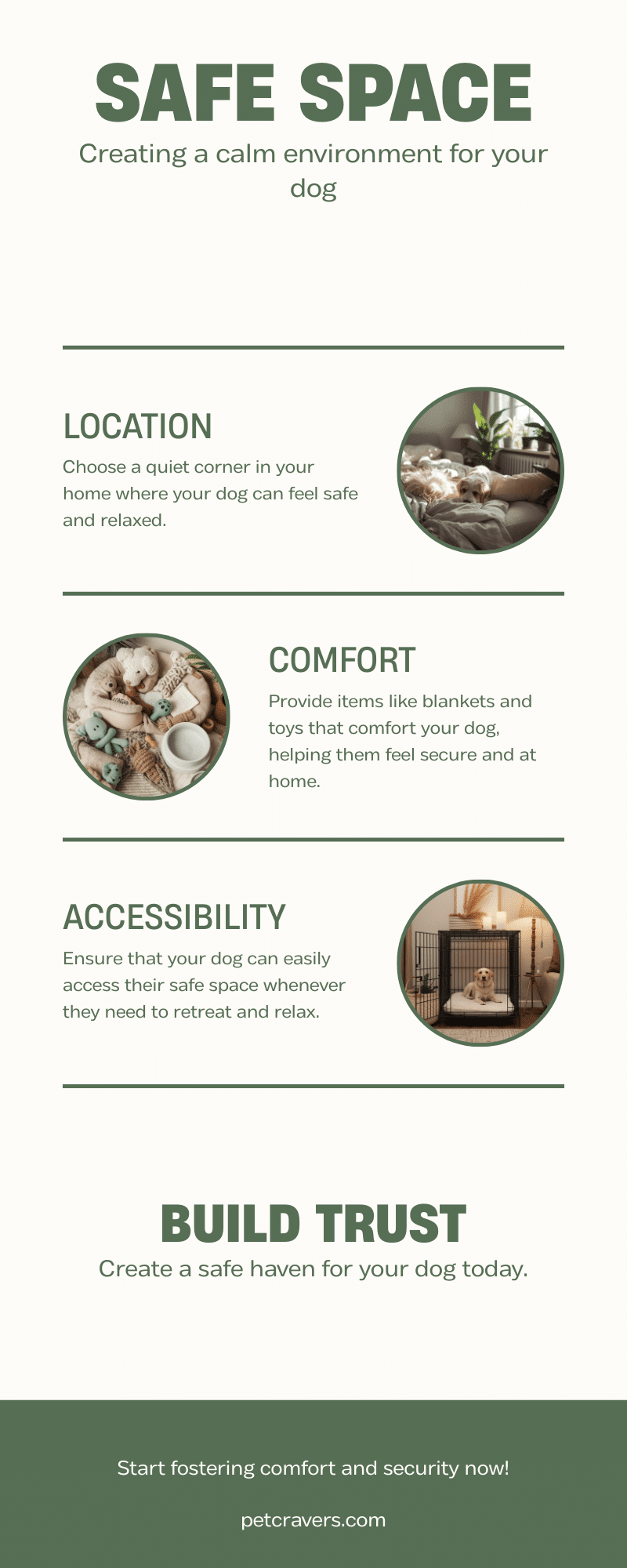
Choosing the Right Location
- Quiet Corners: Select an area of the home away from high-traffic zones, noisy appliances, or frequent interruptions.
- Accessible Yet Private: Ensure the dog can reach the space easily but still has privacy from family activity or other pets.
- Safe from Hazards: Remove items that could cause injury or stress, such as wires, small objects, or slippery surfaces.
Using Crates, Gates, or Designated Corners
- Crates as Comfort Zones: When used positively, a crate can provide a cozy and secure den-like environment. Always avoid using it for punishment.
- Gated Areas: Baby gates or pet pens can create a defined safe area while allowing visibility of the surroundings.
- Corners or Nooks: Even an empty corner with a bed or blankets can become a comforting sanctuary for a traumatized dog.
Arranging Bedding and Comfort Items
- Soft Bedding: Provide blankets, dog beds, or cushions to encourage relaxation and rest.
- Favorite Toys: Include chew toys, plushies, or interactive toys that the dog associates with positive experiences.
- Owner Scent Items: Place a worn t-shirt or blanket to add familiarity and reassurance.
Ensuring Accessibility While Maintaining Boundaries
- Voluntary Use: Allow the dog to enter and exit the space on their own terms to reinforce control and autonomy.
- Clear Boundaries: Teach family members and other pets to respect the area as the dog’s sanctuary.
- Gradual Introduction: Encourage the dog to explore the space slowly, rewarding calm and positive interactions.
Creating a Calming Atmosphere
- Lighting and Sound: Soft lighting and minimal noise help promote relaxation. Calming music or white noise can be beneficial.
- Temperature Control: Ensure the space remains comfortable regardless of season, avoiding extremes in heat or cold.
- Consistency: Keep the layout and items in the safe space relatively unchanged to reinforce predictability.
By carefully selecting the location, arranging bedding and comfort items, and ensuring accessibility, owners can create a safe space that meets the unique needs of a traumatized dog. A well-designed home sanctuary not only provides immediate comfort but also supports long-term emotional recovery and confidence-building.
Encouraging Use of the Safe Space
Creating a safe space is only effective if the dog learns to use it willingly and associates it with comfort, security, and positive experiences. Encouragement should focus on voluntary use, positive reinforcement, and patience, rather than forcing the dog into the area.
Avoid Forcing the Dog
- Respect Autonomy: Never push or physically place the dog into the safe space, as this can create negative associations.
- Gradual Introduction: Allow the dog to explore the area at their own pace, rewarding small steps of voluntary entry.
- Observe Body Language: Signs of hesitation or stress indicate the need to slow down and offer reassurance.
Use Positive Reinforcement
- Treats and Praise: Reward the dog for entering or spending time in the safe space calmly.
- Interactive Toys: Place favorite toys or enrichment items inside to make the space inviting.
- Calm Voice and Presence: Gentle encouragement helps the dog feel safe without pressure.
Allow Natural Retreats
- Respect the Dog’s Timing: Encourage the dog to use the safe space when they feel overwhelmed, tired, or anxious.
- Avoid Punishment: The safe space should never be associated with correction or negative experiences.
- Observe Patterns: Note when and why the dog seeks the safe space to better understand triggers and comfort needs.
Integrate Safe Space into Daily Routine
- Scheduled Breaks: Incorporate optional quiet periods in the dog’s day to encourage use without forcing it.
- After Stressful Events: Encourage retreat after walks, training, or interactions that may be overwhelming.
- Consistency and Predictability: Regularly available safe space reinforces trust and emotional security.
By focusing on voluntary use, positive reinforcement, and natural retreats, owners can help their dogs associate the safe space with calmness, comfort, and safety. Over time, the dog learns to view the sanctuary as a personal haven where they can relax, decompress, and feel fully secure.
Integrating Safe Spaces with Training and Routine
Safe spaces are most effective when they complement a dog’s daily routine and training. By combining a structured schedule with a dedicated sanctuary, owners provide consistency, predictability, and emotional support, which are essential for traumatized dogs.
Complementing Daily Routines
- Scheduled Quiet Time: Integrate calm periods in the dog’s day where they can voluntarily retreat to the safe space.
- Post-Activity Retreat: Encourage use after walks, play sessions, or training exercises to help the dog decompress and regulate emotions.
- Predictable Environment: Keeping the safe space consistently available reinforces security and reduces anxiety related to uncertainty.
Supporting Training and Behavior Goals
- Positive Reinforcement Training: Use the safe space as a reward for calm, confident behavior or successful completion of tasks.
- Safe Retreat During Training: Dogs who are overwhelmed or anxious during training can take breaks in their sanctuary to reset and refocus.
- Building Trust: Integrating the safe space with training teaches the dog that they have control over their environment, fostering independence and confidence.
Encouraging Exploration Beyond the Safe Space
- Gradual Exposure: With the safe space as a fallback, dogs can explore new environments or experiences at a comfortable pace.
- Confidence Building: Knowing a secure retreat is available reduces stress, encouraging curiosity and engagement with their surroundings.
- Reinforcing Positive Associations: By pairing new experiences with the safety of the sanctuary, dogs learn that the world can be safe and predictable.
Balancing Routine and Flexibility
- Adapt to Emotional Needs: Allow the dog to use the safe space as needed, even if it occasionally interrupts the planned schedule.
- Maintain Core Consistency: Keep meal times, walks, and play sessions predictable while allowing optional quiet time in the sanctuary.
- Monitor Progress: Observe how integration of the safe space influences behavior, stress levels, and willingness to engage in training.
By combining safe spaces with structured routines and training, owners provide a holistic approach to supporting traumatized dogs. The sanctuary acts as both a refuge and a foundation for learning, helping dogs develop trust, emotional resilience, and confidence in their new environment.
Signs Your Dog Feels Secure in Their Safe Space
Once a safe space is established and the dog has had time to explore it, there are clear indicators that the dog is comfortable, relaxed, and benefiting from the sanctuary. Recognizing these signs helps owners gauge the effectiveness of the space and the dog’s emotional progress.

Relaxed Body Language
- Calm Posture: Lying down, stretched out, or curled comfortably without tension in muscles.
- Soft Eyes and Ears: Eyes appear relaxed, and ears are not pinned back or overly alert.
- Tail Behavior: Gentle wagging or a relaxed tail indicates contentment rather than anxiety or fear.
Voluntary Use of the Space
- Seeking Refuge on Their Own: The dog enters the safe space without being prompted when stressed, tired, or overwhelmed.
- Consistent Visits: Regular use of the sanctuary demonstrates trust and a sense of security.
- Independence: Retreating to the safe space to relax without needing constant reassurance from the owner.
Improved Behavior and Emotional Stability
- Reduced Anxiety: Fewer signs of nervousness, pacing, whining, or trembling outside the safe space.
- Calmer Reactions to Stimuli: The dog shows less reactive behavior when encountering new people, pets, or environments.
- Positive Engagement: Willingness to explore surroundings or engage in play and training, knowing a secure retreat is available.
Enhanced Confidence
- Exploration: The dog ventures out from the safe space to explore, eat, or interact confidently.
- Social Comfort: Increased comfort around humans, other pets, or in new settings.
- Resilience: Ability to recover quickly from stress or minor triggers by returning to their safe space and then re-engaging with the environment.
Recognizing these signs indicates that the dog views their sanctuary as a secure, comforting refuge. Over time, a well-utilized safe space supports emotional recovery, encourages exploration, and builds the foundation for trust, confidence, and long-term well-being.
Adjusting the Safe Space as Needed
As a traumatized dog gains confidence and becomes more comfortable in their environment, their needs and interaction with the safe space may change. Adjusting the sanctuary thoughtfully ensures it continues to provide comfort while supporting growth, exploration, and emotional resilience.
Modifying the Area Gradually
- Increase Accessibility: Allow the dog to move more freely between the safe space and other areas of the home as confidence grows.
- Add Comfort Items: Introduce new blankets, toys, or enrichment objects to keep the space engaging while maintaining familiarity.
- Adjust Layout: Reorganize slightly if needed to accommodate growth or new behaviors, ensuring the dog still feels secure.
Encouraging Exploration Beyond the Space
- Controlled Exposure: Gradually reduce dependence on the safe space by encouraging the dog to explore other areas while keeping the sanctuary available as a fallback.
- Positive Reinforcement: Reward confident exploration and calm behavior outside the safe space to reinforce independence.
- Balance Comfort and Growth: Maintain a secure retreat while encouraging challenges that build confidence and curiosity.
Observing Emotional and Behavioral Cues
- Monitor Stress Levels: Watch for signs of anxiety, avoidance, or fear to determine if adjustments are needed.
- Celebrate Progress: Note milestones such as voluntary exploration, calm interaction with new environments, or improved social behavior.
- Tailor to Individual Needs: Every dog progresses at a different pace; adjust the space and routines accordingly.
Maintaining a Sense of Safety
- Consistency Matters: Even as changes are made, preserve key elements that communicate security and predictability.
- Safe Retreat Remains Available: Ensure the dog always has the option to use the sanctuary whenever needed.
- Avoid Negative Associations: Never use the safe space for punishment or stressful training, keeping it a purely positive environment.
By thoughtfully adjusting the safe space as the dog grows and develops, owners can support a balance between emotional security and confident independence. A flexible, well-managed sanctuary ensures that traumatized dogs continue to feel safe while gradually building the courage to explore, learn, and thrive in their new home.
Troubleshooting Common Challenges
While creating a safe space can greatly benefit traumatized dogs, owners may encounter challenges along the way. Understanding potential issues and knowing how to address them ensures the sanctuary remains effective and continues to support the dog’s emotional well-being.
Over-Dependence on the Safe Space
- Signs: The dog refuses to leave the space, avoids interactions, or becomes anxious outside the sanctuary.
- Solutions: Gradually encourage short periods outside the safe space with positive reinforcement, interactive play, or training sessions. Reward calm behavior away from the sanctuary to build confidence.
Avoiding Association with Punishment
- Problem: Dogs may develop negative associations if the space is used for discipline or confinement.
- Solutions: Always keep the safe space positive. Use it for comfort, relaxation, and voluntary retreats. Never scold or punish the dog inside this area.
Multiple Dogs in the Household
- Problem: Competition or territorial disputes may arise if more than one dog shares the same sanctuary.
- Solutions: Provide separate safe spaces for each dog to prevent stress and conflicts. Ensure each dog has its own sanctuary with bedding and comfort items.
Reluctance to Use the Space
- Signs: The dog avoids entering, shows hesitation, or seems fearful of the area.
- Solutions: Use gradual introduction techniques, placing favorite toys or treats inside. Spend time near the space without forcing entry, allowing the dog to explore at their own pace.
Disruptions in Routine
- Problem: Changes in household schedule, visitors, or travel may affect the dog’s sense of security.
- Solutions: Maintain core elements of the routine and ensure the safe space remains accessible. Use familiar scents, bedding, or toys to provide continuity.
Stress During Training or Socialization
- Problem: Dogs may become overwhelmed when exposed to new training exercises, people, or pets.
- Solutions: Encourage retreats to the safe space for calming breaks. Gradually reintroduce experiences using positive reinforcement and controlled exposure.
By anticipating and addressing these common challenges, owners can ensure that the safe space continues to serve as a reliable sanctuary. Thoughtful problem-solving and consistent positive reinforcement help traumatized dogs feel secure, build confidence, and gradually adapt to their environment.
Conclusion
Creating a safe space is a crucial step in helping traumatized and rescue dogs feel secure, build confidence, and recover emotionally. A well-designed sanctuary offers more than just a comfortable area—it provides a predictable, calming environment where dogs can retreat when overwhelmed, decompress after stressful experiences, and gradually regain trust in their surroundings and human companions.
Safe spaces work best when thoughtfully integrated with daily routines, training, and enrichment activities. By maintaining consistency, offering positive reinforcement, and respecting the dog’s autonomy, owners create a supportive framework that encourages exploration, learning, and emotional resilience. Over time, dogs begin to associate their sanctuary with safety, comfort, and positive experiences, which helps reduce anxiety and fosters confident behavior both inside and outside the safe space.
Challenges may arise, such as over-dependence, reluctance to use the space, or adjustments required as the dog gains confidence. Patience, observation, and gentle guidance are essential in addressing these challenges while keeping the sanctuary a positive, stress-free environment. In some cases, consulting a professional trainer or veterinary behaviorist can provide additional strategies for dogs with more complex needs.
Ultimately, a safe space is more than a physical location—it is a foundation for healing and trust. By investing time and care into creating and maintaining a secure sanctuary, owners empower their traumatized dogs to feel safe, develop resilience, and thrive in their new homes. The result is a confident, emotionally balanced companion capable of forming strong, trusting bonds with their human family.





Leave a Reply