
Introduction
Rescue dogs often arrive in their new homes carrying emotional baggage from past trauma, neglect, or inconsistent care. Adjusting to a new environment can be overwhelming, leaving these dogs anxious, fearful, or uncertain about what to expect. For many rescue dogs, even simple daily events—mealtimes, walks, or social interactions—can trigger stress if their environment lacks predictability.
This is where routine becomes a powerful tool. A well-structured daily schedule provides a sense of security, helping rescue dogs understand their surroundings and anticipate positive experiences. Consistent routines reduce anxiety, encourage exploration, and foster trust between dog and owner.
Beyond providing structure, routines also support confidence-building and emotional resilience. When a rescue dog knows what to expect and when, they are more likely to engage in play, training, and social interactions without fear. Over time, these predictable patterns help transform uncertainty into comfort, allowing the dog to gradually adjust to their new home.
In this post, we will explore why routine matters for rescue dogs, how to implement a structured schedule, the benefits it provides, and strategies to maintain flexibility while supporting your dog’s emotional growth. By focusing on consistency and gradual adaptation, owners can help their rescue dogs feel safe, secure, and confident in their new environment.
Why Routine Matters for Rescue Dogs
For rescue dogs, the world can feel unpredictable and overwhelming. Many have experienced inconsistent care, neglect, or traumatic events, leaving them anxious and uncertain about what to expect from people and their environment. Establishing a routine provides a framework of predictability that helps dogs feel safe, supported, and in control.
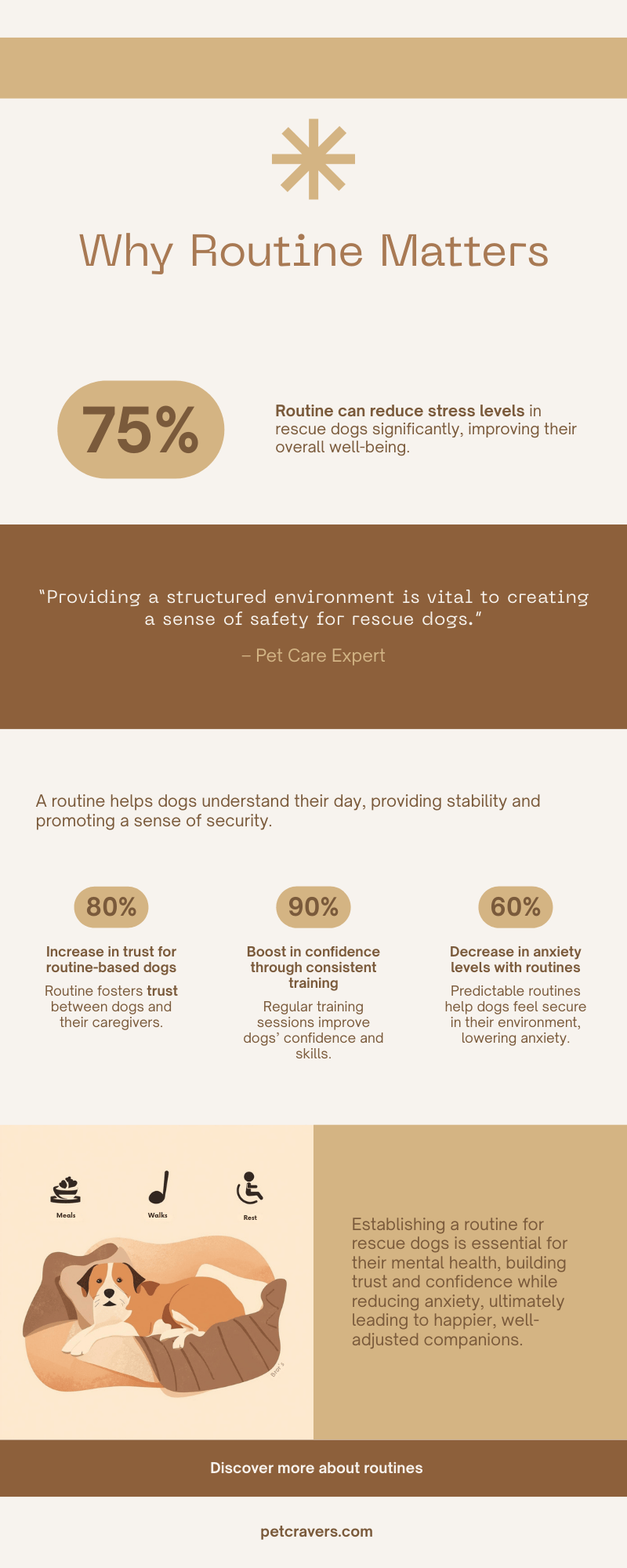
Emotional Security Through Predictability
- Reduces Anxiety: Knowing when meals, walks, and playtime occur helps the dog feel secure. Predictable routines minimize fear of the unknown and reduce stress-related behaviors.
- Builds Trust: Consistency in daily interactions and activities communicates reliability. Dogs learn to trust that their needs will be met, strengthening the bond with their owner.
- Encourages Confidence: Predictable environments allow dogs to focus on learning and exploration rather than constantly scanning for potential threats.
How Inconsistent Environments Affect Rescue Dogs
- Fear and Stress: Sudden changes in daily schedules, feeding, or interactions can trigger anxiety, leading to withdrawal or defensive behaviors.
- Behavioral Challenges: Unpredictability may exacerbate fear-based aggression, excessive barking, or destructive behaviors.
- Difficulty Adapting: Dogs that are used to erratic routines may struggle to adjust to a home with inconsistent signals or expectations.
The Role of Routine in Adjustment
- Provides a stable foundation for introducing new experiences.
- Helps the dog anticipate and engage with positive experiences in a controlled manner.
- Supports emotional recovery by creating an environment where the dog feels understood and secure.
By understanding the importance of routine, owners can create a structured, supportive environment that addresses the unique challenges rescue dogs face. Predictable patterns reduce stress, build confidence, and make it easier for dogs to adjust to their new home, paving the way for long-term emotional stability and trust.
Key Elements of a Daily Routine
Creating a structured daily routine is essential for helping rescue dogs feel safe, secure, and confident. A consistent schedule provides predictability, reduces anxiety, and reinforces positive behaviors. Below are the key elements to focus on when establishing a routine for your rescue dog.
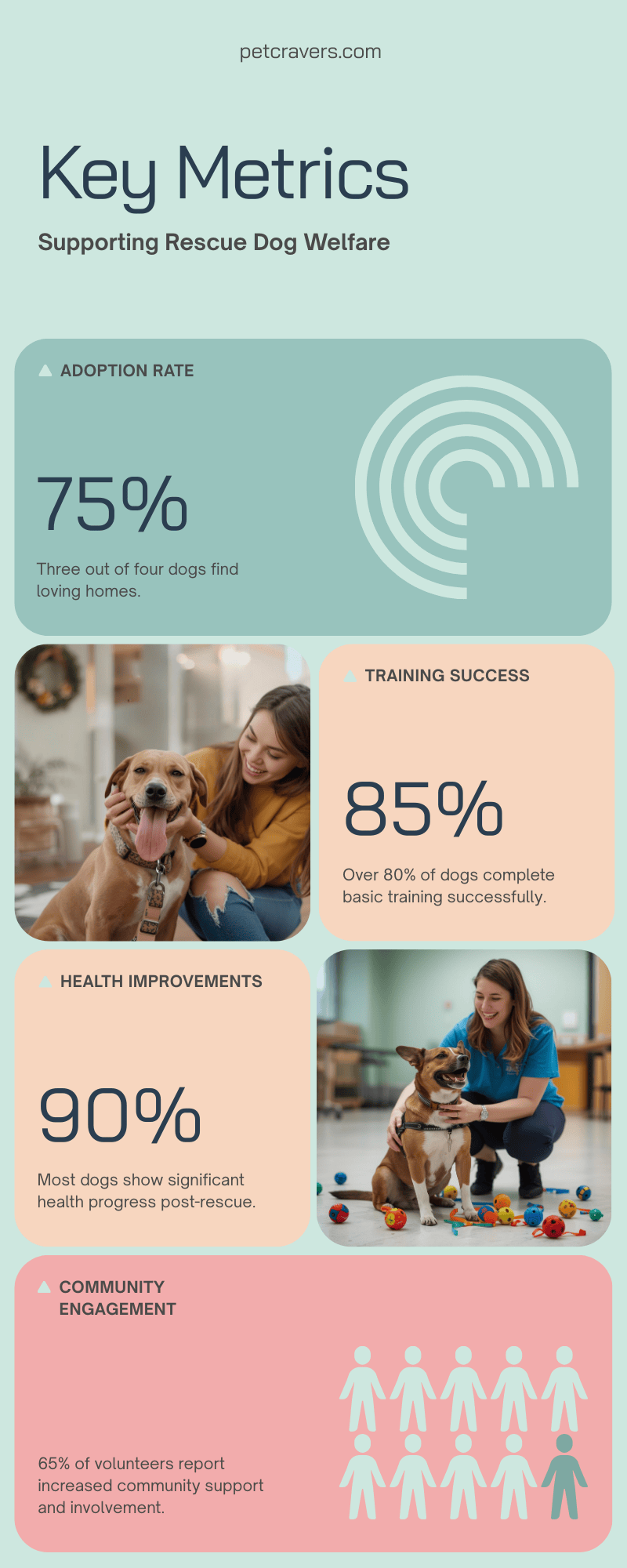
1. Feeding Schedule
- Consistency is Key: Feed your dog at the same times each day to create predictability and security.
- Portion Control and Nutrition: Balanced meals not only support physical health but also contribute to emotional well-being.
- Positive Associations: Pair feeding with gentle interaction and praise to reinforce trust and calm behavior.
2. Exercise and Walks
- Daily Physical Activity: Regular walks and play sessions help release pent-up energy, reduce stress, and prevent destructive behaviors.
- Mental Stimulation: Walks offer opportunities for the dog to explore safely, boosting confidence and curiosity.
- Predictable Timing: Consistent walk schedules provide structure, allowing the dog to anticipate and enjoy these activities.
3. Training and Mental Stimulation
- Short, Regular Sessions: Consistent training reinforces desired behaviors and helps the dog understand expectations.
- Positive Reinforcement: Reward-based training encourages learning and strengthens the human-dog bond.
- Cognitive Challenges: Puzzle toys, scent games, and obedience exercises keep the dog mentally engaged while building confidence.
4. Rest and Sleep Patterns
- Safe, Quiet Spaces: Ensure your dog has a designated area for rest, free from distractions or stressors.
- Consistent Rest Times: Regular sleep patterns help regulate mood and emotional stability.
- Observation: Pay attention to signs of fatigue or overstimulation, adjusting rest periods as needed.
5. Social Interaction
- Controlled Exposure: Introduce your dog to family members, other pets, or new environments gradually to prevent overwhelm.
- Positive Reinforcement: Reward calm, confident social behavior to encourage continued progress.
- Routine Social Opportunities: Regular interactions help normalize social behavior and reduce anxiety in new situations.
By incorporating these elements into a daily routine, owners provide a structured and predictable environment that addresses the emotional and behavioral needs of rescue dogs. Consistency across feeding, exercise, training, rest, and social interactions establishes a foundation for emotional security, enabling the dog to adjust more comfortably to their new home.
Gradual Implementation of Routine
Introducing a structured routine to a rescue dog should be a gradual, thoughtful process. Many rescue dogs may feel overwhelmed by sudden changes, so a step-by-step approach ensures the dog feels safe, confident, and able to adapt comfortably.
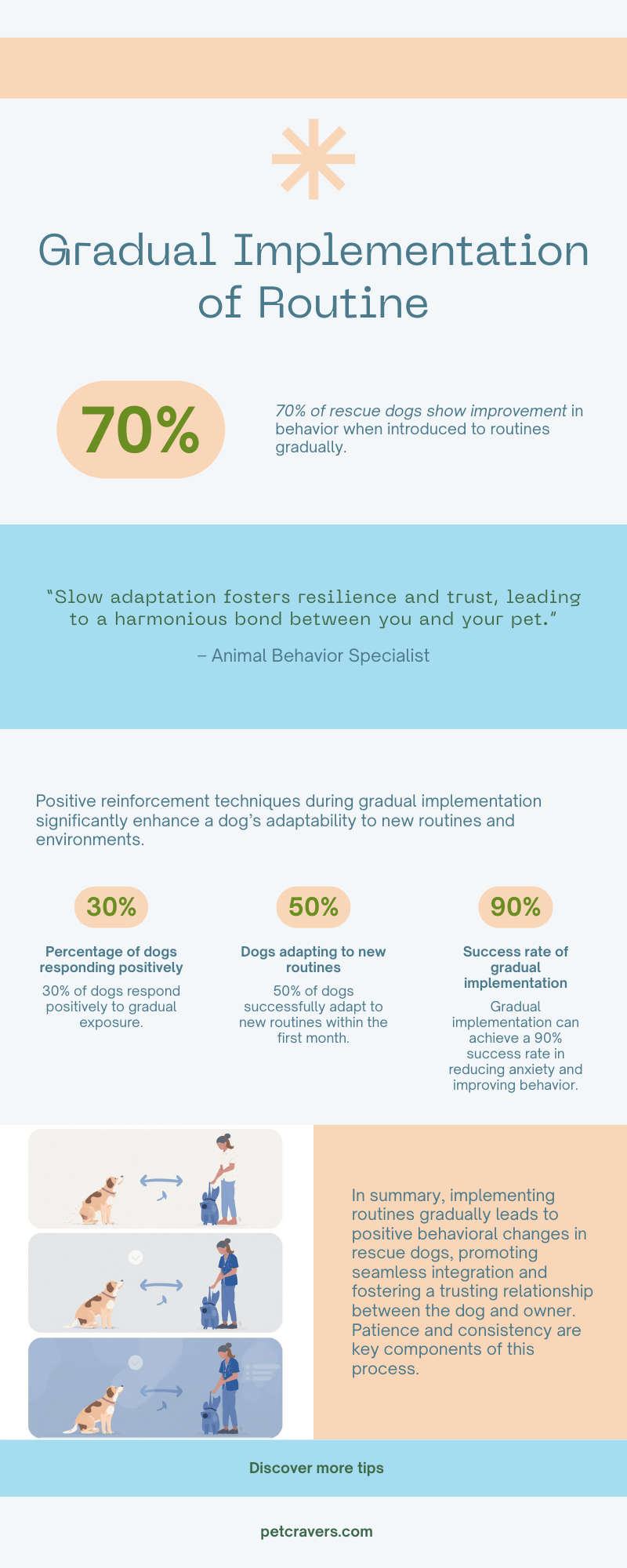
Start Small
- Focus on Key Activities First: Begin with one or two predictable elements, such as feeding times or short walks.
- Observe Reactions: Pay attention to your dog’s body language and behavior to gauge comfort levels.
- Celebrate Early Wins: Even small compliance or engagement with a routine element is a positive step.
Introduce Incremental Changes
- Add Activities Gradually: Once your dog is comfortable with the initial routine, slowly incorporate training sessions, playtime, or social interactions.
- Monitor Stress Signals: Watch for signs of anxiety, such as pacing, whining, or avoidance. Slow the pace if necessary to prevent overwhelm.
- Consistency Builds Confidence: Repetition and predictability help the dog internalize the routine, reducing fear and enhancing trust.
Be Patient and Flexible
- Adjust to the Dog’s Needs: Each dog is unique; some may adapt quickly, while others require more time.
- Maintain Core Consistency: Keep meal times, exercise, and rest periods consistent, while allowing minor variations to suit your dog’s comfort.
- Reward Adaptation: Positive reinforcement for following the routine reinforces the dog’s sense of security and encourages continued engagement.
Gradual implementation ensures that the routine becomes a source of comfort rather than stress. By introducing structure slowly and thoughtfully, owners help rescue dogs adapt confidently, creating a predictable environment that supports emotional stability and long-term adjustment.
Benefits of Routine
A consistent routine provides numerous physical, emotional, and behavioral benefits for rescue dogs. By establishing predictable patterns, owners can help their dogs feel safe, reduce anxiety, and encourage positive growth.

1. Reduces Fear and Anxiety
- Predictable schedules help dogs anticipate daily events, minimizing stress caused by uncertainty.
- Dogs learn that meals, walks, and playtime occur reliably, creating a sense of safety.
- Reduced anxiety leads to calmer behavior, fewer panic responses, and decreased fear-based aggression.
2. Builds Confidence
- Knowing what to expect allows dogs to explore their environment more freely.
- Confidence grows through repeated positive experiences within a structured routine.
- Small successes, like approaching new areas or interacting calmly with people, reinforce trust and emotional resilience.
3. Supports Emotional Stability
- Consistent routines help dogs regulate their mood and energy levels.
- Predictable rest and sleep schedules promote mental and physical recovery.
- Dogs feel secure in their environment, reducing stress-related behaviors like destructive chewing or excessive barking.
4. Strengthens the Human-Dog Bond
- Routine interactions, such as walks, training, and play, build trust between dog and owner.
- Consistency demonstrates reliability, encouraging the dog to rely on and engage with their human family.
- Positive, structured interactions deepen emotional connection and mutual understanding.
5. Reinforces Training and Positive Behaviors
- Regular schedules provide consistent opportunities for training reinforcement.
- Predictable routines help dogs understand expectations and learn desired behaviors more effectively.
- Each small success contributes to long-term behavioral improvement and confidence.
By implementing a structured daily routine, owners provide a stable environment that nurtures a rescue dog’s physical, emotional, and behavioral well-being. The benefits of routine are far-reaching, helping dogs adjust more smoothly, build confidence, and thrive in their new home.
Signs Your Dog Benefits from Routine
Observing your rescue dog’s behavior can provide clear indicators that a consistent routine is helping them adjust and feel secure. Recognizing these signs allows owners to reinforce positive patterns and continue supporting their dog’s emotional growth.
1. Calmness During Previously Stressful Situations
- The dog reacts less anxiously to events that previously caused fear, such as household noises, visitors, or traffic.
- Reduced pacing, whining, or trembling indicates growing emotional stability.
2. Predictable Engagement in Daily Activities
- The dog begins to anticipate mealtimes, walks, and play sessions with calm excitement rather than stress or panic.
- Willing participation in training sessions or enrichment activities shows increasing trust and confidence.
3. Increased Willingness to Explore
- The dog gradually ventures into new areas of the home, yard, or neighborhood.
- Signs of curiosity, such as sniffing new objects or interacting with new people, indicate comfort with the environment.
4. Positive Body Language
- Relaxed posture, soft eyes, wagging tail, and a comfortable demeanor reflect emotional security.
- Reduced signs of fear, such as crouching, tail-tucking, or avoidance, show that the dog feels safe within the routine.
5. Improved Social Interaction
- The dog engages more confidently with family members, other pets, or friendly strangers.
- Calm greetings, willingness to play, and appropriate social cues demonstrate trust and comfort.
6. Reduced Behavioral Challenges
- Decreased destructive behavior, excessive barking, or compulsive actions indicate that stress levels are lowering.
- Consistent routines help the dog regulate emotions, leading to more predictable and positive behaviors.
Recognizing these signs confirms that the routine is effective in supporting your rescue dog’s adjustment. It also provides motivation for owners to maintain consistency while gradually expanding experiences, fostering continued confidence and emotional well-being.
Flexibility Within Routine
While consistency is crucial for helping rescue dogs feel secure, flexibility within a routine is equally important. Dogs, especially those with a history of trauma, may need occasional adjustments to prevent stress, boredom, or frustration. Balancing predictability with adaptability ensures the routine remains a source of comfort rather than pressure.
Why Flexibility Matters
- Prevents Overwhelm: Strict, rigid schedules may cause anxiety if the dog cannot keep up or feels pressured.
- Encourages Resilience: Occasional variation teaches dogs to adapt safely to new experiences while maintaining trust in their environment.
- Maintains Engagement: Flexibility keeps routines enjoyable and prevents boredom, making dogs more willing to participate in daily activities.
How to Incorporate Flexibility
- Adjust Timing When Necessary
- Shift walks, meals, or training sessions slightly when life circumstances change, ensuring minimal disruption.
- Avoid sudden, drastic changes that might confuse or stress the dog.
- Introduce Variety in Activities
- Change walking routes, offer new toys, or vary enrichment games to stimulate curiosity.
- Keep core elements consistent while adding small variations to encourage learning and adaptability.
- Adapt to Your Dog’s Emotional State
- Observe your dog’s cues; if they appear anxious, tired, or overstimulated, modify the routine accordingly.
- Prioritize mental and emotional well-being over strict adherence to the schedule.
- Use Positive Reinforcement During Changes
- Reward calm and confident behavior when introducing variations in routine.
- Reinforce that even minor changes can result in positive outcomes, helping the dog trust in their adaptability.
Benefits of Flexible Routine
- Maintains emotional security while allowing growth and exploration.
- Builds confidence in new situations by showing that predictable outcomes can exist even with change.
- Encourages a stronger bond between dog and owner through responsive and empathetic care.
By combining consistency with thoughtful flexibility, owners provide a routine that supports a rescue dog’s adjustment while encouraging independence and resilience. A balance of structure and adaptability ensures that the dog experiences safety, comfort, and confidence simultaneously.
Troubleshooting Challenges
Even with a well-planned routine, rescue dogs may face challenges that require patience, observation, and adjustment. Understanding common obstacles and strategies to address them helps owners maintain consistency while supporting their dog’s emotional growth.
1. Managing Disruptions in Routine
- Unexpected Changes: Travel, visitors, or emergencies can temporarily disrupt schedules.
- Strategy: Maintain as much consistency as possible with feeding, walks, and rest. Gradually reintroduce the full routine once normalcy returns.
- Adaptability: Prepare for occasional deviations without causing stress by keeping the core structure intact.
2. Recognizing and Addressing Resistance
- Signs of Stress or Anxiety: Pacing, whining, avoidance, or destructive behavior may indicate difficulty adapting.
- Strategy: Slow down the introduction of new routines or activities and reward small successes to rebuild confidence.
- Behavioral Setbacks: Some dogs may regress temporarily; respond with patience rather than punishment. Positive reinforcement encourages gradual improvement.
3. Overcoming Overstimulation
- Too Many Changes at Once: Introducing multiple new activities simultaneously can overwhelm the dog.
- Strategy: Introduce one element at a time and monitor the dog’s response, ensuring they are comfortable before progressing.
- Calm Recovery Spaces: Provide quiet, safe areas for rest and decompression if the dog becomes overstimulated.
4. When to Seek Professional Guidance
- Persistent anxiety, fear-based aggression, or behavioral issues that do not improve with routine adjustments may require expert support.
- Certified dog trainers, veterinary behaviorists, or animal behavior specialists can provide tailored strategies and structured behavior modification plans.
- Seeking professional help ensures safety for both dog and owner while addressing deeper emotional or behavioral concerns.
5. Maintaining Patience and Consistency
- Accept that setbacks are a normal part of the adjustment process.
- Reinforce positive behavior consistently to help the dog regain confidence.
- Celebrate small wins as indicators of progress, even when challenges arise.
By proactively troubleshooting challenges and remaining flexible, patient, and observant, owners can sustain a routine that supports their rescue dog’s adjustment, emotional stability, and long-term confidence.
Incorporating Routine with Other Confidence-Building Strategies
While a structured routine is foundational for helping rescue dogs adjust, combining it with other confidence-building strategies accelerates emotional recovery and strengthens the bond between dog and owner. Integrating routines with positive reinforcement, enrichment, and small wins ensures a comprehensive approach to adjustment.
1. Positive Reinforcement
- Reward Consistency: Use treats, praise, or play to reward behaviors that align with the daily routine, such as calmly waiting for meals or following training cues.
- Reinforce Small Wins: Celebrating incremental progress, like approaching a new environment or staying calm during a walk, helps build confidence alongside routine.
- Strengthen Trust: Positive reinforcement communicates safety and encourages the dog to engage willingly in routine activities.
2. Enrichment and Mental Stimulation
- Interactive Games: Incorporate puzzle feeders, scent games, and gentle problem-solving exercises into the daily schedule.
- Variety Within Routine: Rotate enrichment activities to maintain engagement while preserving predictability in timing.
- Confidence Through Achievement: Successfully completing enrichment tasks reinforces the dog’s self-assurance and promotes curiosity.
3. Gradual Exposure to New Experiences
- Controlled Introduction: Use the routine as a stable framework when introducing the dog to new environments, people, or pets.
- Build Trust Safely: Pair exposure with positive reinforcement to create associations between new experiences and rewarding outcomes.
- Incremental Progress: Gradually increasing complexity within the routine supports resilience and confidence over time.
4. Small Wins and Milestone Tracking
- Celebrate Achievements: Routine provides a structured way to notice progress, from calm behavior during feeding to successful social interactions.
- Track Behavioral Improvements: Keeping a journal of milestones helps owners see patterns, reinforce success, and adjust strategies when needed.
- Motivate Continued Growth: Recognizing small wins encourages the dog to continue engaging confidently in daily activities.
5. Consistency Across Environments
- Apply routine principles in multiple contexts, including walks, visits, or travel, to provide stability.
- Consistent expectations help the dog generalize learned behaviors and maintain emotional security across situations.
Integrating routine with positive reinforcement, enrichment, gradual exposure, and milestone tracking creates a holistic framework for building confidence in rescue dogs. This multi-faceted approach ensures that routine is not just about predictability—it becomes a platform for emotional growth, trust, and long-term adjustment.
Conclusion
A consistent daily routine is a cornerstone in helping rescue dogs adjust to their new homes. For dogs who have experienced trauma, neglect, or uncertainty, predictability provides a sense of safety, emotional stability, and trust. By establishing structured schedules for feeding, exercise, training, rest, and social interactions, owners create an environment that supports confidence-building and reduces anxiety.
The benefits of routine extend beyond predictability. A well-planned routine helps rescue dogs explore their environment, engage in enrichment activities, and experience small, meaningful wins that reinforce positive behavior. When combined with flexibility, positive reinforcement, gradual exposure to new experiences, and milestone tracking, routines become a powerful tool for emotional growth and adjustment.
Challenges may arise along the way, from behavioral setbacks to disruptions in schedule. Patience, observation, and adaptability are key to overcoming these obstacles. In some cases, professional guidance from certified trainers or veterinary behaviorists may be beneficial to address deeper fears or complex behavioral issues.
Ultimately, routine is more than a schedule—it is a framework for building trust, confidence, and resilience in rescue dogs. By providing consistent structure, celebrating small wins, and supporting gradual adaptation, owners can help their rescue dogs feel safe, secure, and truly at home. The journey may require time and patience, but the result is a well-adjusted, confident, and emotionally fulfilled companion.




Leave a Reply