 Skip to content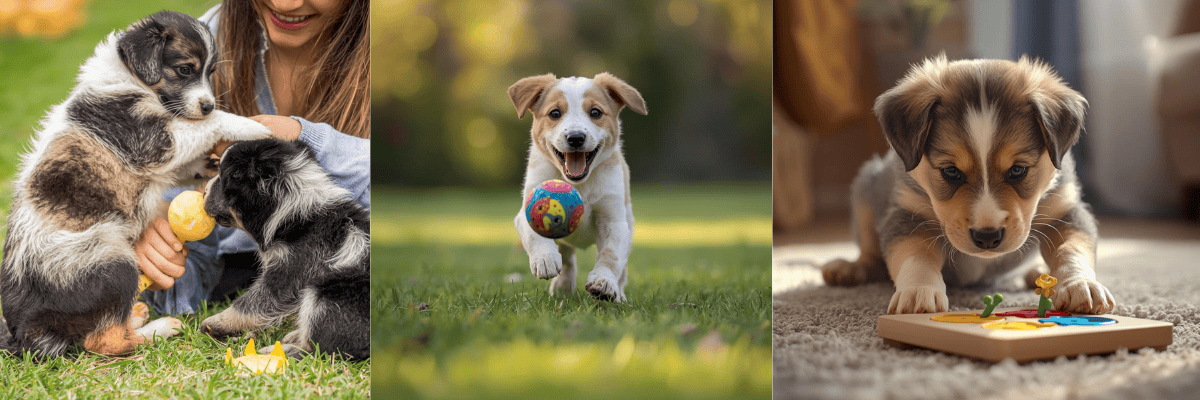
Introduction
Play is often seen as just a fun activity for puppies, but in reality, it is one of the most crucial aspects of their development. From the earliest weeks of life, play shapes a puppy’s physical abilities, social skills, and cognitive growth, laying the foundation for a well-adjusted adult dog.
Through play, puppies learn how to interact with their environment, with other dogs, and with humans. Whether they are wrestling with littermates, chasing toys, or exploring new objects, each playful activity is an opportunity to practice coordination, build confidence, and develop problem-solving skills.
Beyond physical and mental development, play also plays a vital role in emotional regulation and stress relief. Puppies who engage in structured and positive play are more likely to be confident, social, and less prone to fear or anxiety. Conversely, lack of play or insufficient social interaction during these formative weeks can lead to behavioral issues, including aggression, shyness, or destructive tendencies.
In this guide, we’ll explore why play is essential for puppies, the types of play that support healthy growth, and practical tips for owners to incorporate safe, stimulating, and fun play into their puppy’s daily routine. Understanding the importance of play ensures that your puppy not only grows physically healthy but also develops the social, emotional, and cognitive skills needed for a happy, well-rounded life.
The Role of Play in Physical Development
Play is essential for a puppy’s physical growth and coordination. Active play helps puppies build muscle strength, agility, and overall fitness, which are vital as they grow into healthy adult dogs.

Key benefits of physical play:
- Strength and coordination: Activities like chasing, pouncing, and wrestling with littermates or toys improve motor skills, balance, and reflexes.
- Teething and jaw development: Chewing on appropriate toys helps soothe sore gums and strengthens jaw muscles.
- Stamina and energy management: Regular play helps puppies burn off excess energy, reducing hyperactive or destructive behavior in the home.
- Healthy growth patterns: Play encourages movement that supports joint development and bone strength, contributing to long-term physical health.
Engaging your puppy in age-appropriate physical activities ensures they develop a strong, healthy body, while also making exercise fun and mentally stimulating. Physical play is the foundation for a puppy’s confidence, agility, and overall well-being.
Play and Social Development
Play is not only about physical growth—it is also a critical tool for social development in puppies. Through play, puppies learn how to interact with other dogs, humans, and even their environment in a safe and structured way.
How play supports social development:
- Learning bite inhibition and boundaries: When playing with littermates or humans, puppies discover how to control the force of their bites and respect social cues.
- Understanding social cues: Puppies learn to read body language, facial expressions, and vocal signals, which helps them communicate effectively.
- Cooperation and teamwork: Group play encourages puppies to take turns, share space, and engage in cooperative behavior.
- Confidence in interactions: Positive play experiences teach puppies to feel secure when meeting new dogs or people, reducing fear and anxiety later in life.
- Establishing social hierarchies: Play with siblings and other dogs helps puppies understand their role within a social group, which is vital for balanced behavior.
By providing opportunities for both solo and social play, owners can help puppies develop the emotional intelligence and social skills needed to thrive in a variety of settings.
Cognitive Benefits of Play
Play is not just about physical exercise and social skills—it also plays a vital role in a puppy’s mental development. Engaging in stimulating activities helps puppies develop problem-solving abilities, memory, and environmental awareness, which are essential for lifelong learning.
Cognitive benefits of play include:
- Problem-solving skills: Interactive games, puzzle toys, and exploring new environments teach puppies to think critically and overcome challenges.
- Memory and learning: Repeated play experiences help puppies remember cues, patterns, and behaviors, forming the foundation for training and obedience.
- Curiosity and exploration: Play encourages puppies to investigate new objects, textures, and spaces, fostering healthy cognitive development.
- Focus and attention span: Engaging play sessions help puppies learn to concentrate on tasks, which is valuable for training and everyday interactions.
Cognitive stimulation through play ensures that puppies develop mentally as well as physically, preventing boredom and promoting a well-rounded, intelligent, and adaptable adult dog.
Types of Play That Benefit Puppies
Not all play is created equal. Different types of play support various aspects of a puppy’s development, including physical health, social skills, and cognitive growth. Providing a mix of play opportunities ensures well-rounded development.

1. Solo Play
- Involves independent exploration and interaction with toys.
- Examples: Chewing on safe toys, playing with balls, or solving puzzle toys.
- Benefits: Develops problem-solving skills, strengthens jaws, and keeps puppies entertained when alone.
2. Interactive Play
- Play between the puppy and humans, enhancing the bond and trust.
- Examples: Tug-of-war, fetch, gentle wrestling, or hide-and-seek games.
- Benefits: Builds physical strength, teaches impulse control, and encourages positive human interaction.
3. Social Play
- Play with littermates or other vaccinated puppies.
- Examples: Wrestling, chasing, and cooperative games with other dogs.
- Benefits: Teaches social cues, bite inhibition, sharing, and cooperative behavior.
By offering a combination of solo, interactive, and social play, owners can ensure puppies develop physically, mentally, and socially, while also preventing boredom and behavioral problems.
How Play Helps Prevent Behavioral Issues
Play is not just enjoyable—it is a powerful tool for preventing common behavioral problems in puppies. When puppies receive appropriate playtime, they learn self-control, social norms, and how to manage energy, which reduces the likelihood of unwanted behaviors.

Ways play prevents behavioral issues:
- Reduces boredom and destructive behavior: Puppies with insufficient stimulation may chew furniture, shoes, or other household items. Regular play provides a healthy outlet for energy and curiosity.
- Minimizes fear, anxiety, and aggression: Positive social play helps puppies develop confidence, reducing fear-based aggression or anxiety in new situations.
- Encourages healthy expression of excitement and energy: Structured play teaches puppies appropriate ways to express themselves, preventing hyperactivity or attention-seeking nipping.
- Supports training and obedience: Incorporating play into learning experiences helps puppies associate rules with positive outcomes, reinforcing good behavior naturally.
By integrating consistent, stimulating play into a puppy’s routine, owners can shape well-adjusted, confident dogs while reducing the risk of behavioral challenges as they grow.
Safe Play Guidelines for Puppies
While play is essential for development, it’s important to ensure that it is safe and age-appropriate. Puppies are still learning coordination and boundaries, so careful supervision and guidance can prevent accidents or stress.

Guidelines for safe play:
- Supervise interactions: Always watch puppies during play, especially with other dogs or children, to prevent injury or overly rough behavior.
- Choose age-appropriate toys: Select toys that are durable, non-toxic, and sized correctly to avoid choking hazards.
- Monitor play intensity: Puppies can become overstimulated; take breaks and calm them down if play becomes too rough.
- Introduce new experiences gradually: Slowly expose puppies to new toys, people, or environments to build confidence without overwhelming them.
- Avoid using hands or feet as toys: This teaches puppies proper boundaries and reduces biting behavior toward humans.
Following these guidelines ensures that play remains beneficial, enjoyable, and safe, supporting healthy growth while fostering a strong bond between you and your puppy.
Encouraging Lifelong Play Habits
Instilling a love of play early in a puppy’s life sets the foundation for healthy habits that last a lifetime. Regular, structured play not only supports development but also strengthens the bond between you and your dog.
Tips for encouraging lifelong play:
- Make play a routine: Schedule daily play sessions to ensure your puppy gets consistent physical, mental, and social stimulation.
- Rotate toys and activities: Introduce a variety of toys and games to keep your puppy engaged, curious, and mentally stimulated.
- Include both physical and mental challenges: Combine active games like fetch or tug-of-war with puzzle toys or scent-based activities to promote well-rounded development.
- Encourage social play: Regular interactions with other vaccinated dogs or well-behaved puppies teach social skills and maintain confidence.
- Positive reinforcement: Reward calm, cooperative, and focused play behaviors to encourage repeated engagement and healthy play habits.
By creating a playful, engaging, and structured environment, you help your puppy develop into a happy, confident, and adaptable adult dog who continues to enjoy play throughout their life.
Conclusion
Play is far more than just fun for puppies—it is a vital component of their physical, social, and cognitive development. Through playful activities, puppies strengthen their muscles, learn important social skills, develop problem-solving abilities, and gain confidence in themselves and their environment.
By providing a variety of solo, interactive, and social play opportunities, owners can ensure that puppies grow into well-adjusted, confident, and happy adult dogs. Consistent play also helps prevent behavioral issues, reduces anxiety, and fosters a strong, trusting bond between you and your puppy.
Incorporating safe, structured, and stimulating play into your puppy’s daily routine is one of the most effective ways to support their growth, happiness, and lifelong well-being. With patience, creativity, and positive reinforcement, play becomes a powerful tool for raising a healthy, well-rounded, and joyful companion.





Leave a Reply