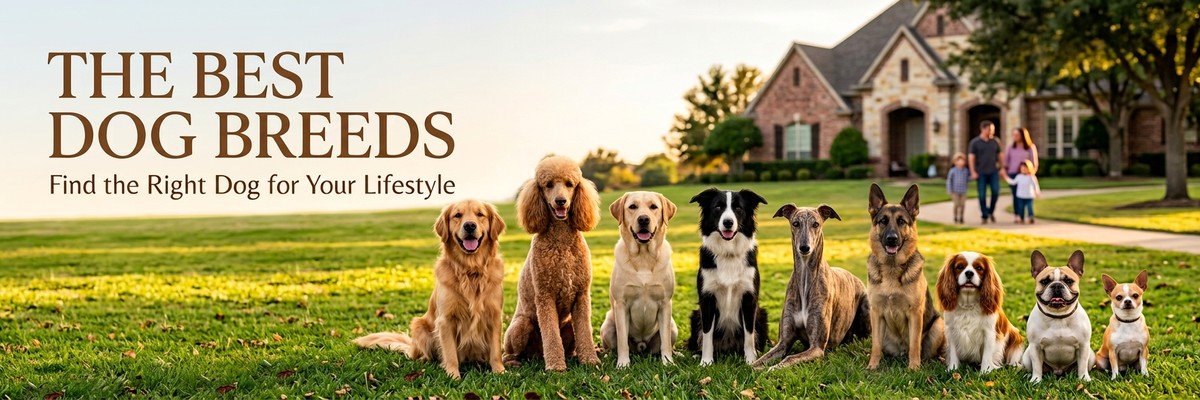
Choosing a dog is one of the most exciting life decisions you can make—and one of the biggest long-term commitments you will ever take on. With hundreds of recognized dog breeds and countless wonderful mixed-breed dogs waiting in shelters and rescues, finding the right companion can feel overwhelming. Should you pick an energetic breed that can join you on weekend hikes? A calm cuddle buddy for a quieter household? A playful family dog that gets along with kids? A small breed that adapts easily to apartment living? Or perhaps a highly intelligent working dog that thrives on learning new skills?
The truth is, there is no single “best dog breed” for everyone. The best dog for you is the one whose needs, temperament, energy level, size, and care requirements fit naturally with your lifestyle. A high-drive working breed may be a dream come true for an avid runner who loves dog sports, but that same dog can become frustrated, anxious, and destructive in a home that prefers quiet evenings on the couch. Similarly, a small dog is not automatically an easy dog, and a large dog is not automatically unsuitable for apartment living. The right match depends on far more than appearance or size.
Before you fall in love with a photo or a viral video, ask yourself honest questions: How much time can you realistically dedicate every day to exercise, training, play, grooming, and companionship? Do you live in an apartment or a house with a yard? Are you looking for a first dog, a family companion for children, or a quieter companion for your golden years? Do you want a dog that enjoys structured training and dog sports, or one that is happiest curled up beside you after a daily walk?
These questions matter more than popularity rankings. In this guide, we cover 25 of the best dog breeds for different types of owners and lifestyles. You will find breeds suited to first-time owners, families with kids, apartment dwellers, active adventurers, seniors, experienced handlers, allergy sufferers, people who want a small companion, and those who prefer a gentle giant. We also include mixed-breed dogs, because in many cases the individual dog’s personality and needs matter more than a breed label. A quick note before we begin: breed tendencies are a starting point, not a guarantee. Every dog is an individual. Genetics, early socialization, training, health, age, and past experiences all shape behavior. Two dogs of the same breed can have very different energy levels and temperaments. The right dog is not simply the one you find cutest or the breed that is trending this year. It is the dog whose physical, emotional, and social needs you can consistently meet for the next 10 to 15 years
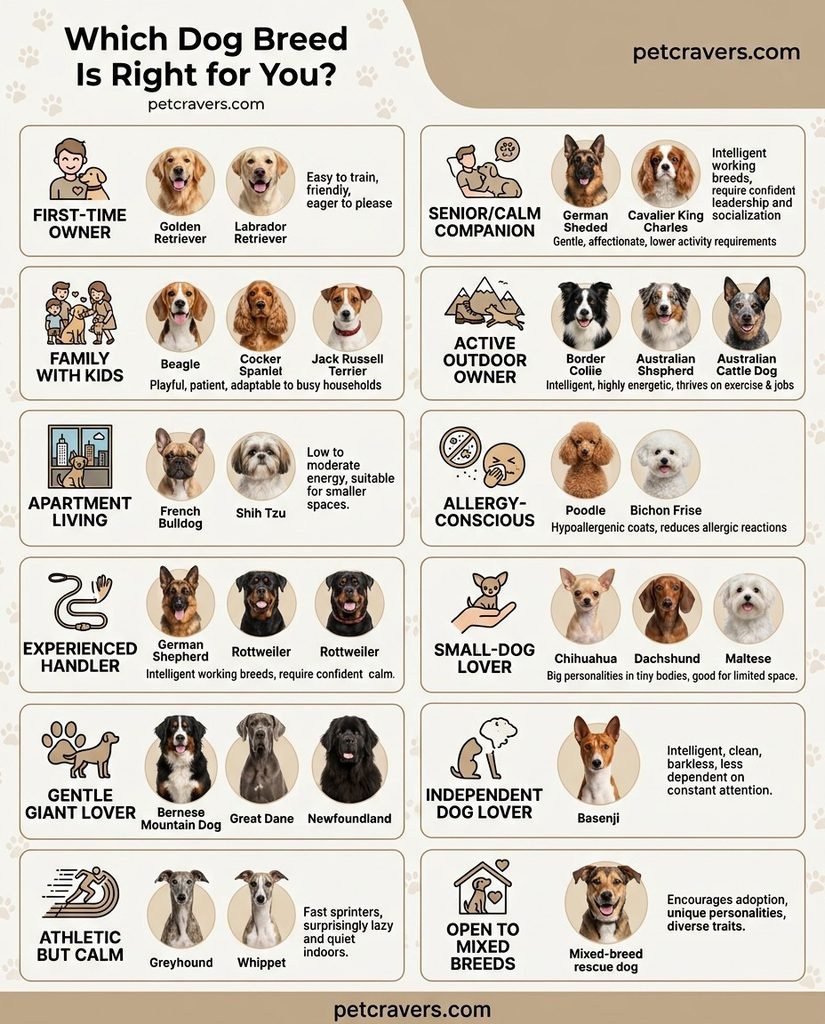
Finding the Best Dog Breeds for Every Type of Owner : Quick Comparison
When looking for the ideal companion, it’s essential to consider the best dog breeds for every type of owner that align with your lifestyle and preferences.
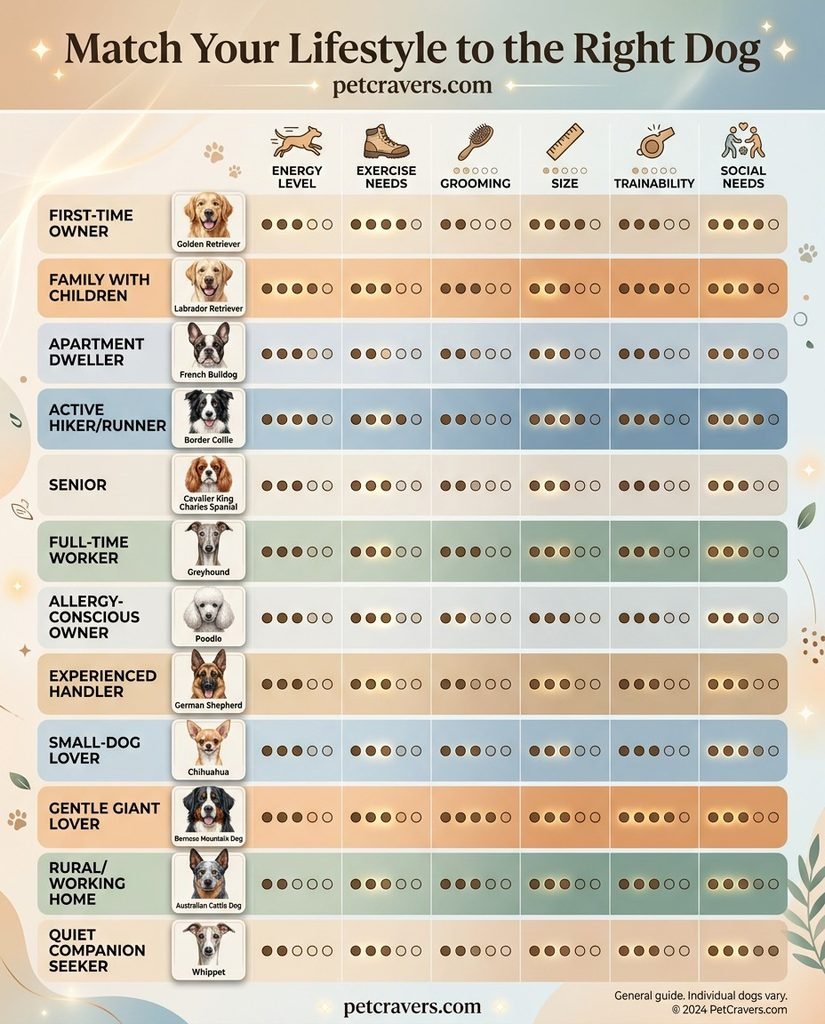
| If you are… | Consider… |
| A first-time dog owner | Golden Retriever, Labrador Retriever, Cavalier King Charles Spaniel |
| Looking for a family dog for kids | Labrador Retriever, Golden Retriever, Beagle, Newfoundland |
| Living in an apartment | French Bulldog, Cavalier King Charles Spaniel, Whippet, Shih Tzu, Maltese |
| Highly active / outdoor enthusiast | Border Collie, Australian Shepherd, Australian Cattle Dog, Jack Russell Terrier |
| A senior or wanting a calm companion | Cavalier King Charles Spaniel, Greyhound, Whippet, Shih Tzu, Maltese |
| Allergic or preferring low-shedding | Poodle, Bichon Frise, Maltese |
| Seeking a protective, experienced-handler dog | German Shepherd, Rottweiler |
| Wanting a small companion | Chihuahua, Shih Tzu, Dachshund, Maltese, Bichon Frise |
| Looking for a gentle giant | Bernese Mountain Dog, Great Dane, Newfoundland |
| Wanting an independent or quiet dog | Basenji, Shiba-type mixes (see Basenji), Greyhound |
| Wanting an athletic but calm dog | Whippet, Greyhound |
| Open to unique personalities | Mixed-breed dogs |
Now let’s look at each breed in depth so you can find your perfect match.
____________________________________________________________
1. Golden Retriever — Best for First-Time Dog Owners
Few dog breeds are as universally loved as the Golden Retriever. Famous for their friendly nature, intelligence, and eagerness to participate in family life, Goldens are often recommended as one of the best dog breeds for first-time owners. Their combination of trainability, sociability, and adaptability has kept them near the top of the American Kennel Club’s popularity rankings for decades.
That said, their friendly reputation should not be mistaken for low-maintenance. Golden Retrievers are active, medium-to-large sporting dogs that need daily exercise, mental stimulation, consistent training, and plenty of companionship. For first-time owners willing to put in that work, they can be remarkably rewarding companions.
Why Goldens excel for new owners: They were developed as working gundogs and are famous for their willingness to cooperate with people. Most enjoy learning basic obedience, tricks, fetch, and even advanced activities like agility or dock diving. For a first-time owner, a dog that is motivated by praise, toys, and food makes the training process far more encouraging than a breed that is stubborn or independent. Important early skills include name recognition, a reliable recall, sit, down, leash manners, waiting at doors, “drop it,” and calm greetings. Early training matters because Goldens grow into 55–75 pound dogs—a jumping puppy is cute; a jumping adult is not.
Goldens are famously social. Many want to be in the same room as their people at all times and thrive when included in walks, hikes, swims, fetch, training sessions, and lazy evenings on the couch. The downside is that they can struggle when left alone for long hours every day without preparation and enrichment.
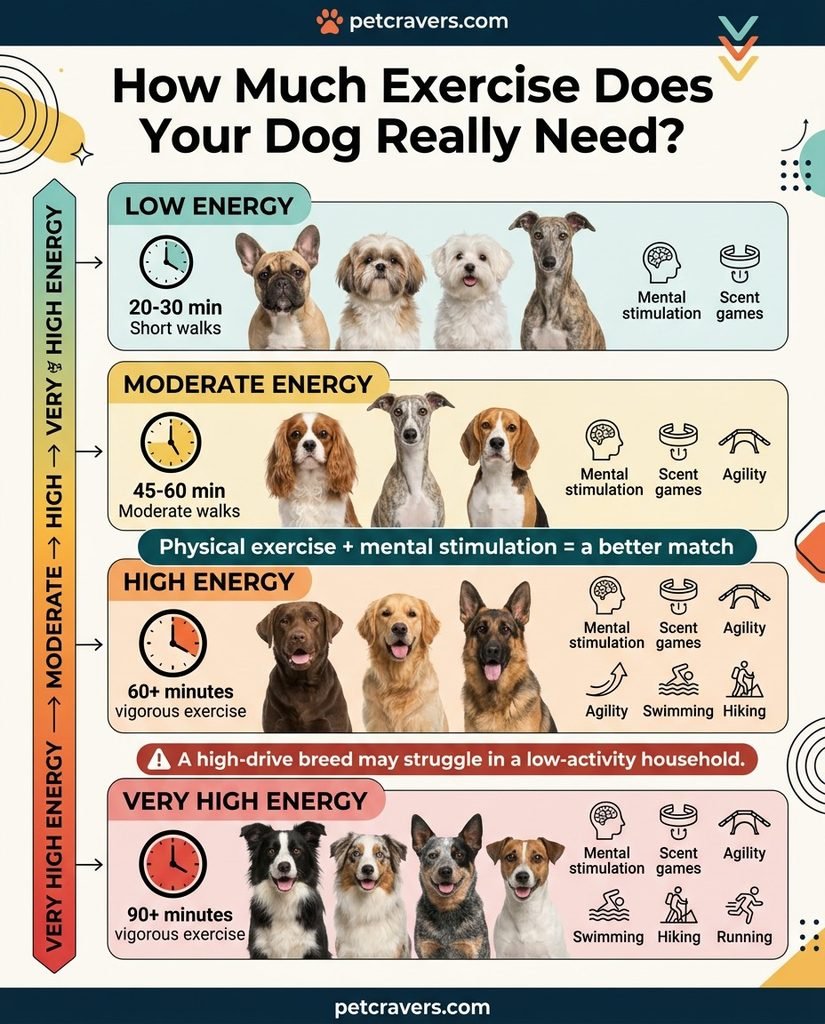
Exercise: Expect 60–90 minutes of daily activity plus play. Goldens love retrieving and swimming.
Grooming: Their thick double coat sheds heavily, especially during seasonal coat blows. Brush several times a week and expect dog hair on furniture.
With kids and other pets: Usually excellent with children and other dogs when socialized early. Supervise interactions with toddlers, as Goldens can be exuberant.
Health considerations: Hip and elbow dysplasia, certain cancers, heart conditions, and ear infections are concerns. A good diet, regular vet care, and responsible breeding help.
Who should look elsewhere: People who cannot commit to daily exercise, regular grooming, or who are away from home 10+ hours a day may find a Golden frustrating.
Final verdict: For first-time owners who are ready for an active, social, trainable dog that wants to be a true member of the family, the Golden Retriever is one of the best dog breeds you can choose.
____________________________________________________________
2. Labrador Retriever — Best for Families
The Labrador Retriever has been the most popular dog breed in the United States for years—and for good reason. Labs are famously friendly, playful, affectionate, and adaptable. They typically form tight bonds with every member of the household and are often described as the quintessential family dog.
But the Lab is not a self-raising pet. They are energetic, strong, intelligent sporting dogs that require daily exercise, consistent training, early socialization, and plenty of human interaction. For families that can meet those needs, a Labrador becomes an enthusiastic and loyal companion for 10–14 years.
Why Labs shine in families: They want to be included in everything—family walks, backyard play, trips to the lake, training sessions, and movie nights. This participatory nature makes them feel like true family members rather than pets that live in the background. They are famously playful, and many stay puppy-like well into their second or third year. Most love retrieving toys, carrying objects around, and showing affection through physical closeness.
Labs are highly food- and toy-motivated, which makes them fun to train using positive reinforcement. Essential family Lab skills include recall, loose-leash walking, “drop it” (vital for a breed that picks up everything), waiting at doors, settling calmly, and greeting visitors without jumping.
Exercise: Plan on 60+ minutes a day, plus mental stimulation. Young Labs can be very high energy and need outlets like fetch, swimming, hiking, or dog sports.
Grooming: Short, dense double coat that sheds considerably year-round and heavily twice a year. Weekly brushing helps.
Final verdict: Understanding the best dog breeds for every type of owner can lead to a happier home.
Health considerations: Hip and elbow dysplasia, obesity (Labs love food!), ear infections, and certain eye conditions. Watch portions and provide regular exercise.
Who should look elsewhere: Families that cannot commit to daily exercise or consistent training may find a young Lab overwhelming. They are mouthy, strong, and can become destructive when bored.
Final verdict: The Labrador Retriever is one of the best family dog breeds for active households ready to invest in training and activity.
____________________________________________________________
3. French Bulldog — Best for Apartment Living
With their bat ears, compact build, and expressive faces, French Bulldogs are one of the most recognizable and popular small dog breeds in the world. Their manageable size, relatively low exercise needs, and companion-oriented personalities make them a frequent pick for apartment and city living.
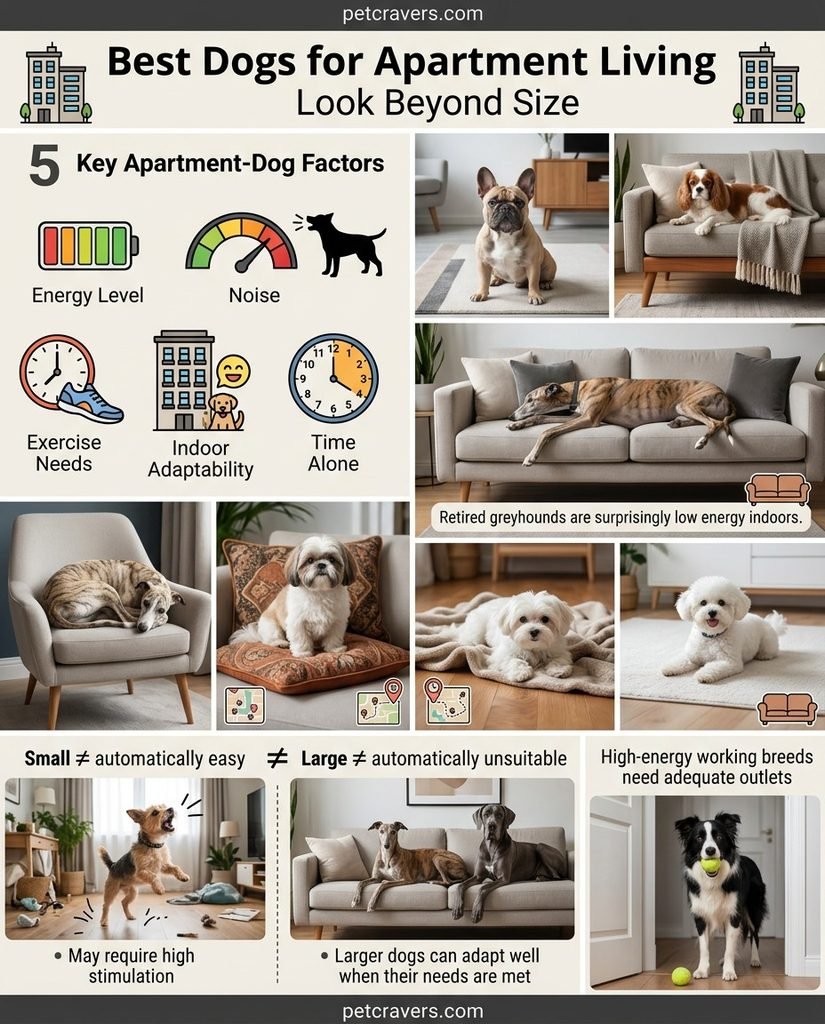
Important caveat: small size and lower exercise needs do not equal low maintenance. French Bulldogs are a brachycephalic (flat-faced) breed with significant health, temperature, and breeding considerations. Prospective owners should research responsible breeders carefully, budget for potential veterinary costs, and understand the breed’s limitations before bringing one home.
Why Frenchies suit apartments: Adults typically weigh 16–28 pounds and do not need the indoor or outdoor space a large breed requires. Most Frenchies are happy with one or two daily walks, some indoor play, and lots of time relaxing near their people. They are often playful, affectionate, curious, social, and clownish—entertaining companions for urban dwellers.
Exercise: Short walks, indoor play, and brief training sessions are usually enough. Avoid strenuous exercise in heat or humidity because of their breathing limitations. Frenchies overheat quickly and should never be left outdoors in hot weather.
Grooming: Short, smooth coat with minimal brushing. Wrinkles should be cleaned and dried regularly to prevent skin infections. Regular nail trims, ear cleaning, and dental care are important.
With kids and other pets: Many Frenchies get along well with children and other pets when socialized, but their small size makes them better suited to homes where kids are taught gentle handling.
In conclusion, the best dog breeds for every type of owner are those that match your needs. Remember to consider all aspects of dog ownership before making your choice.
Choosing wisely from the best dog breeds for every type of owner will ensure a lifelong companionship.
Health considerations: Brachycephalic obstructive airway syndrome (BOAS), hip dysplasia, spinal issues, eye problems, and heat intolerance are common. Because most French Bulldogs cannot whelp naturally, C-sections are typical and ethical breeding is expensive.
Who should look elsewhere: People who want a jogging partner, live in a very hot climate without AC, or who seek a low-cost-to-care-for dog may not be a match.
Final verdict: For apartment dwellers who want a compact, affectionate, often comical companion and who understand the breed’s health realities, the French Bulldog is one of the best small dogs for city life.
With our insights into the best dog breeds for every type of owner, you’ll be better prepared to welcome a new pet.
4. Border Collie — Best for Highly Active Owners
The Border Collie is widely regarded as the most intelligent dog breed on the planet. Their legendary learning ability, intense focus, athleticism, and powerful herding instincts can make them extraordinary partners for the right owner. But intelligence is not the same as easiness. A Border Collie is not just a clever dog that learns lots of tricks; they were developed to work all day, make independent decisions, control livestock, and stay intensely focused for hours. For owners who want a dog that can keep up with long runs, advanced training, and dog sports, they are unmatched. For those seeking a low-key couch companion, they are a poor fit.
Why Border Collies thrive with active owners: They learn verbal cues, hand signals, patterns, and complex behaviors remarkably quickly. A well-matched owner will enjoy teaching them basic and advanced obedience, tricks, scent work, agility, herding, rally, disc, and more. However, their intelligence means they learn unwanted behaviors just as fast—barking, opening doors, counter-surfing, and attention-demanding antics can all become self-reinforcing without consistent guidance.
Mental stimulation is non-negotiable. A tired body alone is not enough. Puzzle feeders, scent games, trick training, “find it” games, training sessions, and meaningful jobs around the house all help tire their busy minds. Without it, they may invent their own entertainment—often in ways owners find destructive.
Exercise: Plan on 90+ minutes of vigorous activity daily, plus mental work. Border Collies excel at running, hiking, herding, agility, and disc sports.
Grooming: Medium double coat that sheds. Brush several times a week, more during shedding seasons.
With kids and other pets: Can be good with respectful children and other dogs when well socialized, but their herding instinct may lead them to chase or nip at running kids, cats, or small animals.
Health considerations: Hip dysplasia, eye disorders (including collie eye anomaly), epilepsy, and certain genetic conditions. Buy from breeders who do appropriate health testing.
Who should look elsewhere: First-time owners, people away from home most of the day, or anyone wanting a calm, low-activity dog should probably choose another breed.
Final verdict: For active, committed owners who enjoy training, outdoor adventures, and engaging with a brilliant canine mind, the Border Collie is one of the most rewarding dog breeds you can own.
____________________________________________________________
5. Cavalier King Charles Spaniel — Best for Seniors and Calm Companionship
Ultimately, the best dog breeds for every type of owner will resonate with your personal lifestyle.
Understanding the best dog breeds for every type of owner can lead to meaningful companionship.
The Cavalier King Charles Spaniel is a small, elegant spaniel with a gentle expression and a reputation as one of the most affectionate companion dogs. Bred primarily to be a loving presence at their owner’s side, Cavaliers often seem like they were born to sit on laps and go for gentle walks.
Why Cavaliers suit seniors and quiet households: They are strongly people-oriented and happiest near their humans. Most form close bonds with everyone in the home and generally welcome strangers warmly. Their adult weight of 13–18 pounds is manageable for most people, and they are small enough to lift comfortably but not so tiny that they are fragile under normal conditions.
Exercise: Moderate. A daily walk of 30–45 minutes plus some indoor play is usually enough. Many Cavaliers also enjoy longer, leisurely strolls.
Grooming: Medium-length silky coat that needs regular brushing several times a week to prevent mats, especially behind the ears and on the legs.
With kids and other pets: Typically gentle with children, other dogs, and cats when socialized. Best suited for homes where children are taught gentle handling because of their small size.
Health considerations: Mitral valve disease (MVD) is a serious concern in the breed, along with syringomyelia (a painful neurological condition), eye problems, and hip issues. Buying from health-tested lines is important.
Who should look elsewhere: People away from home 10+ hours daily (Cavaliers hate isolation), people wanting a rugged outdoor companion, or those unable to manage grooming and potential veterinary costs.
Final verdict: For seniors, retirees, or anyone seeking a sweet, gentle, affectionate companion that thrives on human closeness, the Cavalier King Charles Spaniel is among the best dog breeds available.
____________________________________________________________
6. Poodle — Best for Allergy-Conscious Households
Poodles come in three sizes—Standard, Miniature, and Toy—and all three share the same curly, low-shedding coat, sharp intelligence, and playful personality. While many people think of Poodles as fancy show dogs, they are actually versatile working gundogs and are consistently ranked among the smartest dog breeds.
Why Poodles suit allergy sufferers: Their curly coat catches dander and shed hair rather than releasing it into the air, which can reduce allergic reactions for some people. Note that no dog breed is truly 100% hypoallergenic—allergens vary by individual dog and individual person. Spend time with a Poodle before bringing one home if allergies are a concern.
Poodles are highly intelligent and thrive on training and mental stimulation. Standard Poodles are athletic and often excel in obedience, agility, dock diving, and even retrieving work. Miniature and Toy Poodles are also bright and benefit from training and play.
Exercise: Standards need 60+ minutes of daily activity; Miniatures and Toys need moderate daily walks and play. All sizes benefit from mental work.
Grooming: Their signature coat grows continuously and requires professional clipping every 4–8 weeks plus frequent brushing at home to prevent mats. This is an ongoing expense to budget for.
With kids and other pets: Typically very good with children and other animals, especially when socialized early. Standards are sturdy enough for rougher play; Minis and Toys are more delicate.
Health considerations: Hip dysplasia, eye disorders, bloat (in Standards), epilepsy, and certain genetic conditions. Health testing matters.
Who should look elsewhere: People who cannot afford regular professional grooming or who want a dog that needs no styling may not be a good match.
Final verdict: For households where allergies are a concern and owners are willing to commit to training and grooming, the Poodle (in whatever size fits the home) is one of the best dog breeds to consider.
____________________________________________________________
7. Greyhound — Best for Busy but Responsible Owners
Greyhounds may surprise people who know them only as racing dogs. While they are among the fastest dogs on Earth—capable of reaching 45 miles per hour—many retired racing Greyhounds are surprisingly calm, even couch-like, indoors. They are often described as “45-mile-per-hour couch potatoes,” making them popular with people who work but can still meet a dog’s core needs.
Why Greyhounds work for busy owners: Indoors, many Greyhounds are quiet, gentle, and content to nap for hours after a good walk or a short sprint. This makes them well suited to people with structured full-time jobs who can give them a morning outing, an evening walk and play session, and plenty of companionship in between. Note: “busy” does not mean absent. No dog should be left alone for 12 hours a day with no break.
Exercise: Two daily walks plus a couple of opportunities per week to run in a safely fenced area. Most Greyhounds are not long-distance endurance athletes; they prefer short bursts of speed followed by rest.
Because Greyhounds are sighthounds, their prey drive can be strong. Off-leash walks near roads or small animals are risky. Many retired racers need slow, careful introductions to cats and small dogs.
Grooming: Short, smooth coat that requires minimal brushing and sheds lightly.
With kids and other pets: Usually gentle and patient with children. Cat and small-dog compatibility varies by individual—many adoption groups test for this.
Health considerations: Generally healthy and long-lived for a large breed (10–14 years). Sensitive to anesthesia and cold weather (they need coats in winter). Bloat can be a risk in deep-chested breeds.
Who should look elsewhere: People who want a dog for off-leash hiking, live in very cold climates without indoor warmth, or want a highly interactive training partner may prefer another breed.
Final verdict: For responsible, structured owners who want a gentle, calm, low-fuss indoor companion with occasional zoomies, the Greyhound is one of the best large dog breeds for city and suburban living.
____________________________________________________________
8. German Shepherd — Best for Protective and Experienced Owners
German Shepherds are among the most recognized and versatile working breeds in the world. They serve as police K-9s, military dogs, search-and-rescue dogs, service dogs, and loyal family protectors. They are highly intelligent, deeply loyal, and capable of learning almost any task. That power and intelligence make them best suited to experienced handlers.
Why German Shepherds suit experienced owners: They are exceptionally trainable and thrive when given a job—whether that is advanced obedience, protection work, herding, agility, tracking, search and rescue, or simply being a well-trained family guardian. They bond strongly with their primary people and can be aloof or wary with strangers, which requires intentional early socialization.
Without proper training, socialization, and outlets for their drive, German Shepherds can become anxious, reactive, overprotective, or destructive. They need owners who can be calm, consistent leaders and commit to lifelong training.
Exercise: 60–120 minutes of daily activity plus mental work. Puzzle toys, obedience, scent work, and structured play are all valuable.
Grooming: Dense double coat that sheds heavily, especially twice a year. Brush several times a week.
With kids and other pets: Can be excellent with their own families’ children when raised with them. Supervision and socialization are essential. They may be selective with strange dogs.
Health considerations: Hip and elbow dysplasia, bloat, degenerative myelopathy, and certain genetic conditions. Buying from health-tested working or show lines is critical.
Who should look elsewhere: First-time dog owners, people unable to commit to heavy training and exercise, or anyone away from home most of the day should consider other breeds.
Final verdict: For experienced, confident owners who want a loyal, intelligent, protective companion and are willing to invest in serious training and socialization, the German Shepherd is one of the most capable dog breeds on earth.
____________________________________________________________
9. Chihuahua — Best for Small-Dog Lovers
The Chihuahua is one of the smallest dog breeds in the world, but they carry themselves with the confidence of a much larger dog. Weighing as little as 3–6 pounds, Chihuahuas are portable, devoted, and big on personality.
Why Chihuahuas appeal to small-dog fans: Their tiny size means they travel easily, adapt well to small homes, and do not need large amounts of exercise. They tend to form intensely strong bonds—often choosing one favorite person in the household—and can be fiercely loyal and affectionate with that person.
Do not mistake tiny for low-maintenance, however. Chihuahuas can be yappy, wary of strangers, and prone to trembling when nervous or cold. Without socialization, they can become defensive and nippy. They are also physically fragile—jumps from furniture can cause injuries, and rough handling from young children can be dangerous.
Exercise: Two short to moderate daily walks plus indoor play. Many Chihuahuas enjoy playing fetch or puzzle toys indoors.
Grooming: Short-coated Chis need minimal brushing; long-coated varieties need regular brushing to prevent tangles. All Chis benefit from warm clothes in cold weather.
With kids and other pets: Better suited to homes with older, gentle children or adults. Can get along with other pets when raised together, but many Chihuahuas prefer being the only dog or living with other small dogs.
Health considerations: Dental problems (common in tiny mouths), luxating patellas, heart issues, hypoglycemia in puppies, and hydrocephalus. Dental care is essential.
Who should look elsewhere: Families with very young children, people who want a rugged outdoor companion, or owners who will not commit to socialization and training should look at other breeds.
Final verdict: For people who want a tiny, portable, devoted companion with a big personality and can meet their socialization and care needs, the Chihuahua is the quintessential small dog breed.
____________________________________________________________
In this guide, we will review the best dog breeds for every type of owner to ensure you find the ideal match for your lifestyle.
10. Bernese Mountain Dog — Best for Gentle Giant Lovers
The Bernese Mountain Dog is a strikingly beautiful large breed from the Swiss Alps, known for its tri-color coat, calm expression, and affectionate, patient temperament. They are often described as one of the gentlest of the large breeds.
Why Berners appeal to gentle giant lovers: They typically form strong, loving bonds with their entire family and can be surprisingly gentle with children. Many remain playful into adulthood but mature into calm, steady companions. Their size—adults often weigh 70–115 pounds—is balanced by their soft, people-focused nature.
Exercise: Moderate daily exercise including walks, light hiking, and play. Berners are not typically hyper, but they benefit from regular activity. Avoid over-exercising puppies while their joints develop.
Grooming: Thick, long double coat that sheds heavily, especially seasonally. Brush several times a week.
With kids and other pets: Often excellent with children and other family pets. Supervision is still important because of their size.
Health considerations: Sadly, Bernese Mountain Dogs have a relatively short lifespan (often 7–10 years) with elevated risk of cancer, hip and elbow dysplasia, and bloat. Buying from health-tested breeders is important.
Who should look elsewhere: People unprepared for giant-breed expenses (food, vet care, larger everything), heavy shedding, or shorter lifespan may be better suited to a smaller or longer-lived breed.
Final verdict: For lovers of big, gentle dogs who have the space, budget, and heart for a shorter-lived but deeply loving giant, the Bernese Mountain Dog is one of the most rewarding breeds.
Always consider the best dog breeds for every type of owner that fit your family and lifestyle.
____________________________________________________________
11. Australian Shepherd — Best for Outdoor Enthusiasts
The Australian Shepherd—despite the name, developed largely in the American West—is a medium-sized herding dog prized for intelligence, athleticism, and striking coat colors including blue merle and red merle. They are natural-born athletes and thrive alongside hikers, runners, campers, and dog-sport competitors.
Why Aussies suit outdoor enthusiasts: They are agile, energetic, and born to move. Most love long hikes, trail runs, frisbee, fetch, swimming, and exploring new environments. They also want mental engagement: without a job or regular training, they can become bored and invent their own fun. They excel at agility, herding, obedience, rally, and disc sports.
Exercise: 90+ minutes of vigorous activity daily, plus mental stimulation.
Grooming: Medium-length double coat that sheds. Brush several times a week, more during shedding seasons.
With kids and other pets: Often loyal and playful with their own families’ kids, but may try to herd running children or small animals. Early socialization is essential.
Health considerations: Hip dysplasia, eye problems (including those linked to merle genes when breeding merle-to-merle), epilepsy, and certain genetic conditions.
Who should look elsewhere: Apartment dwellers with limited time, first-time owners not prepared for a high-drive dog, or anyone looking for a low-energy companion should look elsewhere.
Final verdict: For active outdoor lovers who want a bright, athletic partner that is happiest when on the move and fully engaged, the Australian Shepherd is one of the best dog breeds available.
____________________________________________________________
12. Dachshund — Best for Owners Who Want a Small but Big-Personality Dog
Dachshunds, affectionately known as wiener dogs, are instantly recognizable for their long bodies and short legs. Originally bred to hunt badgers, they are bold, curious, tenacious, and surprisingly loud-voiced for their size.
Why Dachshunds appeal to fans of personality: They pack a lot of character into a small package. Many are playful, affectionate, comical, and fiercely loyal to their people. They can be adventurous on walks and surprisingly alert watchdogs.
Exercise: Moderate daily walks (30–45 minutes) plus indoor play. Avoid excessive jumping on and off furniture because of their long backs—provide ramps where possible and keep them at a healthy weight.
Grooming: Smooth-coated Dachshunds need minimal brushing; long-haired and wire-haired varieties need more regular grooming.
With kids and other pets: Can do well with older, gentle children and other pets when raised together, but their backs are vulnerable to rough handling. Many Dachshunds are prone to barking and can be possessive of their people or food without training.
Health considerations: Intervertebral disc disease (IVDD) is a major risk due to their long spine. Obesity drastically increases this risk. Dental issues and patellar luxation can also occur.
Who should look elsewhere: Families with very young or boisterous children, people who want a quiet dog, or anyone unable to commit to back-care precautions and weight management.
Final verdict: For people who want a small, bold, loyal companion with loads of personality and can manage their distinctive care needs, the Dachshund is a charming choice.
13. Shih Tzu — Best for Companion-Focused Owners
The Shih Tzu was developed centuries ago in Tibet and China specifically as a palace companion dog—and they have taken that job seriously ever since. Shih Tzus are affectionate, friendly, and seem born to sit in laps and receive affection.
Why Shih Tzus suit companion-focused owners: They were bred to be companions, not hunters or workers. They thrive on human closeness, are usually friendly with strangers, and adapt well to apartments, houses, and a variety of lifestyles as long as they are with their people.
Exercise: Short daily walks and indoor play are usually sufficient. They enjoy gentle outings but are not high-energy athletes.
Grooming: Long, flowing coats require daily brushing if kept in a show cut, or regular clipping into a shorter “puppy cut” with professional grooming every 4–8 weeks. Their eyes and facial folds need regular cleaning.
With kids and other pets: Generally good with children and other pets when socialized, but better suited to gentle homes because of their small size.
Health considerations: Brachycephalic (flat-faced), which can cause breathing issues and heat sensitivity. Dental problems, eye issues, and hip dysplasia are also seen.
Who should look elsewhere: Owners who cannot commit to regular grooming, people wanting a running or hiking partner, or those who prefer a more independent dog.
Final verdict: For owners who want a cheerful, affectionate lapdog that exists primarily to love and be loved, the Shih Tzu is one of the best companion dog breeds.
____________________________________________________________
14. Beagle — Best for Curious and Playful Owners
Beagles are small-to-medium scent hounds famous for their merry personalities, soulful eyes, long velvety ears, and powerful noses. They are curious, playful, and historically bred to hunt in packs, which means they tend to be highly social.
Why Beagles appeal to curious, playful owners: They see the world nose-first and want to investigate every smell. A walk with a Beagle is rarely boring. They are typically friendly, cheerful, and good-natured, and many retain a playful, puppy-like energy into adulthood. Their pack mentality often makes them good with other dogs.
Exercise: 60+ minutes of daily activity plus mental stimulation. Beagles love scent walks, exploration, and play.
Because of their powerful prey drive and strong noses, reliable recall can be a challenge. Keep Beagles on-leash or in securely fenced areas, and invest in scent-based games like nose work to channel their instincts.
Grooming: Short coat that sheds moderately. Weekly brushing is helpful.
With kids and other pets: Often excellent with children and very good with other dogs. Cat compatibility varies by individual; early socialization helps.
Health considerations: Hip dysplasia, cherry eye, epilepsy, ear infections (those long, floppy ears trap moisture), and obesity.
Who should look elsewhere: Owners who need impeccable off-leash reliability, people who prefer a quiet dog (Beagles can bay loudly), or neat freaks who cannot handle shedding and a dog that tracks in smells.
Final verdict: For families and playful owners who delight in a curious, merry, nose-driven companion and can manage their scent hound instincts, the Beagle is one of the best medium-sized dog breeds.
____________________________________________________________
15. Great Dane — Best for People Who Love Giant Breeds
The Great Dane is one of the largest dog breeds in the world, with some individuals standing over 3 feet at the shoulder and weighing 140+ pounds. Despite their imposing size, many Great Danes are gentle, affectionate, and surprisingly quiet indoors—sometimes described as “the world’s largest lapdog.”
Why Great Danes appeal to giant-breed lovers: Their size is unmistakable, but many owners are surprised by how gentle and affectionate they are. Great Danes often think they can curl up on your lap despite their bulk. They tend to bond closely with their families and can be patient and friendly with children.
Exercise: Moderate daily walks and play are sufficient for adults. Avoid excessive high-impact exercise in puppyhood while their bones and joints develop. Great Danes are not typically hyperactive once mature, but they do need regular activity.
Grooming: Short coat with minimal grooming needs, though they do shed.
With kids and other pets: Generally good with children when raised with them, but supervision is essential because of their massive size—they can easily knock over small children by accident.
Health considerations: Unfortunately, giant breeds often have shorter lifespans (typically 7–10 years). Bloat is a life-threatening emergency, and hip dysplasia, heart disease, and certain cancers are concerns. Everything about a Great Dane costs more: food, vet care, medications, crates, and bedding.
Who should look elsewhere: People on tight budgets, those in very small apartments without room for a giant body, or anyone who cannot accept a shorter lifespan.
Final verdict: For giant-dog lovers who have the space, budget, and heart for one of the largest and most affectionate dog breeds, the Great Dane is unforgettable.
____________________________________________________________
16. Bichon Frise — Best for Social Companion Seekers
The Bichon Frise is a small, cheerful white powder puff of a dog, known for a happy temperament and a fluffy, low-shedding coat. They are social, playful, and seem to approach life with a natural cheerfulness that wins people over.
Why Bichons suit social companion seekers: They often love human interaction and tend to be friendly with strangers, children, and other dogs. Many are playful well into their senior years and enjoy being the center of attention. Their low-shedding coat can be easier on allergy sufferers (though, as with Poodles, no dog is truly hypoallergenic).
Exercise: Moderate daily walks plus indoor play. Bichons enjoy games, trick training, and social outings.
Grooming: Their fluffy coat grows continuously and needs daily brushing plus professional clipping every 4–6 weeks. Tear staining around the eyes needs regular cleaning.
With kids and other pets: Usually very good with children and other pets, particularly when socialized.
Health considerations: Luxating patellas, dental issues, eye problems (including cataracts), allergies, and bladder stones.
Who should look elsewhere: People unwilling to commit to professional grooming, anyone away from home for long stretches (Bichons hate isolation and can develop separation anxiety), or those wanting a more independent dog.
Final verdict: For people who want a small, cheerful, social companion that typically gets along with everyone, the Bichon Frise is one of the best small dog breeds.
Ultimately, understanding the best dog breeds for every type of owner ensures a harmonious match between lifestyle and dog.
17. Rottweiler — Best for Confident, Experienced Owners
The Rottweiler is a powerful, muscular working breed with a natural guarding instinct and deep loyalty to family. When raised, trained, and socialized properly by a confident owner, Rottweilers can be calm, steady, and affectionate companions. Without that leadership, they can become overprotective, pushy, or difficult to manage.
Why Rotties suit confident, experienced owners: They are intelligent and trainable, often excelling in obedience, tracking, protection work, and carting. They bond deeply with their people and can be remarkably loving with their own families. Early socialization with a wide variety of people, dogs, and environments is non-negotiable, as is ongoing positive training.
Exercise: 60–90 minutes of daily exercise plus mental work. Rotties are strong and benefit from structured activity.
Grooming: Short, dense double coat that sheds moderately. Weekly brushing is sufficient.
With kids and other pets: Can be very good with their own family’s children when raised together, but supervision is essential due to their strength. Many Rottweilers are selective with strange dogs.
Health considerations: Hip and elbow dysplasia, heart conditions (especially subaortic stenosis), certain cancers, and bloat. Buy from breeders who do extensive health testing.
Who should look elsewhere: First-time owners, people unable to commit to serious training and socialization, anyone drawn to the breed purely for “protection” or status, or households without the physical strength to handle a powerful dog.
Final verdict: For confident, experienced owners committed to training, socialization, and responsible handling, a well-bred Rottweiler can be one of the most loyal, capable, and loving dog breeds.
____________________________________________________________
18. Basenji — Best for Owners Seeking a More Independent Dog
The Basenji is a unique African hunting breed often described as “cat-like” for their independent, fastidious, and sometimes aloof nature. They do not bark in the traditional sense—instead, they produce a distinctive sound called a “barroo” yodel—and they are known for being clean, curious, and athletic.
Why Basenjis suit people who like independence: They are often less constantly attention-seeking than breeds like Goldens or Labs. Many Basenjis are affectionate with their people but do not demand nonstop cuddles. They are also known for being relatively odorless and for grooming themselves like cats.
Exercise: 60+ minutes of daily activity. Basenjis are athletic, agile, and can climb and jump surprisingly well. Secure fencing is essential.
Grooming: Short coat with minimal grooming needs; they groom themselves and shed lightly.
With kids and other pets: Can do well with older children and other dogs when socialized, but their high prey drive may make them a poor fit with cats or small mammals.
Health considerations: Fanconi syndrome (a kidney disorder), hip dysplasia, eye problems, and certain genetic conditions.
Who should look elsewhere: First-time owners, people who want a highly biddable, clingy dog, owners unable to provide secure fencing, or homes with small pets the Basenji might chase.
Final verdict: For owners who admire cat-like independence, cleanliness, and an athletic, unique companion, the Basenji is a fascinating breed well worth considering.
____________________________________________________________
19. Cocker Spaniel — Best for Affectionate Family Companions
The Cocker Spaniel (the American Cocker Spaniel and its close English cousin) is a medium-sized sporting dog with a beautiful flowing coat, long ears, and a reputation for being gentle, merry, and affectionate. They are often described as one of the happiest-looking dogs, with tails that seem never to stop wagging.
Why Cockers suit affectionate families: They tend to form close bonds with their humans and thrive on attention and gentle interaction. Many are playful, cuddly, and get along well with respectful children and other pets.
Exercise: Moderate daily walks and play—45–60 minutes is often sufficient for adults. They enjoy games of fetch, gentle exploration, and time spent with their people.
Grooming: Their long, silky coat requires regular brushing several times a week and professional grooming every 4–8 weeks, especially if kept in a longer cut. Long ears need regular cleaning to prevent infections.
With kids and other pets: Typically good with children and other dogs when socialized. Their smaller size means supervision with very young children is wise.
When choosing a dog, always consider the best dog breeds for every type of owner that fit your family’s dynamics.
Health considerations: Ear infections, eye problems (including cataracts and glaucoma), hip dysplasia, luxating patellas, and certain heart conditions.
Who should look elsewhere: Owners who cannot commit to regular grooming, those who want a rugged outdoor working dog, or people who prefer a more independent companion.
Final verdict: For families and individuals wanting a gentle, affectionate, merry companion with a classic spaniel personality, the Cocker Spaniel is a wonderful dog breed.
In conclusion, remember that the best dog breeds for every type of owner are those that match your needs.
____________________________________________________________
20. Australian Cattle Dog — Best for Rural and Working Homes
The Australian Cattle Dog, also known as the Blue Heeler or Queensland Heeler, is a tough, intelligent, tireless herding breed developed to drive cattle across vast Australian distances. They are among the most driven and hardworking of all breeds.
Why ACDs suit rural and working homes: They are built for endurance and thrive when they have a real job. They excel on farms and ranches, at dog sports like agility and herding trials, or in active homes where they get both intense physical exercise and serious mental work. They are known for their loyalty and often bond very closely with their primary handler.
Exercise: 90+ minutes of vigorous daily activity plus mental work is non-negotiable. ACDs that are under-exercised can become destructive, obsessive, or reactive.
Grooming: Short double coat that sheds seasonally. Weekly brushing is usually enough.
With kids and other pets: Can be loyal with their family’s children, but their strong herding instinct may lead to nipping at heels or chasing fast-moving kids and animals. Early socialization is critical.
Health considerations: Hip dysplasia, progressive retinal atrophy, deafness (particularly in dogs with excessive white markings), and certain genetic conditions.
Who should look elsewhere: Apartment dwellers, first-time owners, families with very young children, or anyone unable to provide many hours of activity and training each week.
Final verdict: For rural owners, farmers, or highly active and experienced handlers who want a tireless working partner, the Australian Cattle Dog is one of the most capable dog breeds you can choose.
____________________________________________________________
21. Maltese — Best for Small-Dog Companion Lovers
The Maltese is a tiny, elegant toy breed with a long white coat and a history stretching back thousands of years as a companion dog. They are affectionate, playful, and utterly devoted to their people.
Why Maltese appeal to small-companion fans: Weighing typically under 7 pounds, Maltese are ultra-portable and adapt well to apartments, travel, and quiet homes. They thrive on human attention and often form very close bonds with their owners. Their long white hair is low-shedding (similar to human hair in texture), which can be easier on some allergy sufferers.
Exercise: Short daily walks and indoor play are usually enough. Maltese enjoy games, interactive toys, and gentle outings.
Grooming: The long coat needs daily brushing if kept full-length, or professional clipping into a shorter “puppy cut” every 4–6 weeks. Regular eye cleaning for tear staining and dental care are important.
With kids and other pets: Better suited to homes with older, gentle children or adults because of their tiny size and fragility. Can get along with other small pets when socialized.
Health considerations: Dental problems (common in tiny breeds), luxating patellas, heart issues (patent ductus arteriosus), eye problems, and hypoglycemia in puppies.
Who should look elsewhere: Families with very young or rough children, people unable to commit to grooming and dental care, or those wanting a rugged outdoor dog.
Final verdict: For people who want a tiny, devoted, glamorous companion and can meet their grooming and care needs, the Maltese is one of the most classic toy dog breeds.
____________________________________________________________
22. Newfoundland — Best for Families Seeking a Gentle Giant
The Newfoundland is a giant, heavily built working dog famous for water rescue, a thick waterproof coat, webbed feet, and one of the gentlest temperaments in dogdom. “Newfies” are often described as patient, sweet, and deeply devoted to their families.
Why Newfoundlands suit families wanting a gentle giant: Many Newfies are affectionate, calm, and famously patient with children. Stories abound of Newfoundlands acting as gentle guardians and nannies for kids. They are often content to be near their people and are generally not hyperactive indoors once mature.
Exercise: Regular moderate activity—daily walks, gentle play, and swimming when possible. Avoid over-exercising puppies. Newfoundlands often love water, but never assume every individual knows how to swim safely.
Grooming: Thick double coat that sheds heavily and requires brushing several times a week, with particular attention to the neck, chest, and hindquarters. They drool, especially after drinking and in warm weather.
With kids and other pets: Often wonderful with children and other pets. Supervision is still important because of their massive size (adults can weigh 100–150+ pounds).
Health considerations: Shorter lifespan (typically 8–10 years), hip and elbow dysplasia, heart disease (especially subaortic stenosis), bloat, and heat sensitivity due to the thick coat.
Who should look elsewhere: People who cannot manage drool, heavy shedding, giant-breed expenses, or shorter lifespans; people in very hot climates without air conditioning.
Final verdict: For families who want one of the kindest, most gentle giants in the dog world and can manage their size, shedding, and drool, the Newfoundland is almost unmatched.
____________________________________________________________
23. Jack Russell Terrier — Best for Energetic Owners Who Love Small Dogs
The Jack Russell Terrier is a small, bold, highly energetic terrier with a personality far bigger than its 13–17 pound body. Developed in England for fox hunting, they are athletic, clever, curious, and seemingly tireless.
Why Jack Russells suit energetic small-dog lovers: They pack working-terrier drive into a compact, portable body. They love long walks, running, fetch, hiking, agility, earthdog, flyball, scent work, and any game that taps into their prey drive and problem-solving instincts.
Exercise: 60–90 minutes of vigorous daily activity plus mental stimulation is essential. Without outlets, a Jack Russell can become barking, digging, chewing, and escaping.
Grooming: Short or broken coat with minimal brushing needs; they shed moderately.
With kids and other pets: Can do well with older, dog-savvy children who respect them. Their strong prey drive often makes them unsuitable for homes with cats, small mammals, or pocket pets. Many can be scrappy with other dogs if not socialized carefully.
Health considerations: Generally healthy and long-lived (13–16 years), but patellar luxation, deafness, eye issues (lens luxation), and certain genetic conditions can occur.
Who should look elsewhere: First-time terrier owners, people wanting a lap dog, families with very young kids or small pets, or anyone unable to commit to serious exercise, training, and secure fencing.
Final verdict: For high-energy owners who want a small, athletic, clever companion that can keep up and keep them entertained, the Jack Russell Terrier is one of the most spirited dog breeds.
____________________________________________________________
24. Whippet — Best for Owners Wanting an Athletic but Calm Companion
Whippets are graceful, elegant sighthounds that look like smaller versions of Greyhounds. They are capable of incredible bursts of speed—up to 35 mph—but are often quiet, gentle, and calm indoors. This “sprinter by day, couch potato by night” personality makes them uniquely appealing.
Why Whippets suit people wanting balance: Outdoors, they love to run, chase, and play. Indoors, many are content to curl up on a soft bed (or under a blanket) for hours. They are affectionate without being overly demanding, and they tend to be clean, quiet, and gentle.
Ultimately, the best dog breeds for every type of owner will resonate with your lifestyle and aspirations.
Exercise: A couple of daily walks plus a few opportunities per week to sprint in a safely fenced area. Whippets are sprinters, not endurance athletes, and will happily nap after a good run.
Because they are sighthounds with a strong prey drive, off-leash activity near roads, wildlife, or unsecured areas is risky. They are also sensitive to cold and benefit from coats in winter.
Grooming: Short, fine coat that needs minimal brushing and sheds lightly.
With kids and other pets: Usually gentle and patient with children. Cat compatibility varies—some Whippets can live with cats if raised with them; others cannot.
Health considerations: Generally healthy with a good lifespan (12–15 years). Eye problems, heart issues, and sensitivity to anesthesia are considerations. They are lean and need soft bedding to avoid pressure sores.
Who should look elsewhere: People wanting an off-leash hiking companion, those in very cold climates, or owners who cannot provide secure running space.
In conclusion, the best dog breeds for every type of owner can vary greatly in terms of characteristics and needs.
Final verdict: For owners who want an elegant, athletic companion that is equally happy sprinting outdoors and snoozing on the sofa, the Whippet is one of the most appealing medium-sized dog breeds.
____________________________________________________________
25. Mixed-Breed Dogs — Best for Owners Open to Individual Personalities
Mixed-breed dogs are wonderfully diverse companions. Choosing the right fit from the best dog breeds for every type of owner is essential for a fulfilling relationship.
Mixed-breed dogs, sometimes called mutts or crossbreeds, are not a single “breed”—they are wonderfully diverse dogs that may combine the traits of two or more breeds. They can be found in shelters, rescues, and sometimes through intentional crossbreeding programs (such as Labradoodles, Goldendoodles, and other “designer” mixes). For owners willing to focus on the individual dog rather than a breed label, mixed-breed dogs can be absolutely exceptional companions.
Why mixed-breed dogs are worth considering: Every mixed-breed dog is unique. You might find a calm adult mutt that is the perfect quiet companion for a senior; a high-energy crossbreed that thrives on hiking; a goofy, affectionate mix that adores children; or a small, portable companion that fits apartment life beautifully. Many mixed-breed dogs are healthier on average due to “hybrid vigor,” though this is not a guarantee—individual health always varies.
Ultimately, the best dog breeds for every type of owner vary widely, catering to different lifestyles and unique preferences.
Ultimately, the best dog breeds for every type of owner vary widely, catering to different lifestyles and unique preferences. Consider the best dog breeds for every type of owner that match your lifestyle and preferences to find the ideal companion.
Training, kids, and other pets: Mixed-breed dogs benefit from exactly the same positive training, socialization, exercise, and veterinary care as purebreds. Many do beautifully with children, other dogs, and cats when properly introduced, but introductions should always be gradual and supervised, regardless of breed or mix.
Common misconceptions: “All mixed-breed dogs are low-maintenance” is false—they vary widely in energy, grooming, and training needs. “All mixed-breed dogs are healthier” is also an overstatement; they can still inherit genetic conditions from any of their contributing breeds.
Who might prefer a purebred: Owners who need specific predictable traits for work, sports, allergy management, or particular size or temperament may find a purpose-bred purebred from a responsible breeder is the better fit.
Consider the best dog breeds for every type of owner that match your lifestyle and preferences to find the ideal companion.
Final verdict: For owners who are open to the individual dog, willing to invest time in matching personality to lifestyle, and often interested in adoption or rescue, a mixed-breed dog can be one of the best companions you will ever find.
For a smooth start, follow these ASPCA tips for adopting from a shelter.
____________________________________________________________
How to Choose the Best Dog Breed for Your Lifestyle: Which Dog Breed is Right For You
When looking for the ideal companion, it’s essential to consider the best dog breeds for every type of owner that align with your lifestyle and preferences.
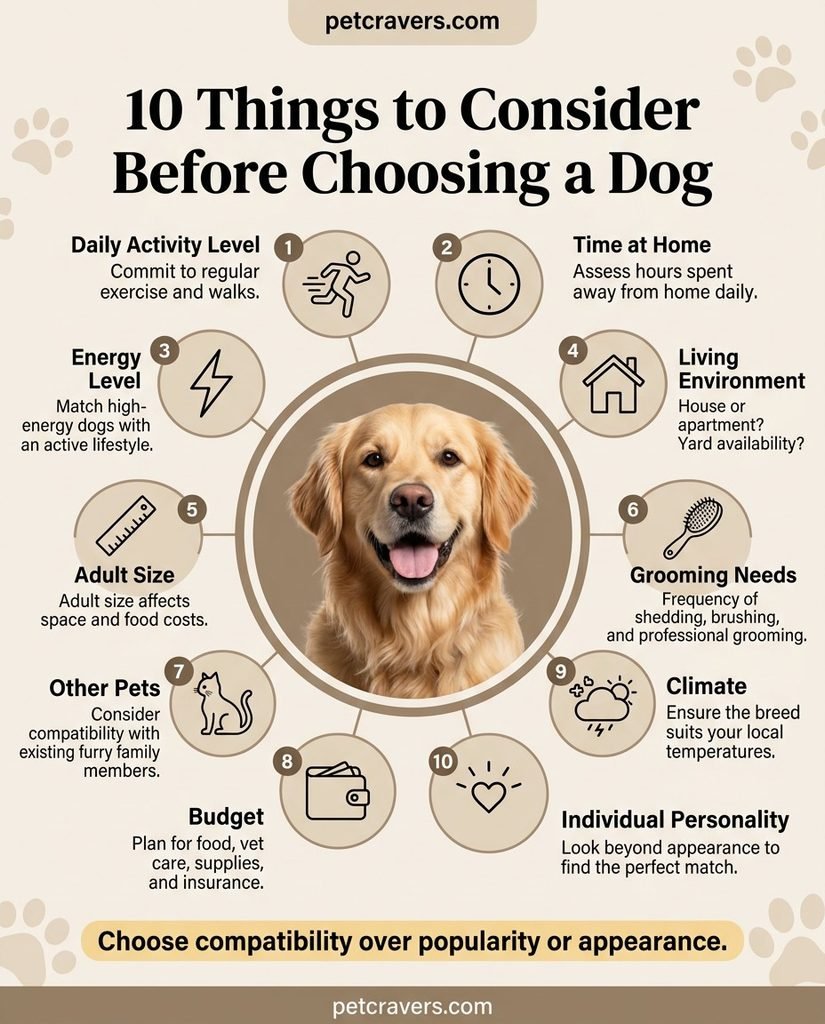
Choosing a dog is not about picking the most popular breed or the puppy with the cutest photo. It is about matching the dog to the life you actually live. Here are the factors that matter most.
Choosing a dog is not about picking the most popular breed or the puppy with the cutest photo. It is about matching the dog to the life you actually live. Here are the factors that matter most. Consider your daily activity level, time spent at home, the dog’s energy level, living environment, adult size, grooming needs, shedding, training requirements, temperament, and experience.
1. Consider your daily activity level. Be honest about how much exercise you will provide every single day, even in bad weather. If you are a couch potato who enjoys a single 30-minute walk, do not bring home a Border Collie or Australian Shepherd. If you are a long-distance runner or hiker, a low-energy toy breed may not be fulfilled either.
2. Think about how much time you spend at home. Dogs are social animals. Even relatively independent breeds need interaction, training, and companionship. If you work 10+ hour days regularly, consider whether you can arrange a midday walker, and be realistic about how much quality time you can offer morning and evening.
3. Match the dog’s energy level to your lifestyle. Energy level is one of the strongest predictors of compatibility. A mismatch here is one of the top reasons dogs are surrendered to shelters. Puppies and young adults of active breeds need far more engagement than seniors or calm breeds.
4. Consider your living environment. Apartments work beautifully for many breeds—small size helps, but temperament matters more. Some large breeds like Greyhounds and Great Danes can thrive in apartments if they get daily walks and outings. What you cannot do is keep a high-energy working breed in a small space with no outlets.
5. Consider the dog’s adult size. A 10-pound puppy may grow into a 100-pound dog. Research the breed’s adult size and make sure you can handle that dog on a leash, in your car, on your furniture (if allowed), and in your budget.
6. Be honest about grooming. Long-haired breeds, curly coats, and double coats all require consistent grooming. If you will not brush daily or pay for professional clips every month, choose a shorter-coated breed.
7. Think about shedding. All dogs shed to some degree, but heavy shedders like German Shepherds, Golden Retrievers, Bernese Mountain Dogs, and Huskies (not on this list but worth noting) leave hair everywhere. If this will bother you, choose a low-shedding breed.
8. Consider training requirements. Smart, driven breeds need consistent training and mental stimulation; this is a joy for some owners and a burden for others. First-time owners often do best with biddable, people-pleasing breeds.
9. Think about temperament. Do you want a Velcro dog that follows you room to room, or a more independent companion? A social butterfly that loves every stranger, or a discerning guardian? Both are valid preferences—match them honestly.
10. Consider your experience. First-time owners should research beginner-friendly breeds; experienced handlers may enjoy the challenge of a more complex working breed.
11. Consider your family and children. Some breeds are famously patient with kids; others do better in adult homes. Always supervise interactions between dogs and children, regardless of breed.
12. Consider other pets. Prey drive, dog selectivity, and cat-friendliness vary by breed and individual. Introductions should be slow and supervised.
13. Consider your budget. Food, grooming, vet care, training, pet sitters, and emergencies add up. Giant breeds and breeds with known health issues cost more over a lifetime. Pet insurance is often a wise investment.
14. Consider your climate. Brachycephalic breeds struggle in heat; thin-coated sighthounds and small breeds suffer in cold; thick-coated giants overheat easily.
15. Do not choose based on appearance alone. The dog in the viral video or on your favorite TV show may be a terrible fit for your real life.
16. Consider the individual dog. Breed characteristics are useful, but individual personality matters enormously. Meet the dog in person if possible, and ask shelter staff, foster caregivers, or breeders lots of questions.
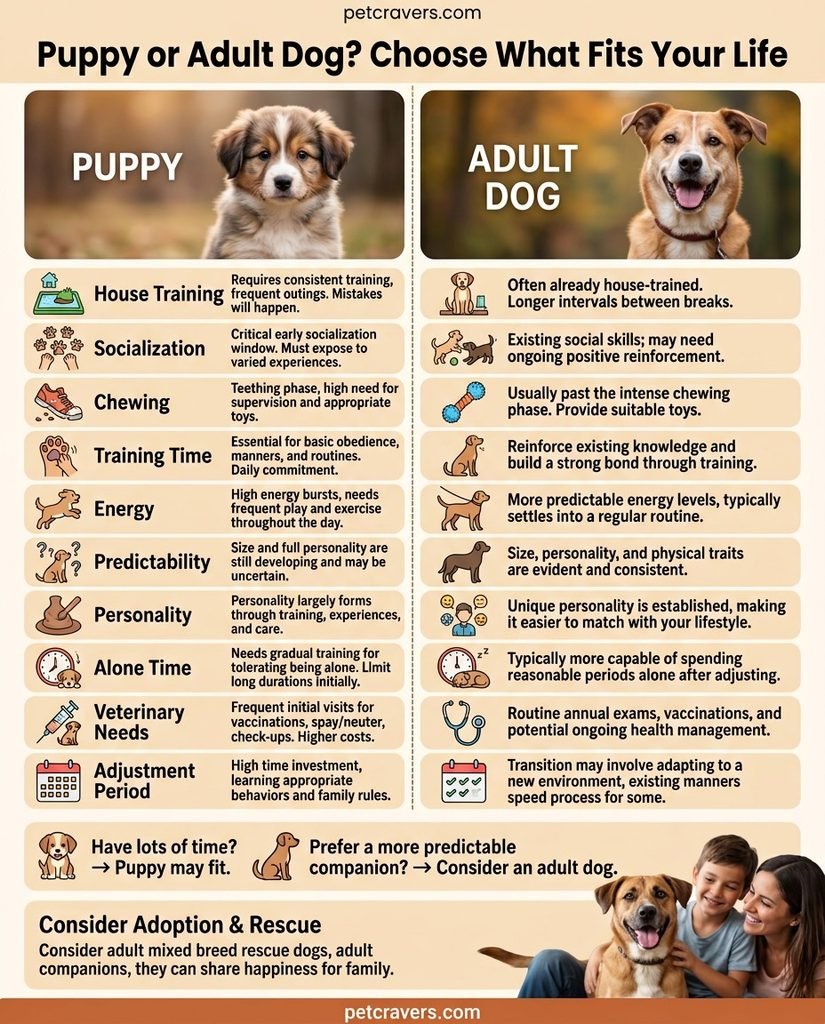
17. Remember that puppies are not blank slates. Puppies are adorable, but they require massive time investments in housetraining, socialization, chewing management, and basic training. Adolescent dogs (6–18 months) can be the most challenging phase.
18. Adult dogs can be excellent choices. Adult dogs from shelters or rescues often arrive with known personalities, housetraining, and basic manners. For many owners, an adult dog is actually easier than a puppy.
In conclusion, remember that the best dog breeds for every type of owner are those that match your needs.
19. Consider adoption and responsible breeders. If you want a purebred, look for responsible breeders who health-test, socialize puppies, and offer lifetime support. If you are open to any breed, shelters and rescues are full of wonderful dogs—including purebreds.
20. Make a checklist and choose compatibility over popularity. The “it” breed of the year is often the breed that overwhelms ill-prepared owners a year later. Choose the dog that fits your real life.
____________________________________________________________
Frequently Asked Questions About the Best Dog Breeds for Every Type of Owner
What is the best dog breed overall? There is no universal number-one breed. The best dog breed for you depends on your lifestyle, experience, living situation, activity level, and preferences. That said, Labrador Retrievers and Golden Retrievers consistently rank among the most popular because of their friendly, adaptable natures.
What is the best dog breed for first-time owners? Golden Retrievers, Labrador Retrievers, Cavalier King Charles Spaniels, Poodles, and certain mixed breeds are often excellent first dogs because of their trainability and generally forgiving natures.
What is the best dog breed for families with children? Labrador Retrievers, Golden Retrievers, Beagles, Newfoundlands, and Cavalier King Charles Spaniels are frequently recommended. Always supervise young children with any dog.
What is the best dog breed for apartment living? French Bulldogs, Cavalier King Charles Spaniels, Greyhounds, Whippets, Shih Tzus, Maltese, and Bichon Frises are all popular apartment dogs. Size is less important than energy level and noise.
What is the best dog breed for active people? Border Collies, Australian Shepherds, Australian Cattle Dogs, Jack Russell Terriers, Vizslas (not on this list but worth a look), and Labradors are great for active owners.
What is the best calm companion dog? Cavalier King Charles Spaniels, Greyhounds, Whippets, Shih Tzus, Great Danes, and many senior mixed-breed dogs can be wonderful calm companions.
There is no such thing as a universally perfect dog breed. The right breed or mix for you depends on your daily routine, energy level, living space, family situation, experience, grooming tolerance, budget, and the kind of relationship you want with a dog.
What is the best dog breed for seniors? Cavalier King Charles Spaniels, Shih Tzus, Maltese, Greyhounds, Whippets, Bichon Frises, and small-to-medium mixed breeds are often recommended, depending on the individual senior’s mobility and lifestyle.
What is the best dog breed for people who work full-time? No dog should be left alone for 12 hours a day, but relatively independent or low-to-moderate energy breeds like Greyhounds, Whippets, French Bulldogs, and certain adult mixed breeds can adapt to full-time work if given morning exercise, a midday break, and evening attention.
Breed descriptions are useful starting points, but they are not guarantees. Every dog is an individual. Spend time with the breed (or the individual dog) before committing, ask breeders or shelters detailed questions, prepare your home and budget, and commit to training, socialization, and lifelong veterinary care.
What are the best hypoallergenic dog breeds? No dog is truly hypoallergenic, but low-shedding breeds like Poodles, Bichon Frises, Maltese, and certain Poodle mixes may cause fewer allergic reactions in some people.
Should I choose a puppy or an adult dog? Puppies are wonderful but require enormous time and patience for housetraining, socialization, and chew management. Adult dogs often arrive with known personalities and can be easier for busy owners or first-timers.
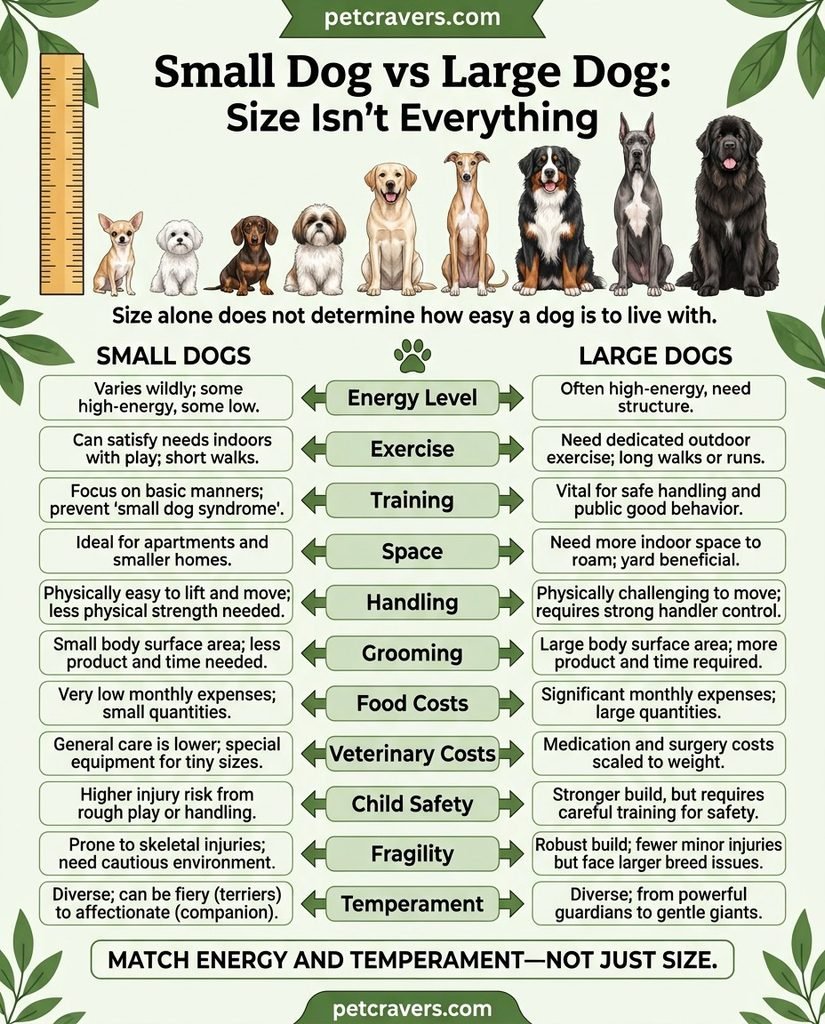
Are small dogs easier than large dogs? Not necessarily. Many small breeds have big personalities, high barking tendencies, and can develop “small dog syndrome” if not trained and socialized. Large breeds can be more physically demanding and expensive. Ease depends on energy and temperament more than size.
Are mixed-breed dogs good pets? Absolutely. Mixed-breed dogs can be affectionate, intelligent, playful, calm, athletic, or independent—every bit as wonderful as purebreds. They require the same lifetime commitment to training, veterinary care, and love.
____________________________________________________________
Final Verdict: The Best Dog Is the One That Fits Your Life
There is no such thing as a universally perfect dog breed. The right breed or mix for you depends on your daily routine, energy level, living space, family situation, experience, grooming tolerance, budget, and the kind of relationship you want with a dog.
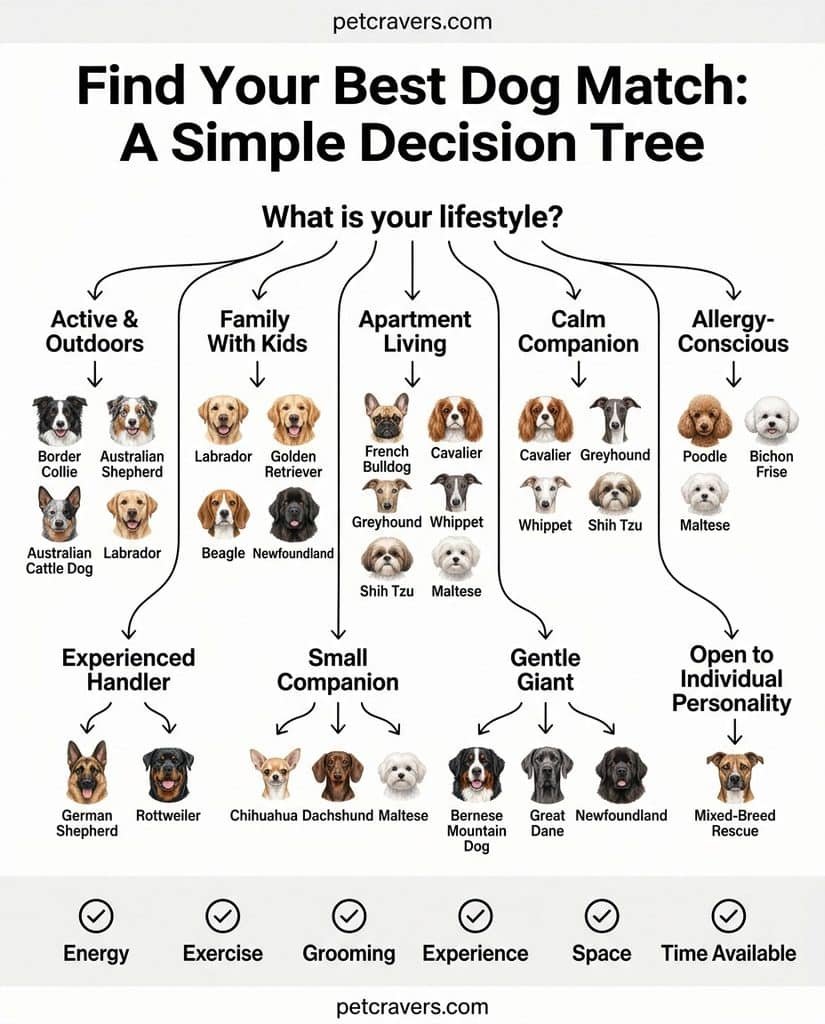
If you are a first-time owner ready for an active, loving companion, a Golden Retriever or a Cavalier King Charles Spaniel may be a wonderful starting point. If you are an active outdoor lover, a Border Collie, Australian Shepherd, or Australian Cattle Dog could become your dream adventure partner. If you live in a small apartment in the city, a French Bulldog, Whippet, Greyhound, Shih Tzu, or Maltese may suit your space and pace. Families may gravitate to Labrador Retrievers, Beagles, or Newfoundlands. Allergy sufferers often look to Poodles, Bichon Frises, or Maltese. Experienced handlers seeking a loyal, protective companion may thrive with a German Shepherd or Rottweiler. And for those open to the unexpected, a mixed-breed dog from a shelter or rescue may be the best match of all.
Breed descriptions are useful starting points, but they are not guarantees. Every dog is an individual. Spend time with the breed (or the individual dog) before committing, ask breeders or shelters detailed questions, prepare your home and budget, and commit to training, socialization, and lifelong veterinary care.
A Simple Final Checklist Before You Bring a Dog Home
- I understand the breed’s (or individual dog’s) exercise needs and can meet them daily.
- I can afford food, grooming, routine vet care, and unexpected emergencies.
- My home and lifestyle suit the dog’s adult size and energy level.
- I am committed to positive training and early socialization.
- I have a plan for when I am at work or traveling.
- Every member of my household is on board and prepared for a 10–15+ year commitment.
- I have chosen compatibility over trends, appearance, or peer pressure.

At the end of the day, the best dog breed is not the one that wins popularity contests—it is the one you can responsibly love, care for, and share your life with for years to come. Whether you come home with a wagging Golden Retriever, a dignified Greyhound, a tiny Maltese, or a one-of-a-kind shelter mutt, the right match will change your life in ways you cannot yet imagine.
Bonus: Tips for the First 30 Days With Your New Dog
Bringing a new dog home is joyful, but the first month is also an adjustment period for everyone. Here are a few practical tips to set you and your new companion up for success, regardless of the breed or mix you choose.
Prepare your space before your dog arrives. Stock up on food, treats, a properly sized crate or bed, food and water bowls, a collar and harness, a sturdy leash, ID tags, poop bags, grooming supplies, a variety of toys (chew, interactive, plush, and puzzle), and an enzymatic cleaner for accidents. Puppy-proof or dog-proof your home by securing electrical cords, toxic houseplants, human foods that are dangerous (especially chocolate, xylitol, grapes, raisins, onions, and garlic), medications, and small objects that could be swallowed. If you are bringing home a chewer, provide a variety of appropriate chews and supervise closely.
Start a consistent routine on day one. Dogs thrive on predictability. Establish fixed times for meals, potty breaks, walks, play, training, and bedtime. Take your new dog out frequently—especially after meals, naps, play, and drinking—to set housetraining up for success. Praise and reward heavily when they eliminate in the right spot. Crate training, when done positively, can help with housetraining and give your dog a safe den of their own. Never use the crate as punishment.
Give them time to decompress. Many dogs, especially shelter or rescue dogs, need a few days or even weeks to settle in. They may be shy, sleep more than expected, have accidents, or show behaviors that surprise you. Give them space, let them explore at their own pace, and do not overwhelm them with visitors or new experiences right away. Children should be taught to give the dog quiet time and to respect their bed and crate as off-limits zones when the dog retreats there.
Find a veterinarian and schedule an initial exam. Within the first week, take your new dog to a trusted veterinarian for a wellness check, vaccinations as needed, parasite screening, and discussion of spay/neuter timing, microchipping, nutrition, and any breed-specific health concerns. If you have a puppy, ask about vaccination schedules and safe socialization before they are fully vaccinated.
Begin positive training immediately. Short, fun, reward-based training sessions (5–10 minutes several times a day) build your bond and teach good habits early. Focus on name recognition, recall, sit, loose-leash walking, and comfortable handling of paws, ears, and mouth for grooming and vet visits. If you are a first-time owner or have a challenging breed, sign up for a positive-reinforcement puppy or basic manners class within the first several weeks. Group classes double as socialization opportunities.
Socialize thoughtfully. Expose your new dog gently and positively to a wide variety of people, dogs, sounds, surfaces, environments, and handling, especially during the critical puppy socialization window (roughly 3–14 weeks), but continue socializing throughout their life. Go at the dog’s pace—never force them into a situation that clearly frightens them, and pair new experiences with treats, praise, and play.
Build the bond. Spend quiet time together, play games your dog enjoys, learn what motivates them (food? toys? tug? praise?), and let them settle into being a loved member of your family. Training, grooming, walking, and simply being present together all build the trust and connection that make dog ownership one of life’s most rewarding experiences.
With preparation, patience, and a genuine commitment to meeting your dog’s needs for their entire life, you can enjoy a decade or more of companionship, laughter, and unconditional love with the right dog for you.


Leave a Reply