
Dogs are celebrated for their loyalty, companionship, and keen social awareness. Many dog owners have experienced moments when their pet seems to recognize a family member or friend instantly, even after long periods apart. But can dogs truly recognize human faces in the same way we recognize theirs?
Facial recognition is a vital skill in social animals, allowing them to identify friends, family, and potential threats. For dogs, recognizing human faces is not just a fun party trick—it’s a key aspect of forming bonds, responding appropriately to social cues, and navigating their human environment.
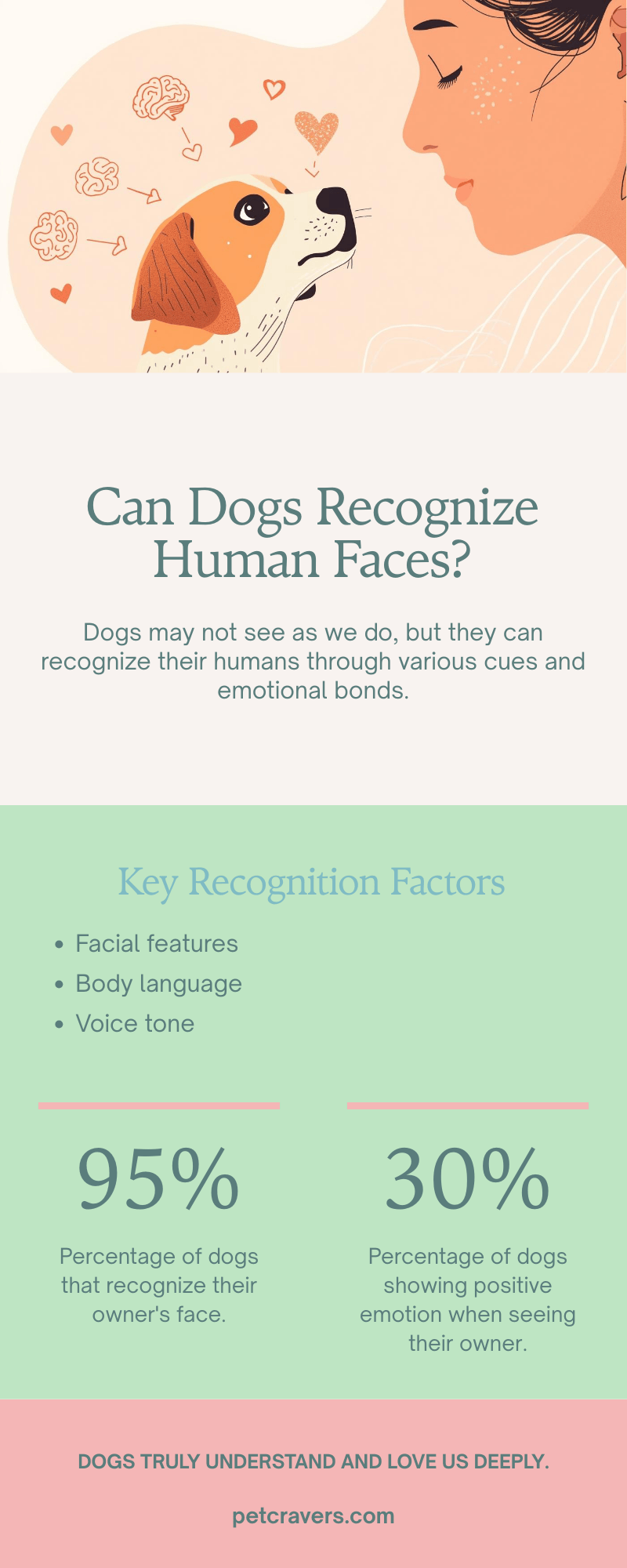
While humans primarily rely on visual input to identify faces, dogs combine multiple senses—including sight, smell, and sound—to determine who they are interacting with. This raises intriguing questions: How much do dogs depend on visual cues alone? Can they distinguish between strangers and familiar people based purely on facial features? And how does this ability affect their behavior, training, and interactions with humans?
In this post, we’ll explore the science behind dogs’ facial recognition abilities, how they identify familiar and unfamiliar humans, the role of other senses in this process, and practical ways owners can leverage this understanding to strengthen their bond with their dogs.
Understanding how dogs understand human emotions helps explain why they respond so strongly to familiar faces.
Do Dogs Recognize Human Faces? The Science Explained
Dogs are highly social animals that have evolved alongside humans for thousands of years. This long-term domestication has shaped their brains and behaviors, giving them unique skills to interpret human cues—including the ability to recognize individual faces.
1. Evolutionary Background
Dogs’ social intelligence has been honed through their interactions with humans. Recognizing familiar faces allows dogs to identify trusted caregivers, respond appropriately to strangers, and maintain social bonds. This skill is a result of both natural selection and learned experience.
2. Role of the Brain
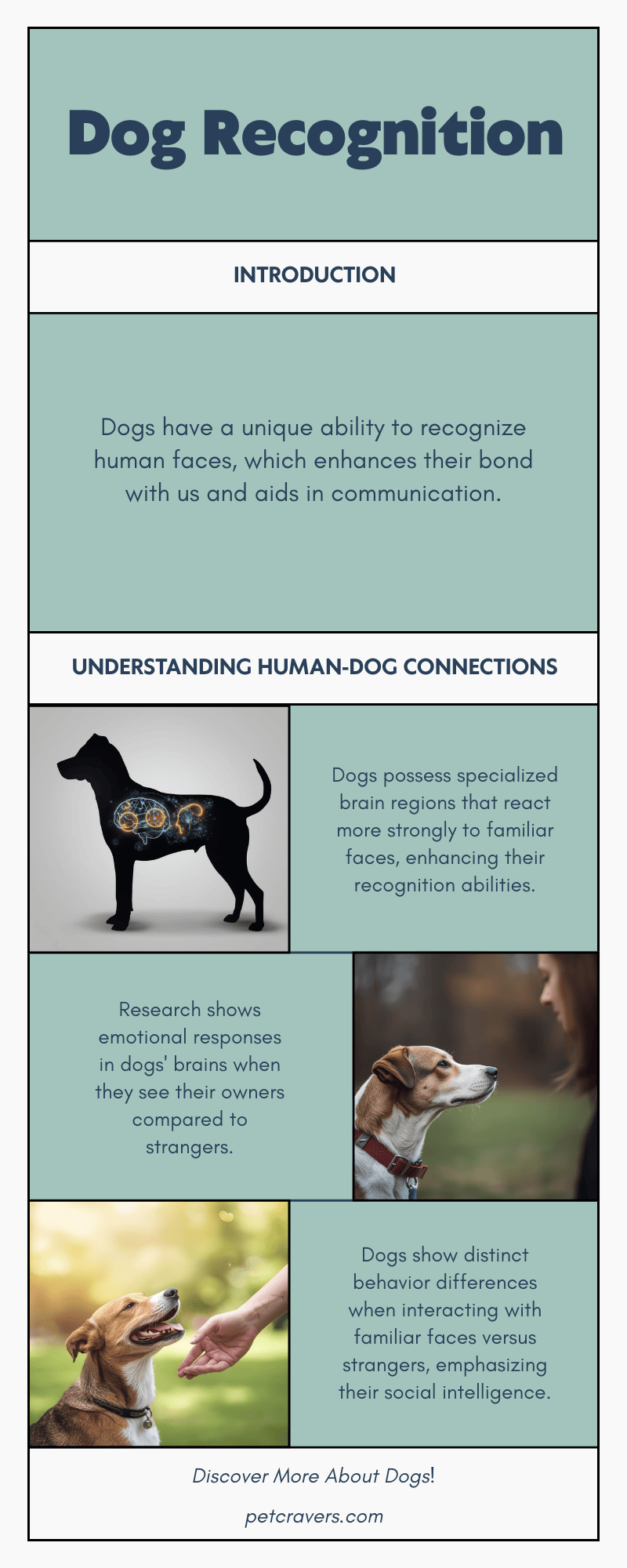
Research has shown that dogs have specialized areas in their brains for processing visual information, similar to humans. The canine fusiform gyrus, for example, is involved in recognizing familiar faces. Functional MRI studies indicate that dogs’ brains respond differently to images of their owners compared to strangers, demonstrating a neurological basis for facial recognition.
Supporting Research: Brain Responses to Human Faces
Neuroscientific research using functional magnetic resonance imaging (fMRI) has shown that dogs have brain regions that respond selectively to faces. These findings suggest that dogs process human faces differently from other visual objects, providing strong evidence that facial recognition has a neurological basis. Rather than relying on vision alone, these specialized brain responses work alongside scent and sound to help dogs identify familiar people and interpret social cues more accurately.
3. Evidence from Studies
- Behavioral studies: Dogs are able to differentiate between photos of their owners and photos of strangers, even when the images are static and lack additional cues.
- Neurological studies: Brain scans reveal increased activity when dogs see familiar faces, suggesting that recognition triggers emotional and reward-related responses.
- Cross-modal recognition: Dogs combine visual, auditory, and olfactory information to confirm identity, showing that facial recognition is part of a broader sensory network rather than a purely visual process.
4. Recommended Reading: The Genius of Dogs
For readers who want to explore canine cognition in greater depth, The Genius of Dogs: How Dogs Are Smarter Than You Think by Brian Hare and Vanessa Woods offers an engaging overview of how dogs evolved to understand and respond to humans. The book explains how dogs interpret facial expressions, gestures, and other social cues, complementing scientific research on canine facial recognition and highlighting the remarkable bond between dogs and people.
By understanding the science behind facial recognition, we can appreciate how dogs perceive their human companions—not just as caretakers, but as recognizable individuals with whom they share complex social bonds.
Research into the science behind a dog’s brain has revealed specialized regions involved in processing social information.
How Dogs Recognize Human Faces and Familiar People
Dogs are skilled at identifying people they know, but they do so using a combination of visual, auditory, and olfactory cues rather than relying solely on facial recognition. Understanding how dogs recognize familiar humans can help owners strengthen their bond and interpret their dog’s behavior more accurately.
1. Behavioral Signs of Recognition
When a dog recognizes a familiar person, several common behaviors are observed:
- Tail wagging and excitement: A quick, energetic wag or an upright, alert tail signals happiness and recognition.
- Approach and proximity-seeking: Dogs may move closer, nuzzle, or lean against familiar individuals to express comfort and trust.
- Vocalizations and playful gestures: Barking, whining, or play bows often accompany recognition, especially during joyful reunions.
2. Role of Scent vs. Visual Cues
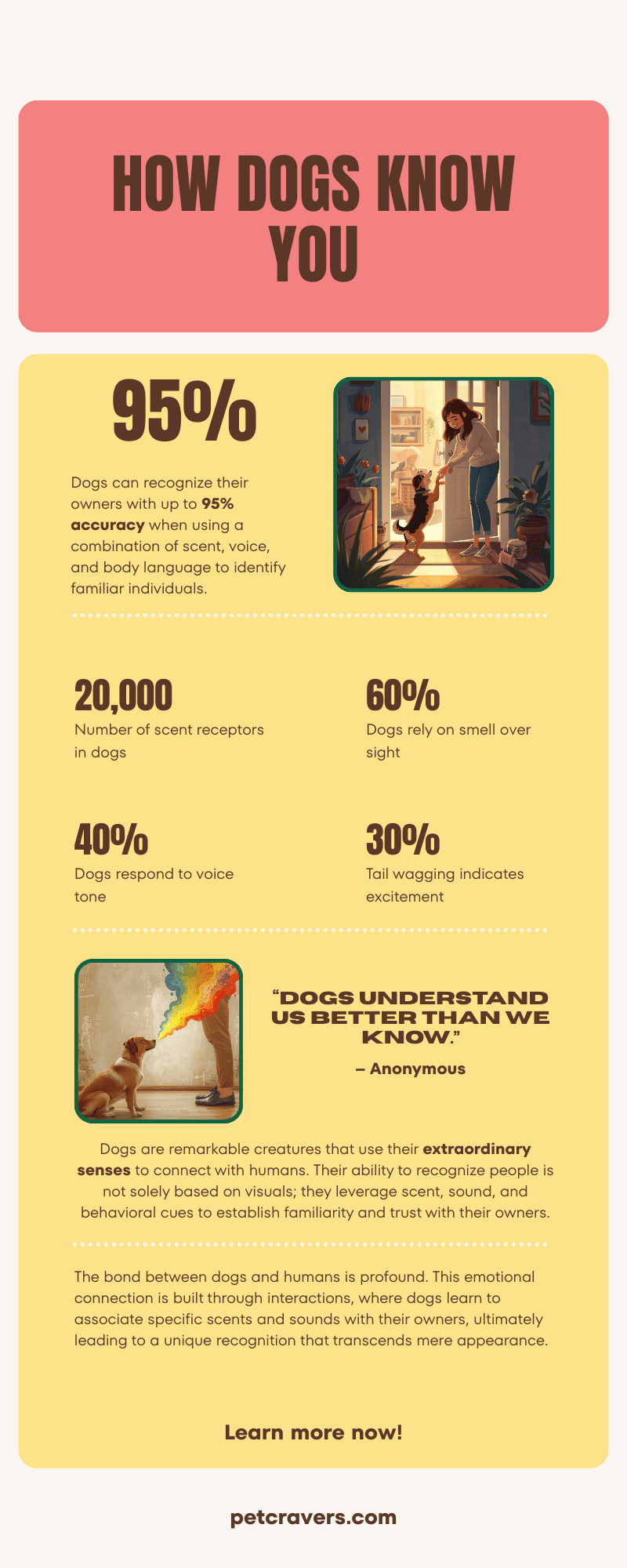
While humans primarily rely on sight, dogs use their incredible sense of smell as the primary method of recognition. They often combine scent with visual information to confirm identity:
- Scent memory: Dogs can remember the unique scent of their owners for years.
- Visual confirmation: Facial features, posture, and habitual movements reinforce recognition.
- Auditory cues: Tone of voice and specific words also help dogs identify familiar humans.
3. Factors That Improve Recognition
- Early exposure: Puppies exposed to family members during critical developmental stages are more likely to recognize them consistently later in life.
- Bonding and positive interactions: Dogs remember people who provide care, food, and affection, strengthening recognition.
- Repeated interactions: Consistency in routine and presence helps dogs build a reliable mental map of familiar humans.
By understanding how dogs recognize familiar people, owners can better interpret their dog’s behavior, anticipate responses, and use recognition cues to enhance training, bonding, and daily communication. Maintaining the power of eye contact in dog bonding can deepen your relationship with your dog.
Dogs also rely on understanding human words and familiar voices to identify their owners.
Do Dogs Recognize Human Faces Better Than Stranger Faces?
Dogs respond differently to people they know compared to strangers, and these differences provide insight into their recognition abilities. Understanding these responses can help owners interpret behavior and manage social interactions more effectively.
1. Behavioral Differences
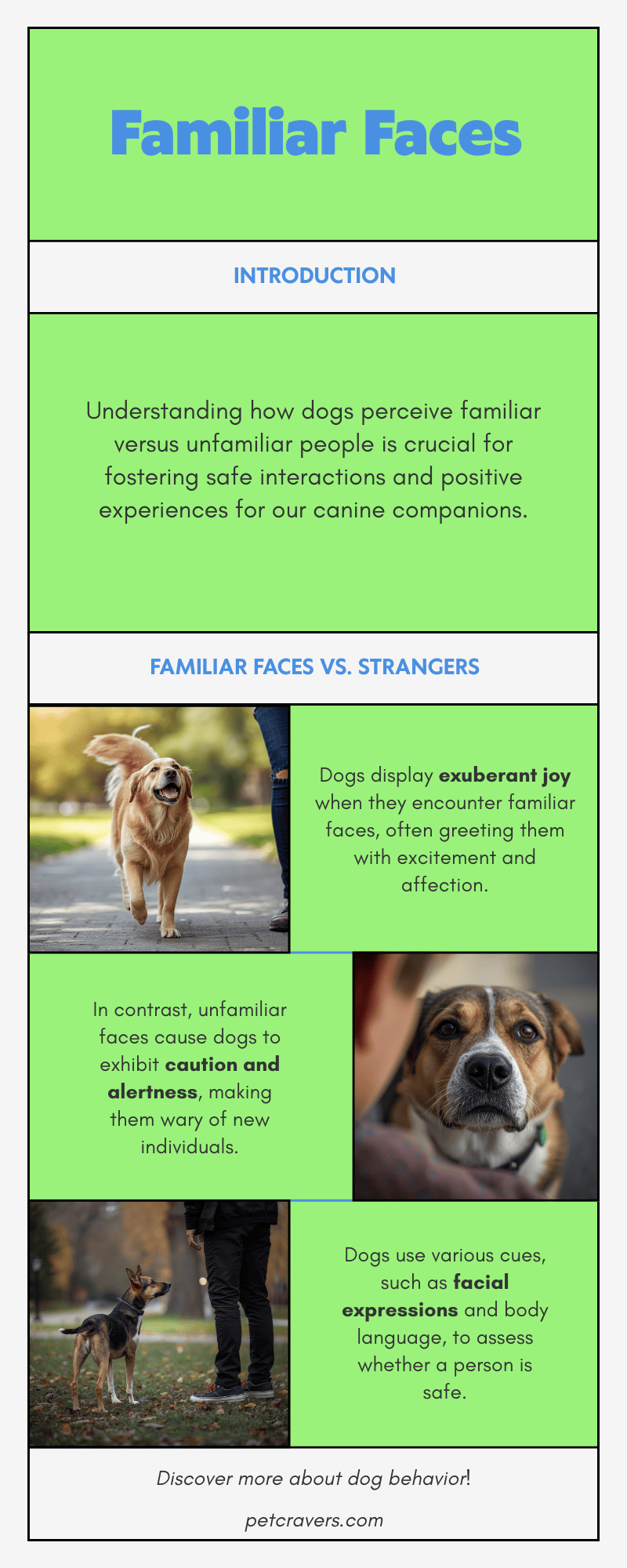
- Familiar Faces: Dogs often show excitement, approach behavior, tail wagging, and playful gestures when they see someone they recognize. They may bring toys, nuzzle, or follow the person around as a sign of attachment.
- Unfamiliar Faces: Dogs may be cautious, alert, or even defensive when encountering strangers. Signs include stiff posture, raised hackles, slow or hesitant approach, barking, or avoidance.
2. Emotional Responses
- Recognizing a familiar person often triggers positive emotions, such as happiness and anticipation.
- Encountering a stranger can evoke caution or anxiety, depending on the dog’s temperament, past experiences, and socialization level.
3. Use of Facial Expressions
Dogs do not rely solely on faces to assess people—they combine facial expressions with tone of voice and body language. For instance, a friendly smile paired with a relaxed posture may reduce a dog’s caution around strangers, while a neutral or tense expression could heighten alertness.
Research Spotlight: Recognizing Similar People
Research has shown that dogs can distinguish between people who look remarkably alike, including identical twins, by combining facial features with other sensory information such as scent, voice, and body movements. This finding highlights that while visual recognition is important, dogs achieve the most accurate identification by integrating multiple cues rather than relying on facial appearance alone.
4. Practical Implications for Owners
- Observing your dog’s reactions to new people can help you gauge comfort levels and intervene when necessary.
- Positive introductions, using calm gestures and friendly expressions, can help dogs learn to differentiate between safe and unfamiliar individuals.
By understanding these differences, owners can better manage social interactions, ensuring dogs feel safe while still enjoying positive engagement with both familiar and new people.
Limitations of How Dogs Recognize Human Faces
While dogs are impressive in their ability to recognize human faces, there are some limitations and common misconceptions about how they perceive us. Understanding these helps owners set realistic expectations and interpret behavior more accurately.
1. Dogs Don’t Recognize Faces Like Humans
Dogs rely on a combination of senses—sight, smell, and hearing—to identify people. Unlike humans, who primarily use visual cues, dogs integrate multiple signals to confirm identity. Facial recognition alone is often not sufficient.
2. Breed Differences and Individual Variation
Not all dogs are equally skilled at reading faces. Breeds that have been historically bred for close human interaction, like Golden Retrievers or Border Collies, tend to be better at recognizing and responding to facial cues. Individual personality, socialization, and experience also play a major role.
3. Misconceptions About “Mind Reading”
Some owners assume that dogs can understand human emotions or intentions fully from faces alone. In reality, dogs infer emotional states based on a combination of signals, including tone of voice, posture, and scent. They are highly perceptive but do not literally “read minds.”
4. Situational Factors Affect Recognition
Dogs may misinterpret facial expressions if context is unclear or if multiple cues are contradictory. For example, a neutral face combined with a tense posture may be confusing, making dogs rely more heavily on tone or scent to assess the situation.
Recognizing these limitations helps owners communicate more effectively, reduce confusion, and ensure that dogs can respond appropriately to both familiar and unfamiliar people.
Practical Ways to Use Your Dog’s Facial Recognition Skills
Understanding that dogs can recognize human faces—and how they do it—can be extremely useful for training, bonding, and everyday interactions. By leveraging this knowledge, owners can create positive experiences and strengthen their relationship with their dog.
1. Enhance Training Through Familiarity
- Use familiar faces during training sessions to create a sense of comfort and security.
- Positive reinforcement paired with visual recognition of the trainer can help dogs respond more reliably.
2. Manage Introductions to New People
- Introduce dogs to strangers gradually, combining calm body language, friendly tone, and visible positive expressions.
- This approach helps dogs learn to differentiate between familiar and unfamiliar people without fear or confusion.
3. Use Consistent Cues
- Pair facial expressions with tone, gestures, and scent when communicating. Dogs respond best when signals are consistent.
- For example, a warm smile paired with a happy tone signals safety and encourages social engagement.
4. Strengthen Bonding at Home
- Regular interactions with family members using positive facial expressions and gestures reinforce recognition and attachment.
- Dogs learn to associate familiar faces with comfort, rewards, and social interaction, deepening emotional bonds.
5. Observe and Adapt
- Pay attention to your dog’s reactions to different faces and cues.
- Adjust your approach for shy, anxious, or overstimulated dogs to ensure interactions remain positive and stress-free.
By applying these strategies, owners can help dogs navigate their social world confidently, enhance learning during training, and build a stronger, more trusting relationship with both family members and visitors.
Fun Facts and Research Highlights
Dogs’ ability to recognize human faces is not only fascinating but also supported by scientific research. Here are some interesting studies, anecdotes, and comparisons that highlight this remarkable skill:
1. Dogs Can Recognize Photos of Their Owners
Behavioral experiments have shown that dogs can distinguish between pictures of their owners and strangers. Even when images are static and lack additional cues like scent or movement, dogs often respond differently to familiar faces, demonstrating visual recognition.
2. Emotional Responses to Recognition
Neuroscientific studies using fMRI scans have revealed that dogs’ brains show heightened activity in reward-related regions when they see their owners. This response is similar to how humans react when seeing loved ones, suggesting a strong emotional component tied to recognition.
3. Dogs Remember Owners After Long Absences
Many dog owners have experienced reunions after months or even years apart, where their dog immediately recognizes them. This indicates not only strong facial recognition abilities but also impressive memory for familiar individuals.
4. Cross-Species Comparisons
While some animals, like primates and horses, can also recognize human faces, dogs have a unique advantage: their long history of domestication has enhanced their ability to interpret human social cues and combine them with other senses for accurate recognition.
5. Influence of Early Socialization
Puppies exposed to family members during critical developmental periods are more likely to recognize those individuals reliably as adults. Positive interactions and consistent exposure enhance this recognition ability, highlighting the role of experience in shaping social cognition.
6. Further Reading: Inside of a Dog
For readers interested in learning more about how dogs perceive the world, Inside of a Dog: What Dogs See, Smell, and Know by Alexandra Horowitz is an excellent resource. The book explains how dogs combine sight, smell, hearing, and other sensory information to recognize people and interpret their surroundings. It provides valuable insights into canine cognition, helping owners better understand why dogs rely on multiple cues—not just facial features—when identifying familiar humans.
These fun facts and research highlights show that dogs’ facial recognition is both scientifically supported and practically observable, reinforcing the deep social connection between humans and their canine companions.
Conclusion
Dogs are incredibly perceptive creatures, and their ability to recognize human faces is a testament to their social intelligence and evolutionary bond with humans. While they do not rely solely on visual cues like humans, they combine sight, smell, and sound to identify familiar people, distinguish strangers, and navigate social interactions effectively.
Understanding that dogs can recognize human faces has practical implications for training, bonding, and everyday interactions. By using consistent facial expressions, tone, and gestures, owners can enhance communication, reduce anxiety, and strengthen trust. Familiar faces can be used strategically to create comfort and security, while positive introductions to new people can foster social confidence.
In short, a dog’s recognition of human faces is more than just a neat trick—it reflects their ability to form meaningful social connections, respond to emotional cues, and live harmoniously with their human families. Observing your dog’s reactions, rewarding positive interactions, and being mindful of cues will help you build a stronger, more responsive, and emotionally connected relationship with your canine companion.




Leave a Reply