Introduction
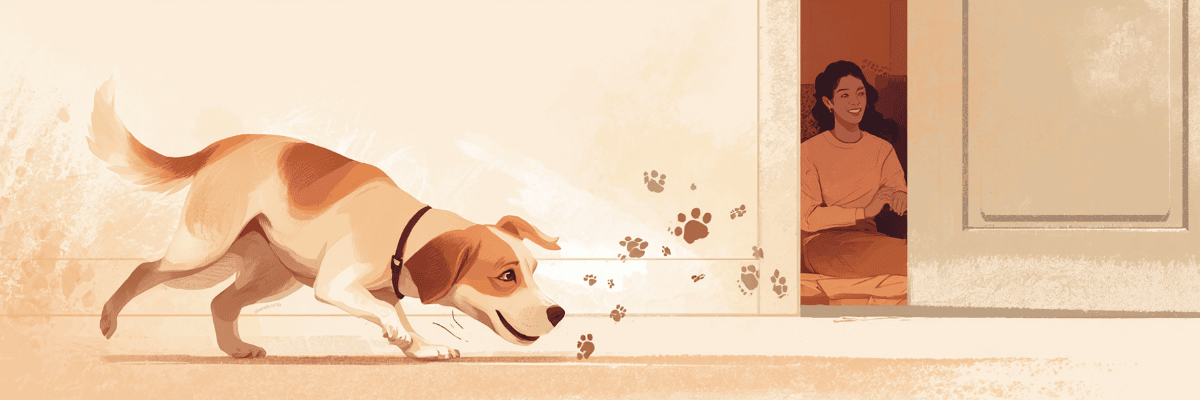
Few games spark as much joy and excitement in dogs as a good round of hide & seek. While often associated with children, hide & seek is an incredibly effective and entertaining way to engage your dog’s mind, body, and instincts—all while deepening the special bond you share. Unlike basic fetch or tug-of-war, hide & seek challenges dogs to think, problem-solve, and actively engage with you, their trusted human.
This game taps into your dog’s natural instincts to track, search, and explore their environment. Whether it’s following your scent, scanning for visual cues, or hunting for a favorite toy or treat, dogs experience a sense of purpose and satisfaction that goes far beyond ordinary playtime. Hide & seek also strengthens communication, trust, and emotional connection between dog and owner, turning playtime into a shared adventure that benefits both participants.
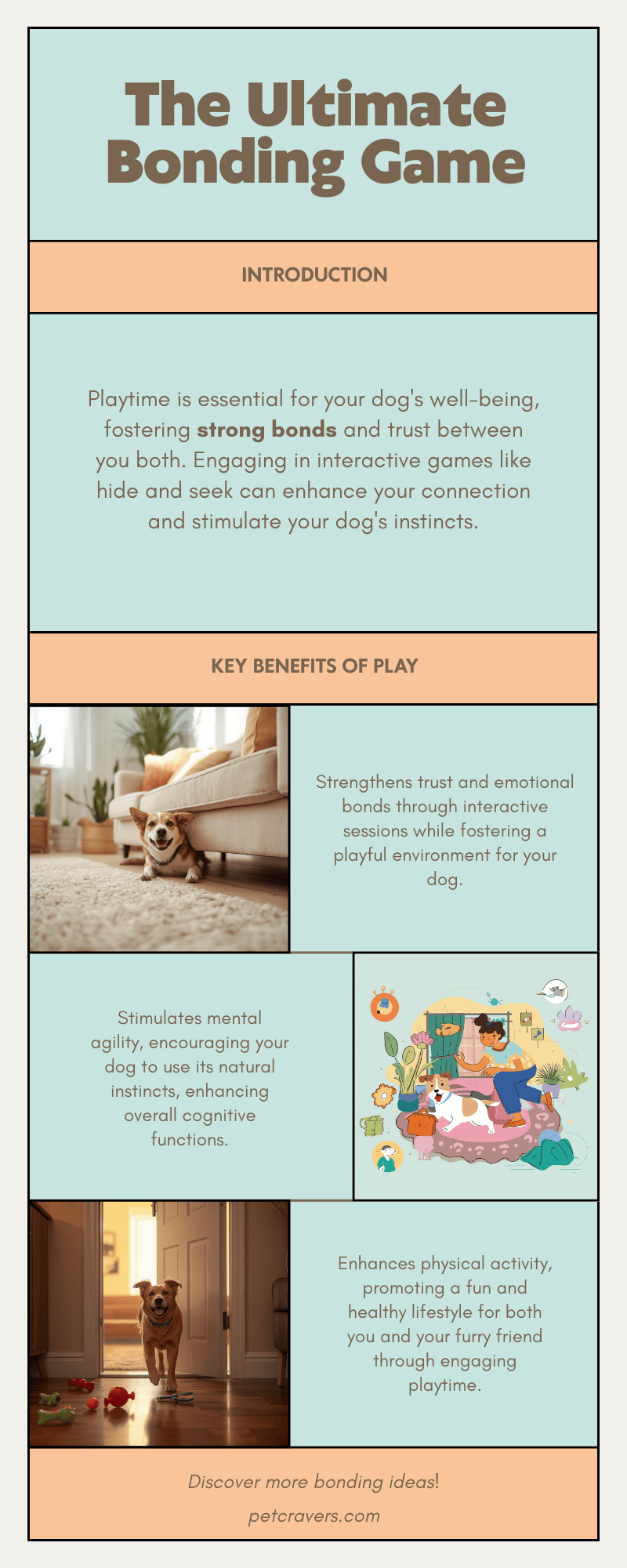
In this post, we’ll explore why hide & seek is such a powerful bonding tool, how to play it effectively, the wide-ranging benefits it offers, fun variations to keep things exciting, and practical tips to ensure every game is safe, rewarding, and enjoyable for your dog. By the end, you’ll be ready to transform a simple game into an enriching activity that stimulates your dog’s mind, encourages physical activity, and strengthens your bond in ways you never imagined.
Why Hide & Seek is Special for Dogs
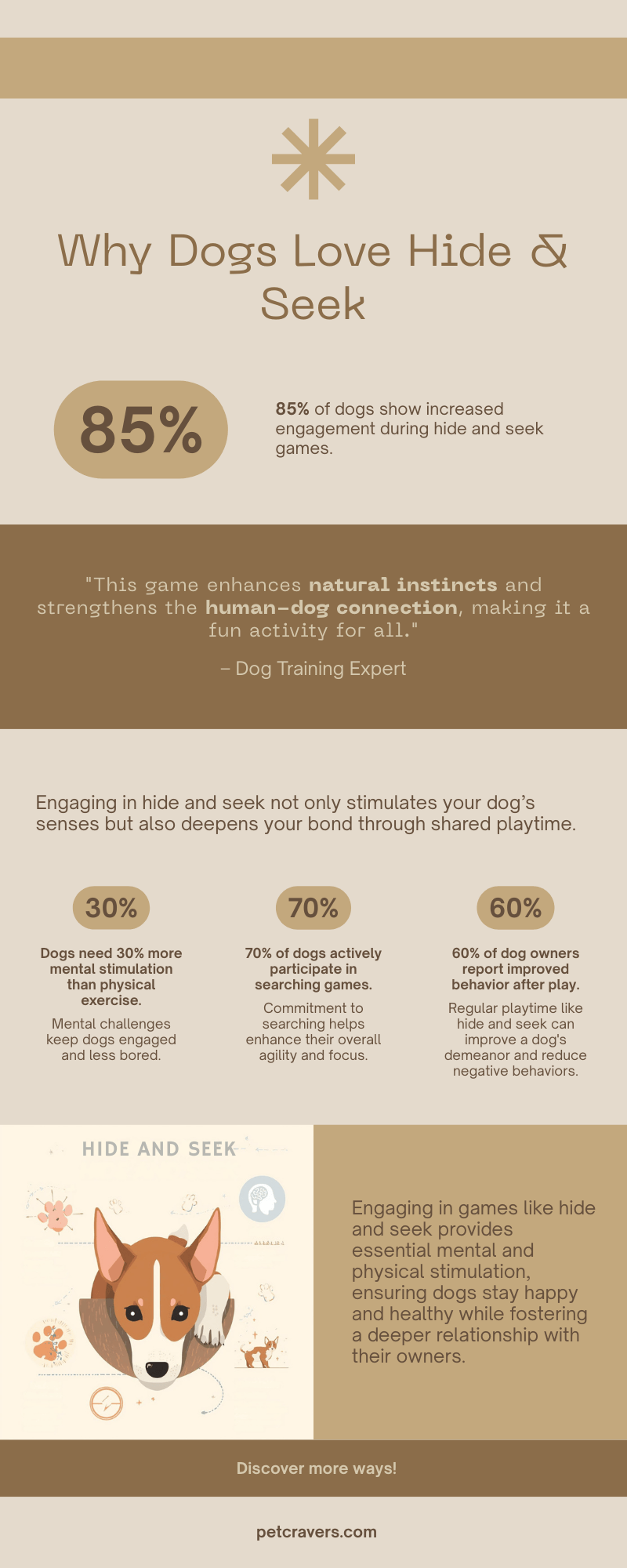
Hide & seek is more than just a fun game—it taps into a dog’s natural instincts and provides a range of benefits that make it a truly unique activity. Unlike standard fetch or tug-of-war, hide & seek challenges both the mind and body, offering mental stimulation, physical exercise, and an opportunity for dogs to express innate behaviors.
1. Engages Natural Instincts
Dogs are naturally curious and love to explore their environment. Hide & seek encourages them to use their senses—especially sight, smell, and hearing—to track and locate a person, toy, or treat. This taps into their instinctual problem-solving and hunting behaviors, satisfying an essential part of their canine nature.
2. Provides Mental Stimulation
Searching for a hidden target requires focus, memory, and critical thinking. Each successful find rewards the dog’s efforts, building confidence and reinforcing the brain’s ability to plan, strategize, and persevere. Mental stimulation like this is crucial for preventing boredom and promoting overall well-being.
3. Offers Physical Exercise
Even in smaller indoor spaces, dogs move, crawl, and dart around while searching. Outdoor hide & seek adds more running, sniffing, and exploration, making the game a fun form of physical activity that doesn’t feel like structured exercise.
4. Strengthens the Human-Dog Bond
Hide & seek is inherently interactive, requiring dogs to focus on their human’s cues and actions. Positive reinforcement through praise, treats, or play fosters trust and emotional connection, making your dog more responsive and attentive in everyday situations.
5. Suitable for All Ages and Breeds
Whether you have a curious puppy, an energetic adult, or a senior dog with limited mobility, hide & seek can be adapted to suit your dog’s abilities and needs. The game’s flexibility ensures that every dog can enjoy the mental and physical enrichment it provides.
By combining instinctual engagement, mental challenge, and interactive play, hide & seek becomes a comprehensive bonding game that dogs eagerly anticipate.
How to Play Hide & Seek with Your Dog
Hide & seek is simple to set up but offers endless variations to keep your dog engaged and challenged. The key is to start easy and gradually increase complexity to match your dog’s skill level and confidence.
1. Basic Rules for Beginners
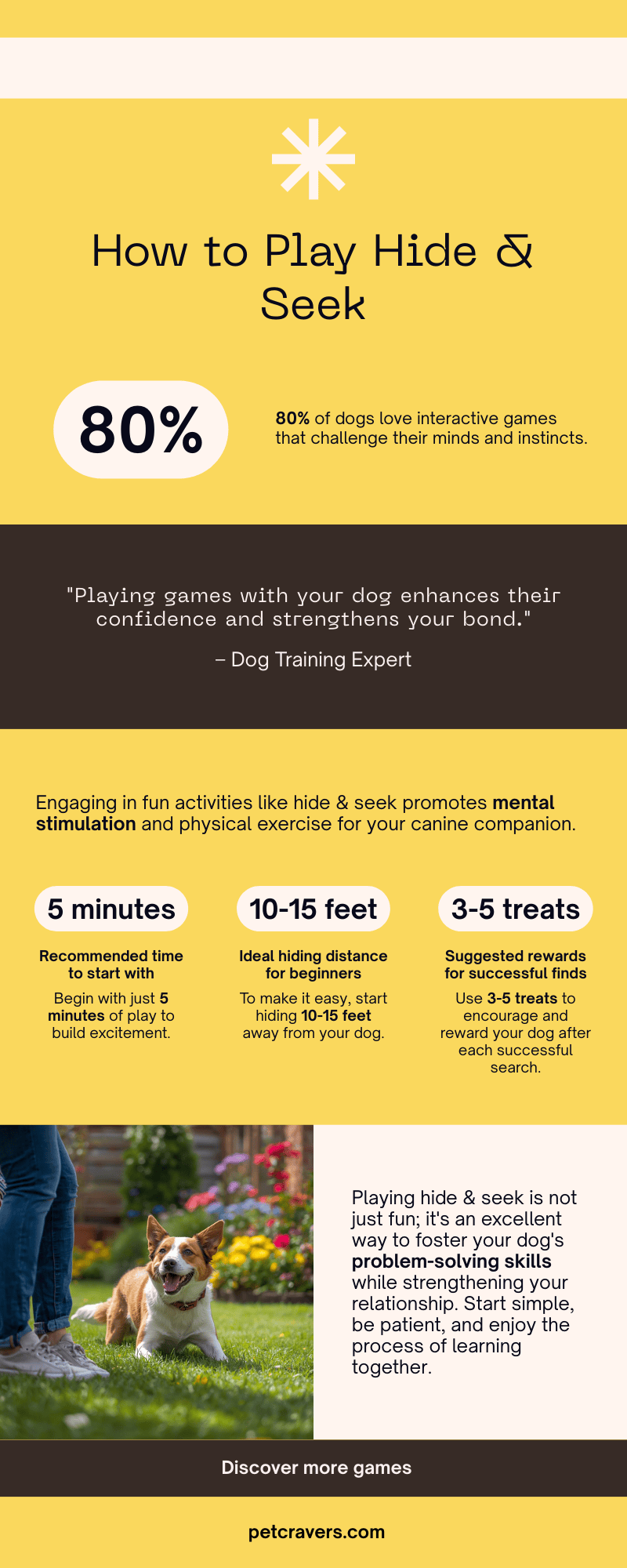
- Start indoors in a small, familiar space.
- Have your dog stay or sit while you find a hiding spot. If your dog doesn’t know “stay,” enlist a helper to hold them gently.
- Hide in an obvious spot initially, then call a cue like “Find me!” or “Where am I?”
- When your dog finds you, celebrate with enthusiastic praise, petting, or a small treat.
- Keep sessions short—3–5 minutes is often enough for beginners.
2. Using Treats or Toys as Incentives
- Instead of hiding yourself, hide a favorite toy or high-value treat.
- Encourage your dog to search using a verbal cue.
- Reward your dog with play, praise, or the treat when they successfully find the hidden item.
- This approach is especially useful for dogs who are shy or hesitant to search for a person initially.
3. Step-by-Step Training Approach
- Introduce the Concept: Show your dog the hidden object or the room where you’ll hide.
- Start Simple: Begin with very easy hiding spots, allowing your dog to succeed quickly.
- Increase Difficulty Gradually: Hide behind doors, under tables, or in another room as your dog becomes confident.
- Use Positive Reinforcement: Always reward successful finds with verbal praise, petting, or treats.
- Monitor Frustration Levels: If your dog becomes stressed, simplify the hiding spot or reduce session length.
4. Advanced Variations for Experienced Dogs
- Hide in multiple rooms or outside for more challenge.
- Introduce timed searches to encourage speed and focus.
- Combine hide & seek with scent games: hide a toy or treat with a distinct scent for added mental stimulation.
- Incorporate multiple participants (family members or friends) to make the game more complex and exciting.
By following this structured approach, you can turn hide & seek into a fun, rewarding game that engages your dog’s mind, encourages physical activity, and strengthens the bond between you.
Benefits of Hide & Seek
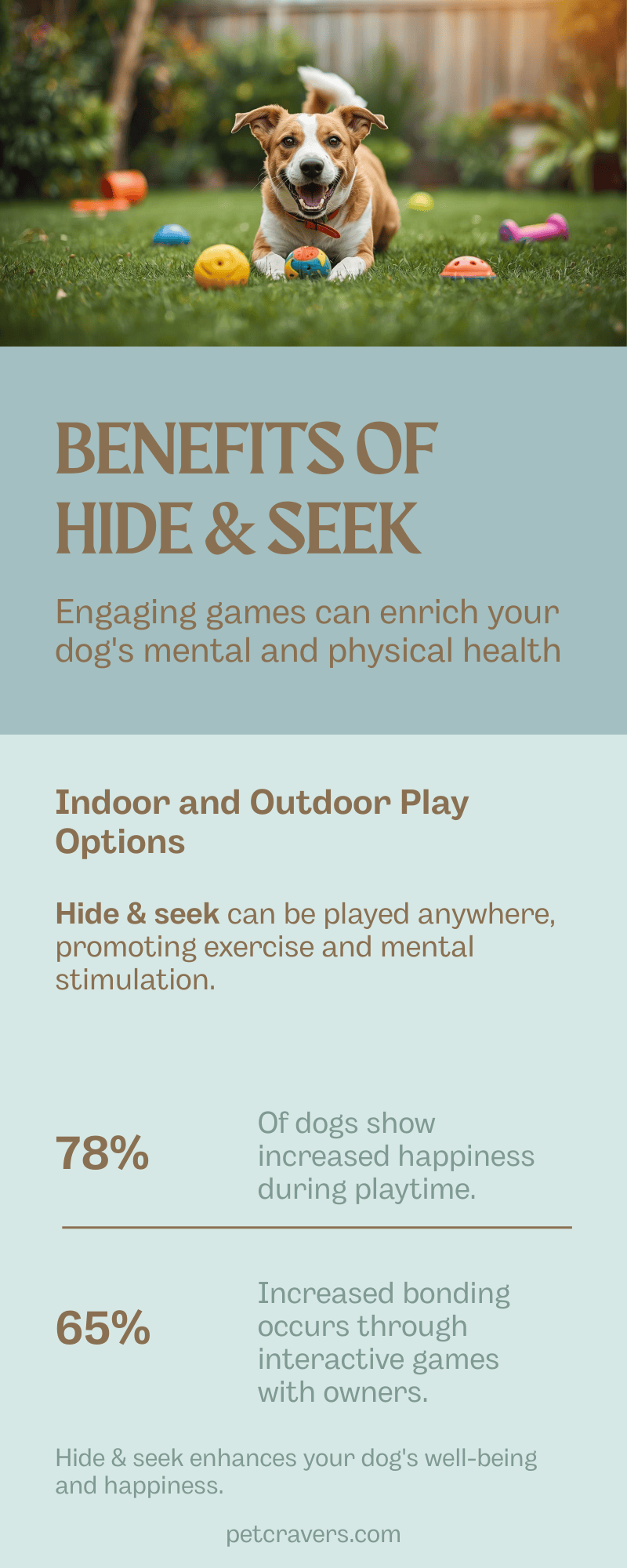
Hide & seek is more than just a fun game—it offers multiple benefits that improve your dog’s mental, physical, and emotional well-being. Here’s why this simple activity is so powerful:
1. Mental Stimulation
- Searching for a hidden person, toy, or treat engages your dog’s brain in problem-solving and critical thinking.
- Enhances focus, memory, and persistence as dogs work to locate their target.
- Mental exercise helps reduce boredom, preventing behaviors like chewing, digging, or excessive barking.
2. Physical Exercise
- Even indoor hide & seek encourages movement—crawling, darting, and exploring different areas.
- Outdoor games add running and increased activity, providing a low-pressure, enjoyable form of exercise.
- Physical engagement paired with mental stimulation keeps your dog fit and balanced.
3. Reduces Anxiety and Stress
- Engaging dogs in purposeful play offers a healthy outlet for energy and nervousness.
- The game encourages concentration and focus, which can calm anxious dogs and promote relaxation.
- Frequent sessions can help dogs feel more confident and secure in their environment.
4. Strengthens the Human-Dog Bond
- Hide & seek is interactive, requiring dogs to follow cues and connect with their human.
- Positive reinforcement through praise, petting, or treats fosters trust and communication.
- Sharing the excitement of finding you or a hidden toy deepens emotional connection and responsiveness.
5. Suitable for All Ages and Breeds
- Puppies learn focus, problem-solving, and social cues through early play.
- Adult dogs benefit from a combination of mental and physical stimulation.
- Senior dogs can enjoy gentle, low-impact versions that keep their minds sharp.
By combining mental challenge, physical activity, and interactive play, hide & seek is a comprehensive game that promotes well-rounded development while strengthening the bond between you and your dog.
Variations of Hide & Seek
Hide & seek can be adapted in many ways to keep the game fresh, engaging, and challenging for dogs of all ages and skill levels. Exploring different variations not only prevents boredom but also provides additional mental stimulation and bonding opportunities.
1. Indoor vs. Outdoor Games
- Indoor: Use rooms, furniture, and safe household objects to create hiding spots. Ideal for puppies, small spaces, or bad weather days.
- Outdoor: Expand the game to your backyard, park, or garden. Dogs enjoy larger areas for running, exploring scents, and tracking movements.
- Tip: Always ensure outdoor areas are secure and safe before starting the game.
2. Multiple People or Pets
- Involve family members or friends hiding in different locations.
- Dogs must use focus, memory, and scent to locate multiple targets, increasing mental challenge.
- For dogs comfortable with other pets, you can even hide toys or treats that other dogs must ignore until it’s their turn.
3. Combination with Scent Games
- Hide toys or treats with a distinct scent to create a hybrid game of hide & seek and scent tracking.
- Enhances mental stimulation and reinforces natural tracking instincts.
- Suitable for dogs who enjoy sniffing and problem-solving.
4. Timed Challenges
- Add a timer to encourage dogs to find hidden objects quickly.
- Reward speed and accuracy with high-value treats or enthusiastic praise.
- Timed games can be especially fun for competitive or high-energy dogs.
5. Themed or Seasonal Games
- Hide objects or toys related to holidays or seasonal items, such as pumpkins in fall or stuffed animals at Christmas.
- Keeps the game novel and engaging while reinforcing tracking and problem-solving skills.
6. Level-Based Challenges
- Beginner: Easy, obvious hiding spots within sight.
- Intermediate: Hide behind doors, under tables, or around corners.
- Advanced: Multiple rooms, outdoor areas, or objects with subtle scents.
- Gradually increase difficulty to maintain engagement without causing frustration.
By experimenting with these variations, hide & seek becomes a dynamic, multi-level game that continually challenges your dog’s mind, satisfies natural instincts, and strengthens the bond between you.
Tips for Success
Hide & seek is fun and engaging, but following some practical tips ensures that your dog enjoys the game, stays motivated, and benefits fully from the experience.
1. Start Simple and Gradually Increase Difficulty
- Begin with obvious hiding spots so your dog experiences early success.
- Gradually hide in more challenging locations to build confidence and problem-solving skills.
- Avoid making the game too hard too quickly, which can frustrate your dog.
2. Use High-Value Rewards
- Use your dog’s favorite treats or toys to encourage participation and excitement.
- Rotate rewards to maintain novelty and keep your dog engaged over multiple sessions.
3. Keep Sessions Short and Fun
- 5–15 minutes per session is ideal, especially for beginners.
- Multiple short sessions are more effective than one long session.
- End each session on a positive note, even if your dog doesn’t fully succeed.
4. Positive Reinforcement is Key
- Praise, petting, or small treats after successful finds reinforces learning and enjoyment.
- Avoid punishment for mistakes; the game should always be a positive experience.
5. Ensure Safety
- Avoid hiding spots with potential hazards like sharp objects, small choking risks, or unstable furniture.
- Supervise outdoor games to prevent escapes or encounters with unsafe areas.
6. Observe Your Dog’s Energy and Focus
- Tailor the game to your dog’s mood and energy levels.
- If your dog appears tired or frustrated, simplify the game or take a break.
- Adjust the environment or difficulty based on your dog’s reactions.
7. Make It Interactive
- Use enthusiastic verbal cues and body language to encourage your dog.
- Celebrate every success with genuine excitement to reinforce bonding.
- Engage with your dog consistently to make the game a shared adventure.
By following these tips, hide & seek becomes not only a mentally and physically stimulating activity but also a safe and rewarding bonding experience for you and your dog.
When to Avoid or Modify the Game
While hide & seek is generally safe and enjoyable, there are situations where you should adjust the game or avoid it altogether to ensure your dog’s safety, comfort, and well-being.
1. Dogs with Medical Conditions or Mobility Issues
- Dogs recovering from surgery, with joint problems, or other health concerns may need low-impact variations.
- Modification Tips:
- Play on flat surfaces or table-top hide & seek games.
- Avoid hiding spots that require jumping, climbing, or long distances.
- Keep sessions short and gentle to prevent strain.
2. Puppies or Senior Dogs
- Puppies: Have shorter attention spans and may tire quickly. Use simple hiding spots and brief sessions.
- Senior Dogs: May have limited mobility or vision/smell changes. Use low-impact versions and easily accessible hiding spots.
3. Overly Anxious or Reactive Dogs
- Dogs prone to stress may become frustrated if the game is too challenging.
- Modification Tips:
- Start with very easy hiding spots.
- Offer calm, encouraging guidance.
- Gradually increase difficulty as confidence grows.
4. Unsafe Environments
- Outdoor games in busy or hazardous areas can pose risks.
- Avoid hiding spots near sharp objects, water bodies, roads, or unstable surfaces.
- Ensure the area is secure and safe before playing.
5. Extreme Weather Conditions
- Avoid outdoor hide & seek during extreme heat, cold, or heavy rain.
- Modify by playing indoors or in shaded areas to protect your dog from stress or injury.
By knowing when to modify or avoid hide & seek, you ensure every game is safe, enjoyable, and tailored to your dog’s abilities and comfort level. Proper adjustments help maintain a positive experience while still providing mental and physical enrichment.
Conclusion
Hide & seek is more than a simple game—it’s a powerful way to engage your dog’s mind, encourage physical activity, and strengthen the bond you share. By combining problem-solving, tracking instincts, and interactive play, this classic game provides both mental and emotional enrichment that dogs of all ages and breeds can enjoy.
From easy indoor sessions to challenging outdoor hideouts, hide & seek offers endless opportunities to stimulate your dog’s curiosity, build confidence, and reduce boredom or anxiety. Each successful find rewards your dog’s effort and deepens the trust and communication between you, making playtime a meaningful shared experience rather than just a fun distraction.
Whether you’re teaching a curious puppy, engaging an energetic adult dog, or offering gentle mental stimulation to a senior canine, hide & seek can be adapted to suit any dog’s abilities. Start simple, use high-value rewards, and gradually explore creative variations to keep the game exciting and rewarding.
So, grab a favorite toy or treat, find a hiding spot, and watch your dog light up with excitement. Hide & seek isn’t just a game—it’s the ultimate bonding experience, turning playtime into a joyful journey of discovery, connection, and fun.




Leave a Reply