 Skip to content
Dogs experience the world in a way that is profoundly different from humans, largely because of their extraordinary sense of smell. A dog’s nose is not just a tool for detecting odors; it is a gateway to understanding their environment, reading social cues, and fulfilling instincts that have been hardwired over thousands of years. While many dog owners focus primarily on physical exercise like walks or playtime with toys, mental stimulation is just as crucial for a dog’s overall well-being. One of the most natural and effective ways to provide this mental enrichment is through scent games.
Scent games are activities that tap into a dog’s innate ability to track, search, and distinguish scents. These games go beyond simple fetch or tug-of-war—they challenge your dog’s mind, engage their instincts, and provide a rewarding outlet for energy that might otherwise manifest in undesirable behaviors, like chewing or excessive barking. Whether you have a young puppy bursting with curiosity or an adult dog in need of more mental stimulation, scent games offer a versatile and enjoyable solution that benefits dogs of all ages and breeds.
Beyond mental enrichment, scent games strengthen the bond between dogs and their humans. When a dog successfully locates a hidden treat or toy, the joy and excitement are amplified by your encouragement and praise. This shared experience not only satisfies their natural instincts but also fosters trust, communication, and a deeper connection. In today’s fast-paced world, where dogs often spend hours at home alone, scent games provide a meaningful and interactive way to keep them happy, healthy, and engaged.
In this post, we will explore why scent games are so important, the various types you can try at home, and practical tips for making the most of these instinct-stimulating activities. By the end, you’ll be equipped with the knowledge to turn simple playtime into an enriching adventure that your dog will love—and their nose will thank you for.
Why Scent Games Are Important
Dogs are naturally equipped with one of the most powerful senses of smell in the animal kingdom. Their noses contain up to 300 million olfactory receptors—compared to about six million in humans—allowing them to detect and distinguish an astonishing variety of scents. This incredible ability is not just a party trick; it is an essential part of their evolutionary makeup. For thousands of years, dogs relied on their sense of smell to hunt, forage, and navigate their environment. Even today, these instincts remain deeply ingrained, waiting for opportunities to be expressed.
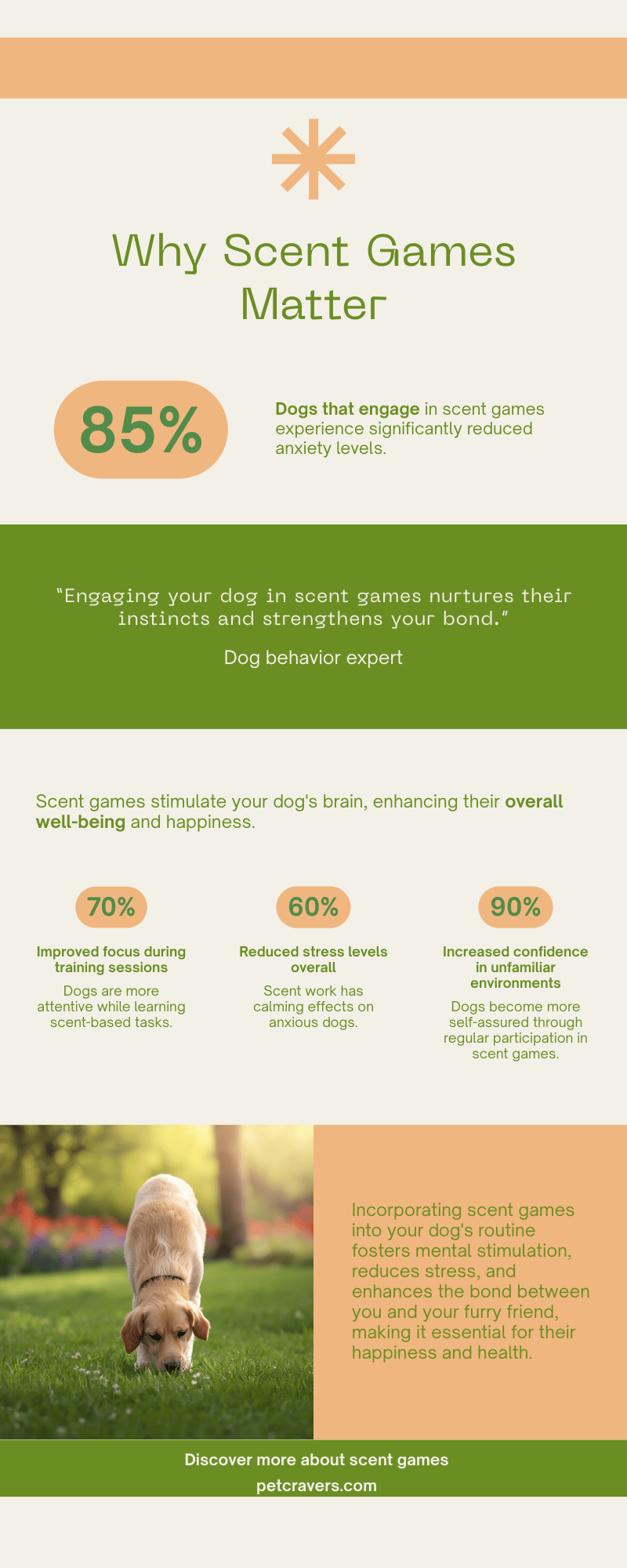
Scent games tap directly into these instincts, providing mental stimulation that is just as crucial as physical exercise. While a walk around the block or a game of fetch helps burn off physical energy, scent-based activities challenge your dog’s mind, giving them a purposeful task that engages their natural problem-solving abilities. This kind of mental workout is especially important for intelligent breeds, such as German Shepherds, Border Collies, and Labradors, who can become bored or frustrated without adequate mental engagement.
The benefits of scent games extend far beyond entertainment:
- Reduces Anxiety and Stress: Engaging a dog’s nose in focused tasks can help reduce feelings of restlessness, nervous energy, and anxiety, particularly in dogs prone to stress.
- Encourages Problem-Solving Skills: Scent games require your dog to think, make decisions, and persist until they succeed, boosting their confidence and mental agility.
- Strengthens the Human-Dog Bond: By playing together, rewarding successes, and guiding them through challenges, owners create a positive and interactive experience that deepens trust and communication.
- Prevents Boredom and Destructive Behavior: Dogs left without mental stimulation often find their own “entertainment,” which can lead to chewing furniture, excessive barking, or digging. Scent games provide a productive outlet for energy and curiosity.
Ultimately, scent games allow dogs to express their instincts in a safe, structured, and enjoyable way. They satisfy an innate need to explore and investigate, turning simple play into an enriching activity that keeps your dog happy, healthy, and mentally sharp.
Types of Scent Games
Scent games are versatile and can be adapted to suit your dog’s age, skill level, and available space. Here are some popular and effective scent-based activities that stimulate your dog’s natural instincts:
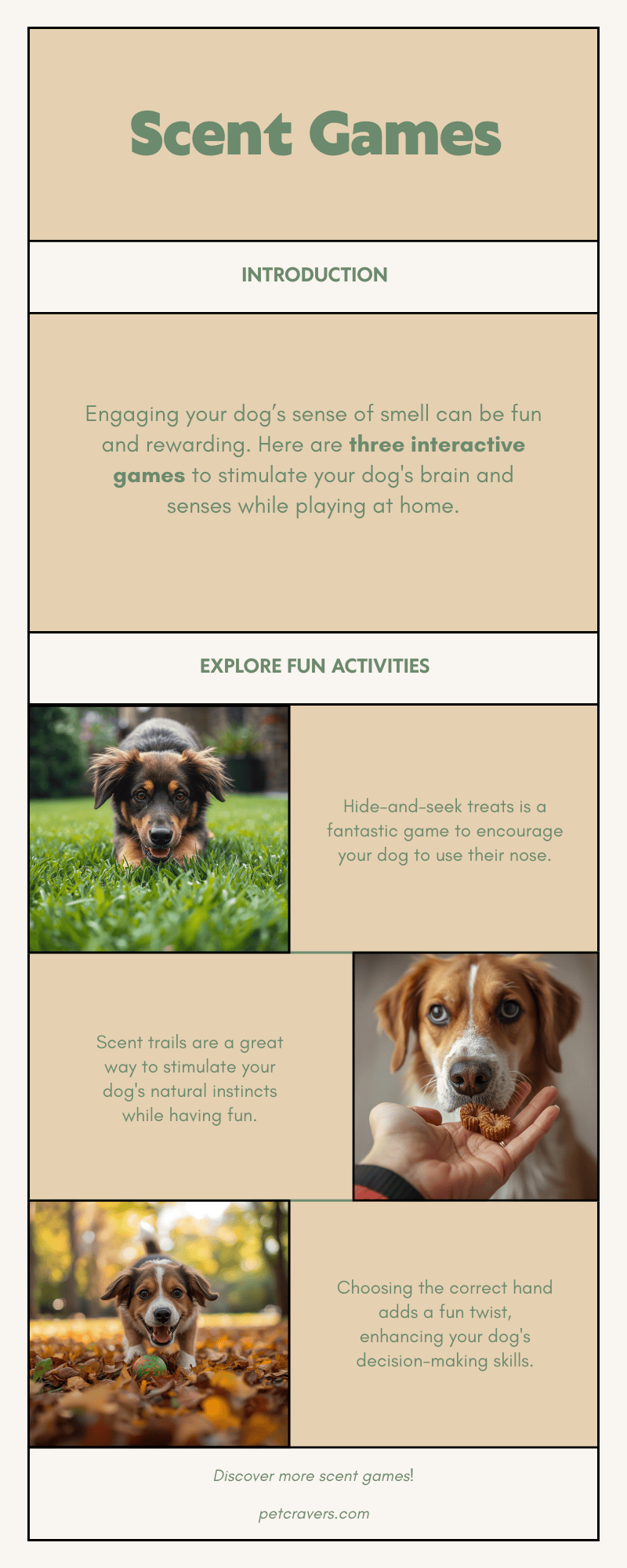
1. Hide and Seek Treats
- Overview: This classic game involves hiding small treats around your home or yard for your dog to find.
- How to Play: Start with easy-to-find locations, like under a cushion or behind a chair. Gradually increase the difficulty by hiding treats in more challenging spots.
- Benefits: Encourages dogs to use their noses actively, provides mental stimulation, and gives a sense of accomplishment when they succeed.
- Tips: Use high-value treats that your dog loves to keep them motivated. Always supervise to ensure they don’t ingest anything unsafe.
2. Find the Toy
- Overview: Similar to the treat version, but using your dog’s favorite toy instead.
- How to Play: Start by showing the toy to your dog, then hide it while they watch. Use a verbal cue like “find it!” to prompt them. As your dog improves, hide the toy in rooms or outdoor areas where they must rely on their sense of smell rather than sight.
- Benefits: Strengthens problem-solving skills and provides physical activity if your dog has to move between hiding spots.
- Variations: Introduce scent markers like a dab of essential oil (safe for dogs) to add complexity for advanced players.
3. Which Hand Game
- Overview: A simple, interactive game for dogs of all ages.
- How to Play: Place a treat in one of your closed hands, hold both hands out, and let your dog choose the correct hand. Reward them when they pick the right one.
- Benefits: Enhances scent discrimination, focus, and engagement with you as the handler.
- Tips: Keep sessions short to maintain excitement and gradually increase difficulty by varying hand positions or hiding the treat behind obstacles.
4. Scent Trails / Tracking
- Overview: This advanced game mimics the natural tracking instincts of dogs.
- How to Play: Create a trail using small treats or a scented object that winds around your home or yard. Lead your dog to the starting point and encourage them to follow the trail.
- Benefits: Challenges your dog physically and mentally, simulating real-world scent tracking experiences.
- Variations: Use multiple trails for your dog to follow in succession, or hide a toy at the end as a reward.
5. DIY Scent Boxes
- Overview: Use containers with holes (like cardboard boxes) to hide treats or toys inside.
- How to Play: Place a treat in one box and empty boxes around it. Encourage your dog to sniff and find the treat.
- Benefits: Introduces problem-solving, encourages persistence, and keeps dogs mentally engaged.
- Tips: Start with fewer boxes and gradually increase the number for more advanced scent challenges.
These scent games are not only fun but also incredibly effective in stimulating your dog’s brain and satisfying their natural instincts. By rotating games and increasing difficulty over time, you can create an engaging routine that your dog will look forward to every day.
Tips for Successful Scent Games
Scent games are highly engaging, but to make them effective and enjoyable for your dog, it’s important to follow some practical tips. Proper planning ensures your dog stays motivated, safe, and challenged without becoming frustrated.
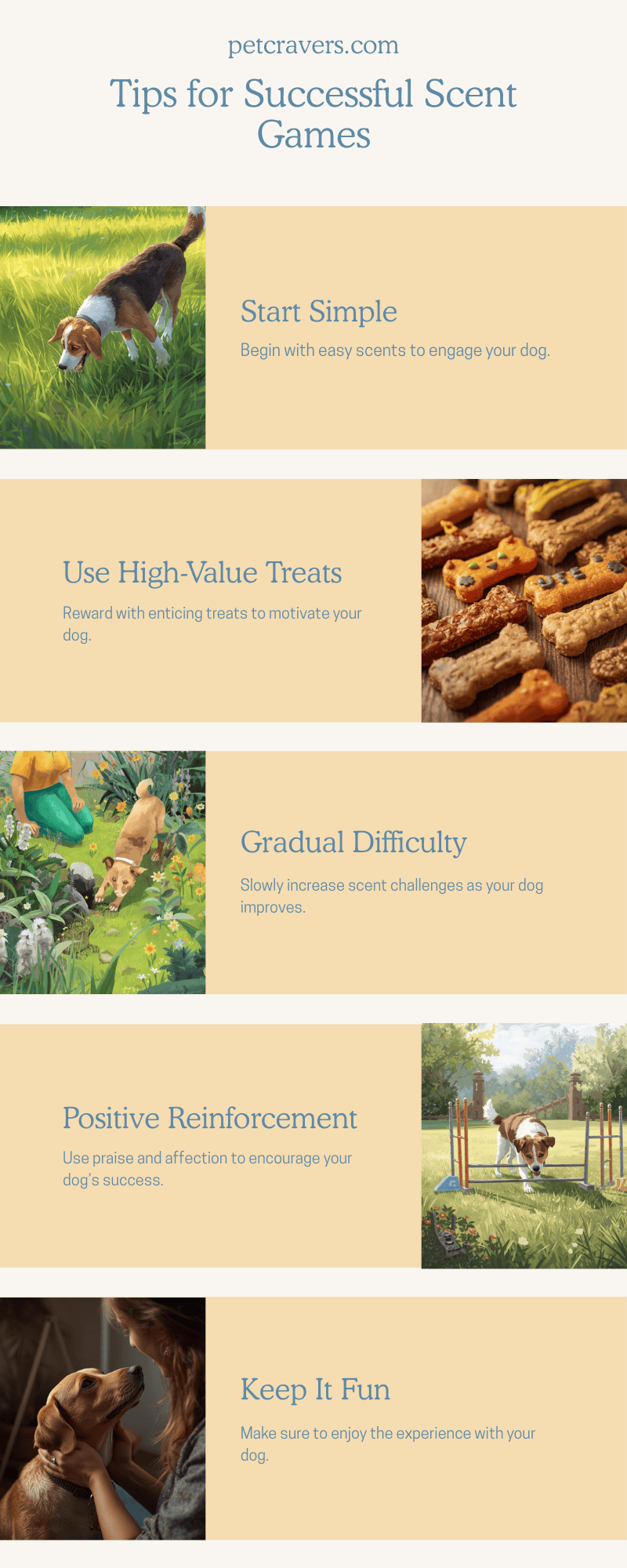
1. Start Simple and Gradually Increase Difficulty
- Begin with easy hiding spots or short scent trails so your dog can experience early success.
- Gradually increase complexity by hiding items in harder-to-find locations, adding multiple scents, or creating longer trails.
- This step-by-step approach keeps your dog confident and eager to participate.
2. Use High-Value Rewards
- Choose treats or toys that your dog really loves. High-value rewards increase motivation and engagement.
- Rotate treats to keep them novel and exciting.
- Even a favorite toy can be used as a reward to maintain focus.
3. Keep Sessions Short and Fun
- Dogs can lose interest or become frustrated if sessions are too long.
- Aim for 5–15 minute sessions, adjusting based on your dog’s age, energy level, and experience.
- Short, frequent sessions are more effective than one long session.
4. Positive Reinforcement is Key
- Always praise and reward your dog when they successfully locate a hidden item or follow a trail.
- Use verbal praise, petting, or a quick play session to reinforce success.
- Avoid punishment for mistakes; scent games are meant to be a fun and stress-free challenge.
5. Ensure Safety
- Avoid hiding items that could pose a choking hazard or are toxic if ingested.
- Monitor your dog, especially with small objects or in outdoor areas.
- Consider your dog’s physical limitations, especially if they have mobility issues or are senior dogs.
6. Vary the Environment
- Introduce new environments gradually to prevent overstimulation or confusion.
- Try scent games indoors, in the backyard, or on quiet trails.
- Different surfaces, smells, and distractions help keep your dog mentally sharp.
7. Observe and Adjust
- Pay attention to your dog’s enthusiasm, frustration levels, and learning pace.
- Adjust difficulty and type of game based on their responses.
- Every dog is unique, so tailor the game to suit their personality and instincts.
Following these tips ensures that scent games remain a positive, stimulating experience for your dog. Properly structured games not only satisfy natural instincts but also build confidence, focus, and a stronger bond between you and your furry companion.
Benefits of Regular Scent Play
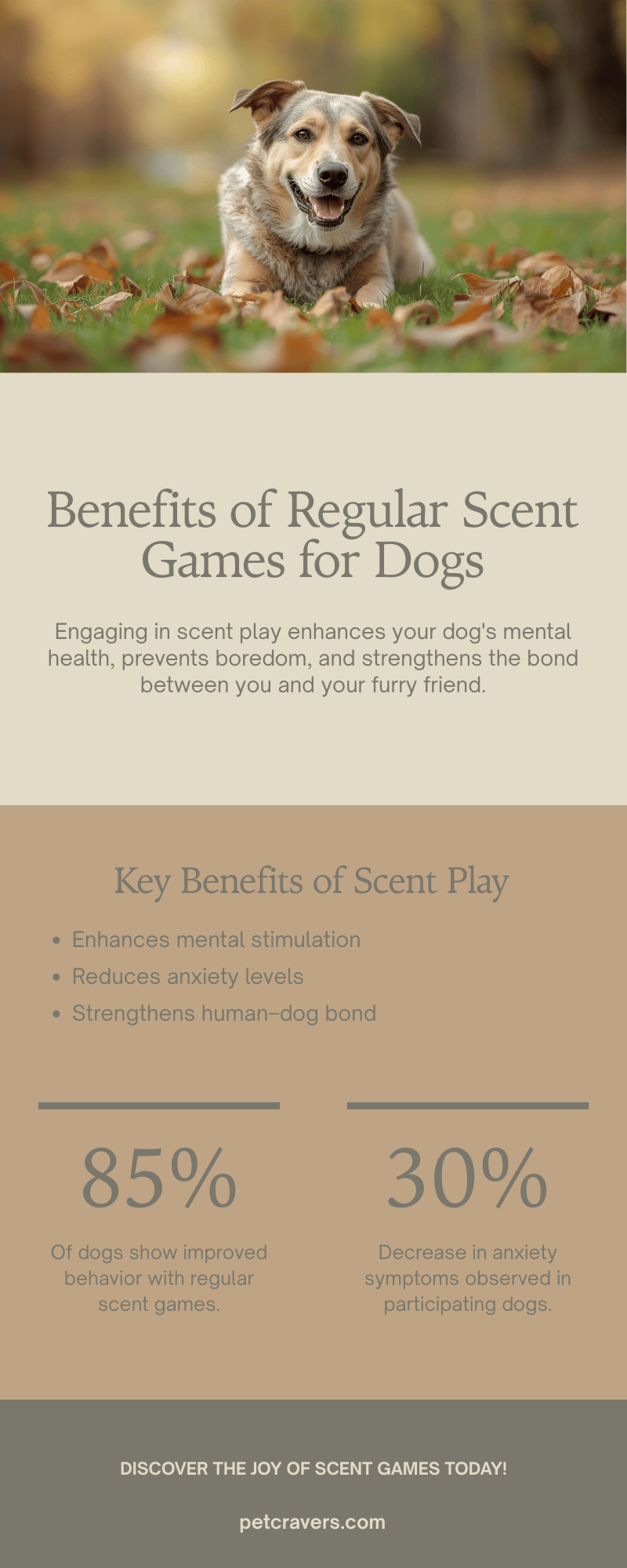
Incorporating scent games into your dog’s routine offers far-reaching benefits that go well beyond simple entertainment. These activities tap into natural instincts, promote mental well-being, and strengthen the bond between you and your dog. Here are the key benefits of regular scent play:
1. Provides Mental Stimulation
- Dogs require mental exercise just as much as physical activity.
- Scent games challenge their brains to solve problems, make decisions, and persist until they succeed.
- Regular mental engagement reduces boredom, keeping your dog alert, curious, and mentally sharp.
2. Reduces Anxiety and Stress
- Dogs with excess energy or anxiety can become restless or develop destructive behaviors.
- Engaging their sense of smell in structured games provides a calming and purposeful outlet for energy.
- For dogs prone to separation anxiety or nervousness, scent games can serve as a soothing, confidence-building activity.
3. Enhances Problem-Solving and Confidence
- Successfully locating a hidden treat or tracking a scent trail gives dogs a sense of accomplishment.
- Over time, these successes build self-confidence, especially in shy or timid dogs.
- Confidence gained through scent games often translates into more positive behaviors in other areas, such as social interactions or learning new commands.
4. Strengthens the Human-Dog Bond
- Scent games are interactive, providing shared experiences that foster trust and communication.
- Rewarding your dog with praise or play reinforces positive connections and mutual enjoyment.
- Owners who actively participate in these games often notice improved responsiveness and attentiveness in their dogs.
5. Helps Prevent Boredom and Destructive Behavior
- Dogs left unstimulated may resort to chewing furniture, barking excessively, or digging.
- Scent games redirect their natural curiosity into productive tasks.
- By offering engaging challenges, dogs remain occupied, satisfied, and less likely to develop unwanted behaviors.
6. Suitable for Dogs of All Ages and Breeds
- Puppies benefit from early scent training, building focus and confidence.
- Adult dogs, especially high-energy or intelligent breeds, gain mental exercise and enrichment.
- Senior dogs can enjoy modified scent games that are low-impact but still stimulating.
Regular scent play is not just a fun activity—it is a holistic way to nurture your dog’s mind, instincts, and emotional well-being. By making scent games a consistent part of your routine, you provide enrichment that keeps your dog happy, confident, and connected to you.
Advanced Scent Challenges
Once your dog has mastered basic scent games, you can introduce advanced challenges to further stimulate their mind, refine their tracking abilities, and keep playtime exciting. Advanced scent games are ideal for experienced dogs, high-energy breeds, or dogs that have a natural talent for scent work.
1. Multiple Scent Discrimination
- Overview: Teach your dog to distinguish between different scents.
- How to Play: Use several containers or items, each with a unique scent. Hide a treat in one, and encourage your dog to find the correct one.
- Benefits: Enhances focus, cognitive skills, and precision in scent detection.
- Tip: Start with very distinct scents and gradually increase similarity as your dog improves.
2. Longer or Complex Scent Trails
- Overview: Extend the difficulty by creating longer, winding trails that may include obstacles or turns.
- How to Play: Lay a trail with treats, scented toys, or safe objects. Include turns, forks, or slight delays between scents. Reward your dog when they successfully follow the full trail.
- Benefits: Improves problem-solving, persistence, and physical coordination.
- Tip: Vary the environment—indoors, backyard, or quiet park—to add real-world complexity.
3. Scent Puzzle Toys
- Overview: Use commercial or DIY puzzle toys that hide treats under compartments or sliding covers.
- How to Play: Fill the puzzle toy with high-value treats and encourage your dog to sniff, investigate, and retrieve the reward.
- Benefits: Combines scent tracking with problem-solving and fine motor skills.
- Tip: Rotate puzzle types to maintain novelty and challenge.
4. Hide-and-Seek with Multiple Participants
- Overview: For dogs comfortable with other people or pets, this game introduces added distractions.
- How to Play: Have multiple family members hide in different locations with treats or toys. Give your dog a cue to “find” someone or something specific.
- Benefits: Boosts focus, adaptability, and social skills.
- Tip: Start with one hidden person or object and gradually increase complexity.
5. Seasonal or Themed Scent Hunts
- Overview: Create fun, themed scent games using seasonal items, safe herbs, or new smells.
- How to Play: Hide pumpkin-scented toys in the fall or mint-scented objects in the spring. Encourage your dog to locate them.
- Benefits: Keeps scent play interesting and seasonal, while reinforcing tracking instincts.
Advanced scent challenges not only keep your dog engaged but also provide deeper mental enrichment and real-world problem-solving practice. They transform ordinary playtime into a rewarding experience that sharpens your dog’s natural abilities, boosts confidence, and strengthens the bond between you.
When to Avoid or Modify Scent Games
While scent games are generally safe and beneficial, there are certain situations where modifications or caution are necessary to ensure your dog’s safety, comfort, and overall well-being. Being mindful of these factors helps prevent stress, injury, or negative experiences.
1. Dogs with Medical Conditions or Mobility Issues
- Dogs recovering from surgery, with joint problems, or other health concerns may need low-impact scent games.
- Modification Tips:
- Use table-top scent games or scent boxes instead of floor-level trails.
- Keep sessions short and avoid obstacles that require jumping or climbing.
- Focus on games that rely on sniffing rather than physical activity.
2. Overly Stressed or Reactive Dogs
- Dogs that are anxious, nervous, or easily frustrated may become overwhelmed with complex scent games.
- Modification Tips:
- Begin with very simple tasks, such as “which hand” or a single hidden treat.
- Provide gentle encouragement and plenty of praise.
- Avoid loud environments or crowded spaces until the dog builds confidence.
3. Age Considerations
- Puppies may have short attention spans and need frequent breaks.
- Senior dogs may tire quickly or have diminished senses.
- Modification Tips:
- For puppies, keep sessions under 5–10 minutes and focus on fun over precision.
- For older dogs, use smaller areas, low-impact games, and highly motivating treats.
4. Safety Concerns
- Avoid hiding objects that could be swallowed, are toxic, or pose choking hazards.
- Monitor your dog during scent games to prevent accidental ingestion or injury.
- Ensure outdoor games are played in safe, enclosed areas to prevent escapes or encounters with hazards.
5. Environmental Factors
- Extreme weather (heat, cold, or rain) can make outdoor scent games unsafe.
- Modify games to indoor environments or shaded areas, ensuring your dog stays comfortable and hydrated.
By understanding when to modify or avoid certain scent games, you can ensure that these activities remain positive, safe, and enriching for your dog. Tailoring games to your dog’s age, health, and comfort level maximizes enjoyment and strengthens their confidence in a stress-free way.
Conclusion
Scent games are more than just a fun pastime—they are a powerful way to engage your dog’s natural instincts, provide essential mental stimulation, and strengthen the bond between you and your furry companion. By tapping into their extraordinary sense of smell, you offer your dog a fulfilling outlet for curiosity, problem-solving, and confidence-building. From simple “hide and seek” treats to advanced tracking challenges, there are endless ways to make playtime both exciting and enriching.
Incorporating scent games into your daily routine helps prevent boredom, reduces stress, and encourages positive behavior, making them a valuable addition for dogs of all ages and breeds. The beauty of these activities lies in their adaptability: you can tailor them to suit your dog’s abilities, preferences, and environment, ensuring each session is rewarding and enjoyable.
So, whether you are working with a playful puppy, a high-energy adult dog, or a senior canine needing gentle stimulation, scent games offer endless opportunities for learning, fun, and connection. Start small, observe your dog’s reactions, and gradually explore more complex challenges. Your dog’s nose is not just a tool—it’s a gateway to joy, engagement, and a happier, healthier life.
Unleash the power of scent games today and watch your dog’s instincts come alive!





Leave a Reply