
How dogs interpret human smiles is a fascinating question that reveals just how closely our canine companions pay attention to us. A smile is one of the most universal forms of human communication, often conveying happiness, friendliness, and warmth. But when you smile at your dog, does it understand the positive emotion behind the expression? Studies suggest that dogs are remarkably attuned to human social cues, including facial expressions, making their interpretation of our smiles more sophisticated than many people realize.
Research shows that dogs can read not only our body language and vocal cues but also certain facial expressions, allowing them to respond appropriately to our emotional states. For instance, your dog may come closer, wag its tail, or display playful behavior when you smile, suggesting a recognition of your positive emotion. But do dogs really understand the meaning behind a smile, or are they simply reacting to the combination of your tone, posture, and facial expression?
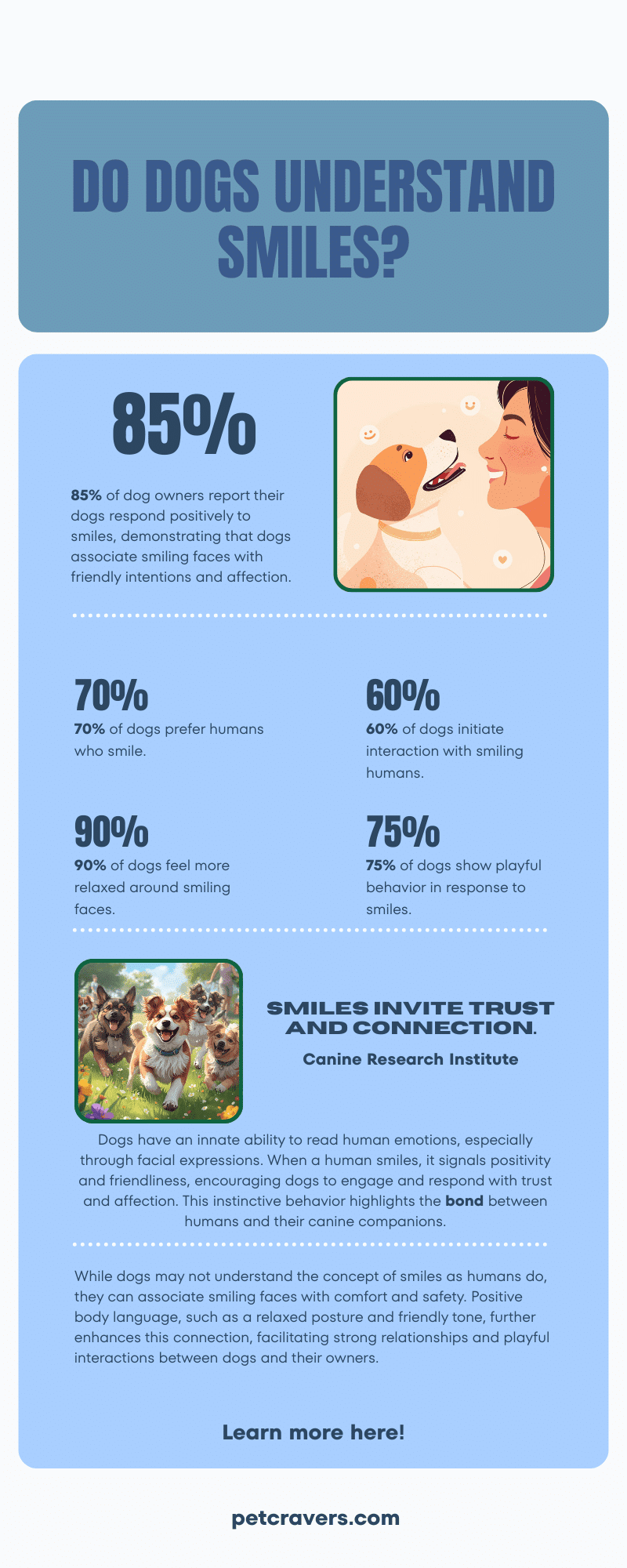
Understanding how dogs interpret smiles is more than just curiosity—it has practical implications for training, bonding, and everyday interactions. By knowing how dogs perceive this simple gesture, owners can communicate more effectively, strengthen trust, and create a happier environment for their furry companions.
Dogs are highly sensitive to human emotions and social signals. If you’re curious about the broader science behind canine emotional awareness, be sure to read our guide on Do Dogs Really Understand Human Emotions?
In this post, we’ll explore the science behind canine emotion recognition, how dogs perceive and respond to human smiles, common misinterpretations, and practical tips for using smiles to reinforce positive behavior and deepen your connection with your dog.
The Science Behind How Dogs Interpret Human Smiles
Dogs are not just pets—they are highly social animals that have evolved alongside humans for thousands of years. This long history of cohabitation has shaped their ability to read human emotions and social cues, including facial expressions.
Understanding how dogs interpret human smiles requires looking at their long evolutionary relationship with humans. Over thousands of years, dogs have developed a unique ability to read human social cues, and how dogs interpret smiles is a key part of this adaptation.
1. Dogs’ Social Intelligence
Dogs are naturally attuned to human behavior. From birth, they observe and respond to their owners’ actions, tone of voice, and expressions. This social intelligence allows them to form strong bonds, anticipate needs, and even mirror human emotions.
2. Role of Facial Cues
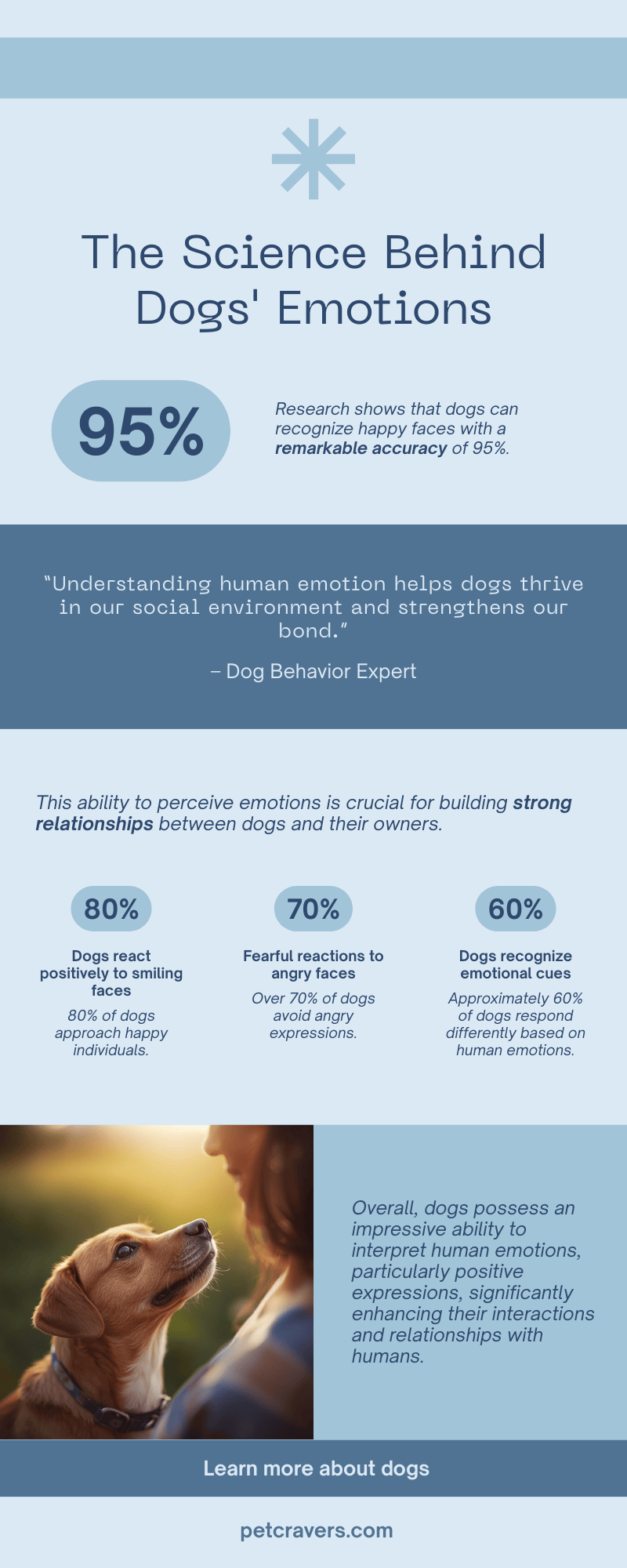
Facial expressions are a crucial component of human communication. Studies have shown that dogs can distinguish between happy, angry, and neutral faces. While they may not understand the underlying emotions in the same way humans do, dogs respond to visual signals combined with vocal tone and body language.
Studies on canine cognition suggest that how dogs read human smiles depends on a combination of facial expression, tone, and context rather than the smile alone.
3. Evidence from Research
- Behavioral studies demonstrate that dogs spend more time looking at happy human faces compared to neutral or angry expressions.
- Neurological studies indicate that dogs process human emotional cues in specific brain regions, similar to how humans recognize emotions.
- Dogs are particularly sensitive to positive expressions, which encourages social engagement and bonding.
This scientific understanding explains why a simple human smile can trigger a variety of responses in dogs—from wagging tails to playful approaches. By recognizing the cues embedded in our expressions, dogs are able to navigate social interactions and respond appropriately to our moods.
Dogs have evolved alongside humans, developing remarkable social intelligence that helps them interpret our behaviors and expressions. Learn more in The Science Behind a Dog’s Brain.
Facial expressions are only one part of canine communication. Dogs also rely heavily on body language and emotional context, which we explore in Can Dogs Understand Human Body Language?
Additional Insight: What The Genius of Dogs Reveals
In their influential book The Genius of Dogs, researchers Brian Hare and Vanessa Woods argue that a dog’s greatest cognitive strength is not problem-solving but social intelligence—the ability to understand and respond to human behavior. According to the authors, thousands of years of domestication have shaped dogs into experts at reading human cues, including eye contact, gestures, facial expressions, and emotional signals. This evolutionary adaptation helps explain why dogs often respond positively to a smiling face. Rather than viewing a smile as an isolated expression, dogs appear to interpret it as part of a broader set of social cues that indicate friendliness, safety, and willingness to interact. The findings discussed in the book support the growing body of scientific evidence showing that dogs are uniquely skilled at understanding human emotions and intentions.
How Dogs Interpret Human Smiles in Daily Life
To understand how dogs interpret human smiles, it is important to remember that dogs do not view facial expressions in isolation but as part of a larger emotional picture. While humans understand smiles instinctively, dogs rely on a combination of facial expressions, tone of voice, and body language to interpret what a smile means. Their perception is more about patterns and context than language or emotional reasoning.
1. Positive vs. Negative Smiles
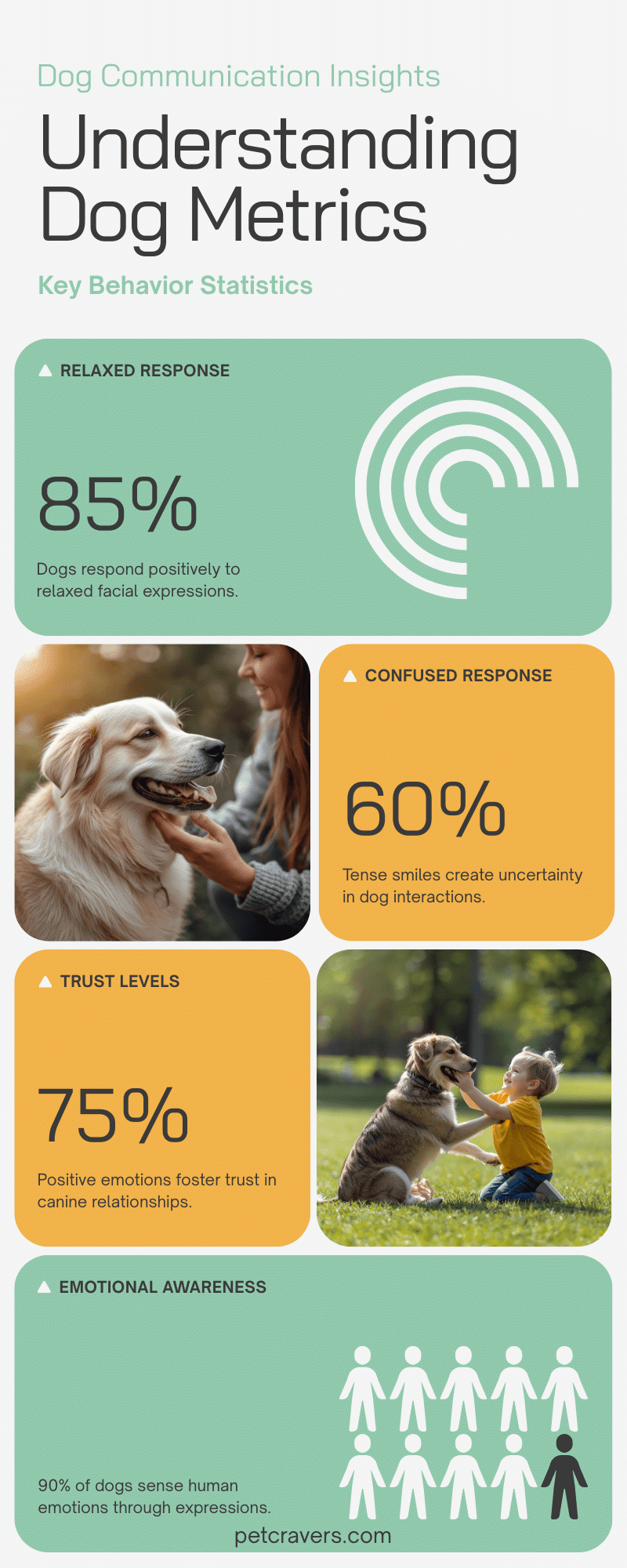
Not all smiles are equal in the eyes of a dog. A genuine smile—often called a Duchenne smile—involves relaxed eyes and mouth muscles, and usually signals positive emotion. Dogs tend to respond to these with affiliative behaviors like wagging their tails, approaching, or play-bowing.
Scientific evidence supports the idea that dogs respond differently to various human facial expressions. In a 2015 study by Müller and colleagues, dogs demonstrated the ability to distinguish happy human faces from angry ones, even when viewing people they had never seen before. This finding suggests that dogs may recognize certain visual features associated with positive emotions, helping them interpret genuine smiles as signs of friendliness and social engagement rather than merely reacting to familiar individuals.
In contrast, a forced or tense smile can convey ambiguity or even stress. Dogs are sensitive to subtle cues in muscle tension, and may misinterpret a stiff smile as anxiety or discomfort, leading to hesitation or avoidance.
2. Tone and Body Language Matter
Dogs rarely interpret a smile in isolation. They rely on vocal tone, posture, and gestures to gauge the meaning of your expression. For instance, a warm, upbeat tone paired with a relaxed posture reinforces a friendly smile, while a flat or sharp tone may confuse the dog despite the smiling face. This is a key part of how dogs interpret human smiles, as they combine multiple cues rather than relying on facial expression alone.
John Bradshaw’s research, summarized in Dog Sense, suggests that dogs are experts at interpreting patterns of human behavior rather than individual signals in isolation. This means a dog’s response to a smile is often influenced by previous experiences and the surrounding context. Over time, dogs learn to associate smiling faces with positive interactions such as praise, affection, play, or rewards, which helps explain why many dogs respond enthusiastically when their owners smile at them.
3. Breed and Individual Differences
Some breeds are naturally more expressive and socially attuned, such as Golden Retrievers and Border Collies, which may make them better at reading human facial cues. Individual personality also matters—more sensitive or attentive dogs tend to respond more accurately to smiles, while shy or anxious dogs may need more context to interpret them correctly.
Understanding these nuances helps owners recognize that dogs are sophisticated observers. They are not “reading minds,” but they are experts at interpreting signals from multiple sources, allowing them to respond appropriately to the social cues we provide.
A smile rarely works alone. Dogs often combine facial expressions with vocal cues when interpreting human intentions. Read How Tone of Voice Affects Dogs to learn more.
Eye contact can also influence how dogs perceive a smile. For a deeper understanding, see Understanding Dog Eye Contact: Love or Threat?
Seeing the World Through a Dog’s Eyes
In Inside of a Dog, canine cognition researcher Alexandra Horowitz encourages readers to consider human behavior from a dog’s perspective rather than assuming dogs perceive the world as we do. She explains that although dogs can recognize human faces and expressions, they do not focus on facial features to the same extent as humans. Instead, dogs gather information from multiple sources at once, including body posture, movement, scent, voice, and facial cues.
This broader approach to perception helps explain why dogs rarely interpret a smile in isolation. A smiling face becomes meaningful when it is combined with other signals that indicate friendliness and positive intent. For example, a relaxed posture, gentle voice, and familiar scent can reinforce the message conveyed by a smile. Horowitz’s work highlights that dogs are constantly integrating information from their environment, allowing them to form a more complete understanding of human emotions and intentions.
Signs Your Dog Understands You’re Smiling
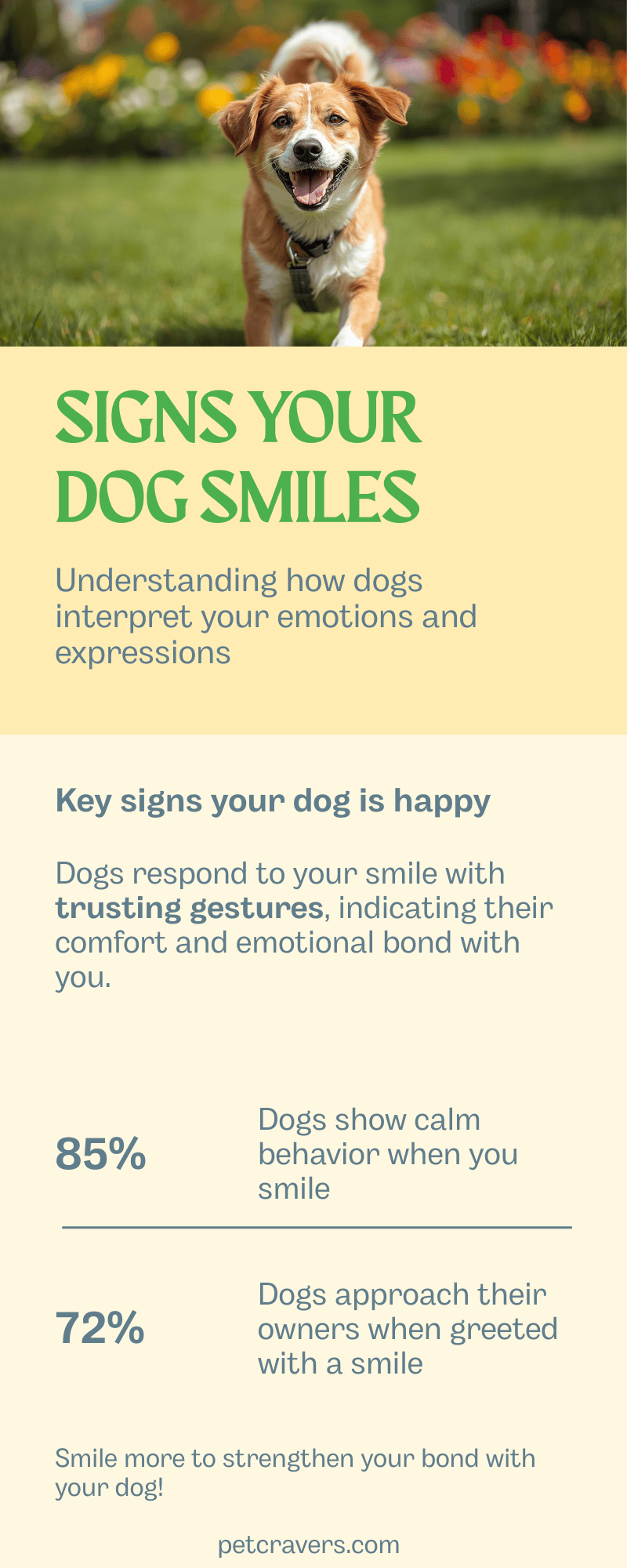
Dogs communicate primarily through body language, and their responses to human smiles can reveal whether they perceive your positive emotion. Recognizing these signs is an important part of how dogs interpret human smiles, helping you strengthen the bond and ensure your dog feels safe and happy around you.
1. Tail Wagging and Relaxed Posture
A wagging tail is one of the most obvious indicators that your dog recognizes a friendly smile. Coupled with a relaxed body, soft eyes, and loose ears, this posture signals that your dog perceives you as calm, approachable, and happy.
2. Approach Behavior
If your dog moves closer, leans in, or nudges you gently, it often indicates they understand your smile as a positive signal. Dogs use proximity as a way to engage socially and seek interaction.
3. Lip Licking and Play Bows
Affiliative behaviors, such as gentle lip licking or a play bow (front legs stretched forward, rear raised), are signs that your dog interprets your smile as friendly and inviting. These gestures show readiness for play or social engagement.
4. Contextual Interpretation
Dogs rarely rely solely on facial expressions—they integrate tone, gesture, and context. For instance, if you smile while calling your dog for a walk, they may respond with excitement, knowing that the smile signals a fun activity. Conversely, if the smile accompanies a stern tone, the dog may hesitate or appear cautious.
By observing these subtle cues, owners can gauge how well their dog interprets smiles, allowing for more effective communication and a stronger bond. Regularly using positive facial expressions alongside encouraging tone and gestures helps dogs feel secure, understood, and motivated to interact.
Tail wagging is one of the most common signs that your dog is responding positively to your expression. Learn more in What Your Dog’s Tail Wag Really Means.
You may also notice relaxed body language and increased engagement. Discover additional indicators in 10 Signs Your Dog Is Bonding with You.
If you’re unsure whether your dog’s reaction is positive or anxious, see Signs Your Dog Is Happy vs. Anxious.
When Dogs Misinterpret Human Smiles
While dogs are adept at reading human cues, there are times when they can misinterpret our smiles, especially if the context or accompanying signals are inconsistent. Understanding these pitfalls is important for safe and effective communication, and it plays a key role in how dogs interpret human smiles in real-world interactions.
1. Tense or Forced Smiles
Dogs are sensitive to subtle facial tension. A forced or nervous smile—where your mouth tightens or your eyes remain stiff—can be misread as anxiety or even mild aggression. In such cases, your dog may hesitate, retreat, or display stress signals like yawning, lip licking, or turning away.
2. Confusing Tone and Gesture
A smile paired with a sharp or negative tone can confuse a dog. For example, smiling while giving a firm “no” command may lead your dog to misinterpret the signal, causing hesitation or partial obedience. Dogs rely on consistency between facial expressions, voice, and body language.
3. Overgeneralizing Smiles
Dogs learn through association. If a smile is sometimes paired with rewards and sometimes with corrections or scolding, the dog may not reliably respond. It’s important to pair positive facial expressions with positive interactions consistently to prevent miscommunication.
4. Individual Sensitivities
Some dogs, particularly shy or anxious individuals, may be more cautious in interpreting smiles. They may require additional context—such as relaxed posture, soft tone, and gentle approach—before reacting positively.
By being aware of these potential misinterpretations, owners can adjust their expressions, tone, and gestures to ensure that smiles are consistently understood as positive cues, fostering trust and clear communication with their dog.
Dogs can sometimes misread mixed signals from humans. Understanding canine stress signals can help prevent confusion. Read How to Recognize Stress in Dogs.
Consistency is essential when communicating with dogs. Learn why in Why Consistency in Commands Matters.
Using Human Smiles to Train and Bond With Dogs
Smiles are more than just expressions of happiness—they can be a powerful tool in dog training and relationship-building. When used thoughtfully, your smile can reinforce positive behavior, create a relaxed learning environment, and strengthen the bond with your dog.
1. Reinforcing Positive Behaviors
Pairing a genuine smile with praise or treats signals to your dog that they have done something right. For example, when your dog sits on command or performs a trick correctly, smiling while saying “good job” makes the reward more meaningful. The combination of visual, verbal, and tactile reinforcement helps the dog associate success with positive interaction.
2. Enhancing Play and Interaction
Smiles can be used to encourage playful engagement. For instance, smiling and laughing during fetch, tug-of-war, or gentle play invites your dog to join enthusiastically. Dogs often mirror human energy, so a happy expression promotes a joyful and interactive experience.
3. Reducing Stress During Training
Training can sometimes be stressful, especially for shy or anxious dogs. A warm, relaxed smile paired with calm tone and gentle gestures reassures your dog, helping them focus and feel safe. This is particularly important during new skill learning or when introducing new environments.
4. Strengthening Emotional Connection
Using smiles consistently signals positive intent and trust. Dogs are highly observant and respond to emotional cues from their owners. Smiling when greeting your dog, offering affection, or during bonding activities helps your dog associate you with comfort and happiness, deepening the relationship.
Studies by Nagasawa and colleagues highlight the importance of emotional communication in the human-dog bond. Dogs frequently seek information from their owners’ faces and eyes, using these cues to assess mood and intent. When owners consistently smile during positive interactions such as play, praise, affection, or training, dogs may come to associate those expressions with safety, attention, and rewarding experiences. Over time, this reinforces trust and strengthens the emotional connection between dog and owner.
By integrating genuine smiles into training and daily interactions, owners create a supportive, motivating, and emotionally rewarding environment, enhancing both obedience and companionship.
Smiles can strengthen trust when paired with positive interactions. For more bonding strategies, visit Daily Habits That Strengthen Human-Dog Bonds.
Positive facial expressions are especially effective when combined with verbal communication. Learn more in How Talking to Your Dog Affects Your Bond.
Eye contact and smiles often work together to reinforce connection. Read The Power of Eye Contact in Dog Bonding.
Practical Tips for Owners
Understanding how dogs perceive smiles is one thing; applying that knowledge effectively in daily life is another. Here are practical tips to help owners use smiles to communicate, train, and bond with their dogs:
1. Be Mindful of Genuine vs. Forced Smiles
Dogs are sensitive to subtle facial cues. Aim for a relaxed, genuine smile rather than a forced one. A natural smile with soft eyes and relaxed facial muscles signals friendliness and calmness.
2. Observe Your Dog’s Reactions
Pay attention to how your dog responds when you smile. Tail wagging, relaxed posture, and approach behavior usually indicate positive perception, while avoidance or stress signals may suggest misinterpretation. Adjust your approach accordingly.
3. Pair Smiles with Tone and Gestures
A smile is most effective when combined with a positive tone of voice and appropriate body language. Use gentle gestures, open posture, and encouraging sounds to reinforce your intent.
4. Use Smiles Consistently During Training
Smiles should be integrated into training routines when reinforcing correct behavior. Consistency helps dogs associate the expression with positive outcomes, making commands and learning more effective.
5. Avoid Confusing Signals
Do not smile while scolding, correcting, or giving mixed messages. Dogs rely on consistency; conflicting cues can cause hesitation, anxiety, or misunderstanding.
6. Make Smiles Part of Daily Interaction
Beyond training, use smiles during greetings, playtime, or bonding moments. Regular positive reinforcement through facial expression strengthens trust and encourages social engagement.
By applying these tips, owners can enhance communication, reduce stress, and deepen the bond with their dogs, making smiles a simple yet powerful tool for a happier, more responsive companion.
Final Thoughts on How Dogs Interpret Human Smiles
Dogs are remarkably perceptive to human cues, and our smiles are no exception. While they may not understand the emotional nuances behind every expression the way humans do, dogs can interpret smiles as signals of positive intent, especially when paired with tone, gestures, and body language. Recognizing how your dog perceives your smile can enhance communication, build trust, and deepen your bond.
Using genuine smiles consistently—during training, play, or daily interactions—creates a positive and reassuring environment for your dog. By observing their reactions and combining visual cues with tone and gestures, owners can guide their dogs’ behavior, reduce stress, and encourage engagement.
Understanding how dogs interpret human smiles can improve communication and strengthen your relationship. To explore the emotional side of the human-dog connection further, read Can Dogs Really Love Their Owners?
In short, a simple smile is more than just a facial expression—it’s a powerful tool for connection. Experiment with smiling at your dog in different contexts, watch how they respond, and use these insights to strengthen your relationship. Through thoughtful, consistent use of smiles, you can create a happier, more responsive, and emotionally attuned companion.




Leave a Reply