 Skip to content
Imagine calling your dog to “come,” but sometimes you say “here” instead, or you use a different hand gesture each time. You might notice your dog hesitating, looking confused, or even ignoring the command altogether. This scenario highlights a common challenge in dog training: inconsistency in commands.
Consistency in communication is one of the most crucial elements for effective dog training. Dogs thrive on clear, predictable signals, whether they are verbal commands, hand gestures, or body posture. Inconsistent cues can lead to confusion, slower learning, and even anxiety, as dogs are unsure of what is expected of them.
Using consistent commands benefits both you and your dog. It helps your dog understand expectations more quickly, strengthens obedience, and fosters trust and cooperation. Consistency also reduces frustration for the owner, creating a smoother, more enjoyable training experience.
In this article, we will explore what consistency in commands means, why it matters, how dogs learn, and practical strategies to ensure your dog responds reliably. By understanding the importance of consistency, you can improve communication, reinforce good behavior, and build a stronger bond with your dog.
Understanding Consistency in Dog Training
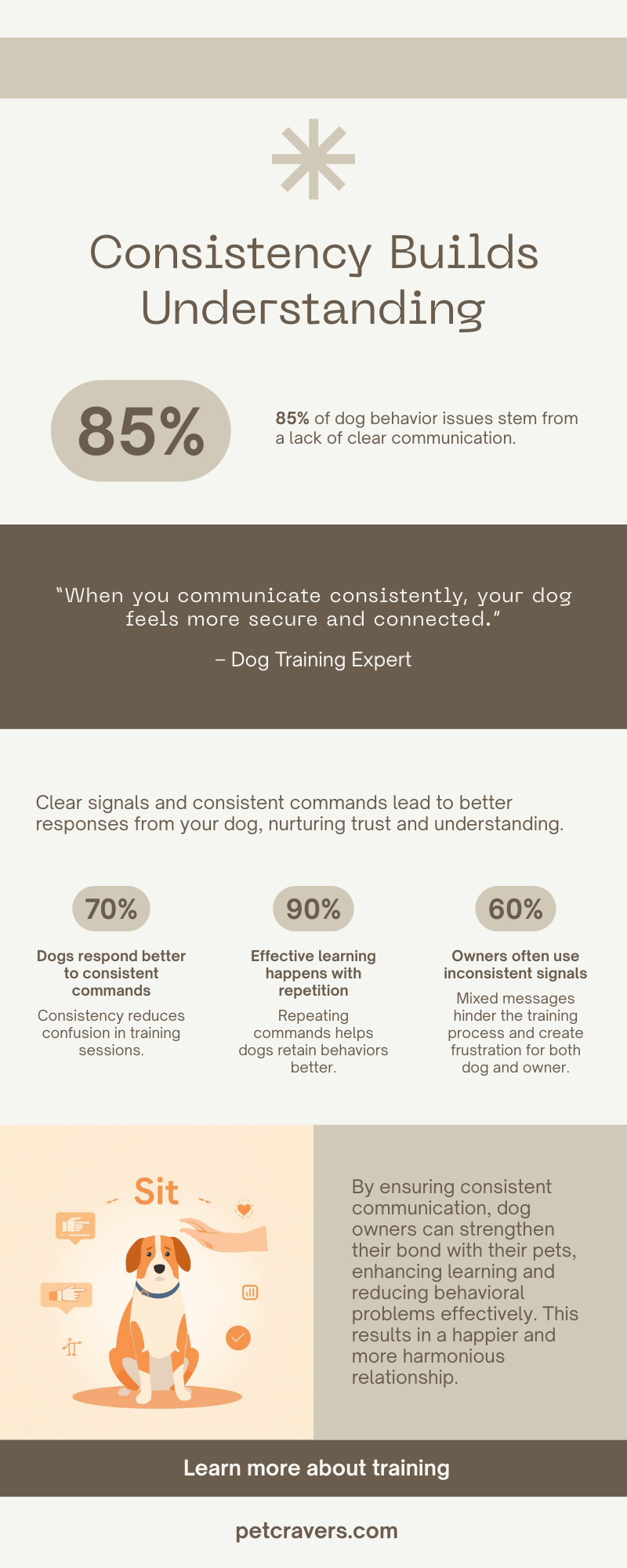
Consistency is the cornerstone of effective dog training. It ensures that your dog clearly understands what you expect and can reliably respond to commands. Without consistency, even the smartest dogs may struggle to grasp what behavior is desired.
1. What Consistency Means
- Verbal Cues: Using the same word or phrase for each command every time. For example, always saying “sit” rather than alternating with “sit down” or “take a seat.”
- Gestures and Body Language: Pairing commands with the same hand signals, posture, or movement cues consistently. Dogs are highly visual learners and rely on predictable gestures.
- Tone and Timing: Maintaining a consistent tone of voice—calm, firm, and positive—helps dogs associate the cue with the correct action. Timing is equally important; dogs need immediate reinforcement to link the command with behavior.
2. Why Inconsistency Creates Problems
- Confusion: Dogs may not know which command to follow when multiple variations are used.
- Slow Learning: Repeatedly changing words, gestures, or tone slows down the training process.
- Frustration and Stress: Dogs may become anxious or hesitant if cues are unpredictable, leading to unwanted behaviors.
3. The Role of Routine and Repetition
- Repetition helps reinforce learning. Consistently using the same commands allows dogs to form strong associations between the cue, the action, and the reward.
- Routine also helps dogs anticipate and understand expectations in daily life, making training more effective and communication smoother.
Key Takeaway
Consistency is not just about repeating commands; it’s about creating a predictable, clear, and reliable system of communication. Dogs respond best when they know exactly what each cue means and can anticipate the expected behavior.
How Dogs Learn Commands
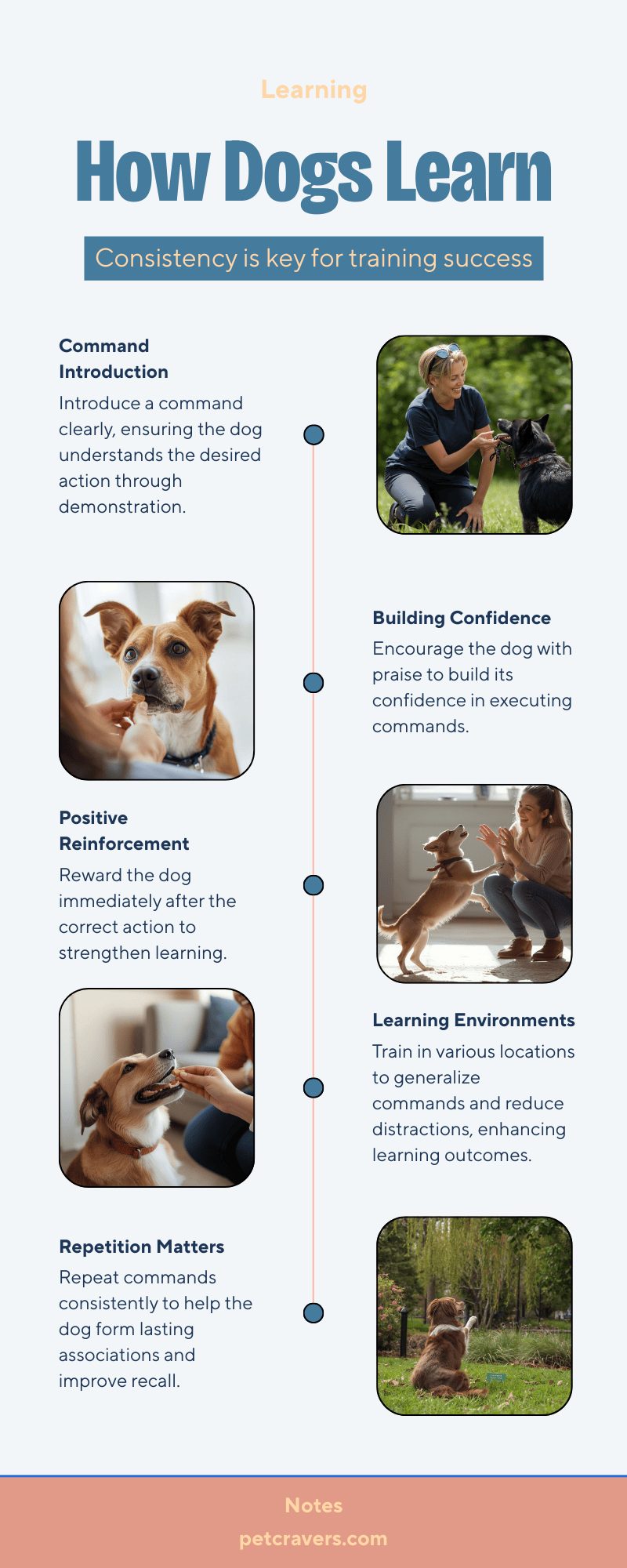
Dogs learn commands primarily through association, repetition, and reinforcement. Understanding this learning process helps owners appreciate why consistency is so critical.
1. Learning Through Association
- Dogs link a specific command, gesture, or signal with an action and its outcome.
- Example: Saying “sit” while gently guiding the dog into a sitting position creates a connection between the word, the action, and the reward.
- Without consistent association, dogs may struggle to understand which behavior corresponds to which command.
2. Role of Repetition
- Repeating the same command in the same manner strengthens the mental connection between cue and action.
- Over time, the dog responds automatically, reducing hesitation or confusion.
- Repetition across different contexts—home, park, or during walks—helps generalize understanding.
3. Positive Reinforcement
- Rewarding desired behavior immediately reinforces learning. Treats, praise, or play act as positive signals that a behavior is correct.
- Dogs are more likely to repeat actions that lead to rewards.
- Consistency in rewards—giving them reliably for correct responses—ensures that the dog understands what behavior is expected.
4. Avoiding Punishment Confusion
- Inconsistent punishment or negative reinforcement can confuse dogs, as they may not connect the consequence with the behavior.
- Clear, consistent guidance combined with positive reinforcement is more effective than sporadic correction.
Key Takeaway
Dogs learn best when commands are consistent, repeated, and paired with clear reinforcement. Consistency allows them to form strong associations, respond reliably, and build confidence in their understanding of expected behaviors.
Common Inconsistencies and Their Effects
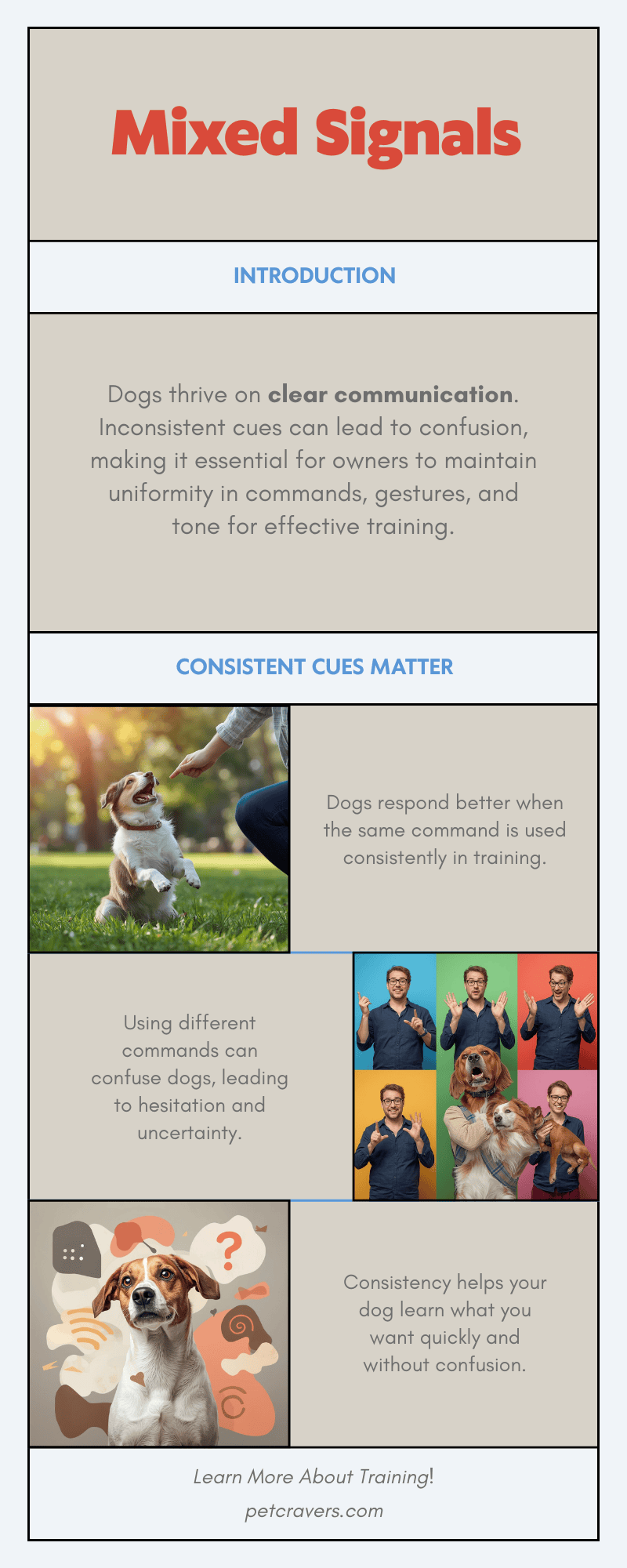
Even small variations in commands or gestures can significantly impact a dog’s learning and behavior. Recognizing common inconsistencies helps owners avoid confusion and maintain effective training.
1. Using Different Words for the Same Command
- Example: Saying “come,” “here,” or “over” interchangeably for recall.
- Effect: Dogs may hesitate or ignore the command, unsure which cue applies.
- Solution: Choose a single word for each command and stick with it consistently.
2. Changing Gestures or Body Language
- Example: Using a raised hand sometimes, a pointed finger other times, or no gesture at all.
- Effect: Dogs rely heavily on visual cues; inconsistent gestures create uncertainty.
- Solution: Standardize gestures and use them every time the command is given.
3. Variations in Tone of Voice
- Example: Using a firm tone sometimes, a soft tone at other times.
- Effect: Dogs may misinterpret the seriousness or urgency of the command.
- Solution: Maintain a calm, firm, and positive tone consistently.
4. Inconsistent Timing and Reinforcement
- Example: Rewarding a behavior immediately one time, delaying it another time, or rewarding accidentally for incorrect actions.
- Effect: Dogs may form incorrect associations or fail to learn the correct response.
- Solution: Provide immediate, consistent rewards for desired behavior and avoid reinforcing mistakes.
5. Multi-Person Household Challenges
- Different family members using varied words, gestures, or tones.
- Effect: Dogs may become confused or respond inconsistently to different people.
- Solution: Ensure all household members agree on commands, gestures, and reinforcement methods.
Key Takeaway
Inconsistencies in words, gestures, tone, timing, and reinforcement slow learning, create confusion, and can lead to unwanted behaviors. Maintaining uniformity is essential for effective training and clear communication.
Benefits of Consistent Commands
Using consistent commands in dog training offers a wide range of advantages, improving not only learning but also behavior, safety, and the overall relationship between dog and owner.

1. Faster Command Recognition and Response
- Dogs learn to associate a single word or gesture with a specific action more quickly.
- Consistency reduces hesitation and confusion, allowing dogs to respond reliably.
- Example: A dog trained consistently to “sit” responds almost immediately, even in distracting environments.
2. Clear Expectations Reduce Anxiety and Misbehavior
- Predictable commands create structure, helping dogs understand what is expected of them.
- Reduces stress or frustration caused by unclear instructions.
- Well-trained dogs are less likely to develop problem behaviors stemming from confusion or uncertainty.
3. Builds Trust and Strengthens the Bond
- Dogs feel more secure when communication is clear and predictable.
- Consistency demonstrates fairness and reliability, fostering trust between owner and dog.
4. Multi-Person Household Advantages
- When all family members use the same commands and signals, dogs can respond consistently to anyone.
- Prevents mixed messages that may otherwise confuse the dog or hinder training progress.
5. Supports Long-Term Training and Obedience
- Consistent commands form the foundation for advanced training and complex behaviors.
- Ensures that dogs maintain understanding even as they learn new skills or face different environments.
Key Takeaway
Consistency in commands leads to faster learning, reduced anxiety, stronger trust, and reliable obedience, making both daily life and advanced training easier and more enjoyable for you and your dog.
Tips for Maintaining Consistency
Consistency is key to effective dog training, but it requires conscious effort from owners. The following strategies can help you maintain uniform commands, gestures, and reinforcement.
1. Choose Simple, Clear Words for Each Command
- Select short, distinct words that are easy for your dog to recognize.
- Example: Use “sit,” “stay,” “come,” and “leave” consistently, avoiding synonyms or variations.
- Keep commands consistent across all situations to reinforce learning.
2. Standardize Gestures and Body Language
- Pair each command with a clear hand signal or body posture.
- Use the same gesture every time you give the command.
- Dogs rely heavily on visual cues, so gestures should be distinct and deliberate.
3. Maintain a Consistent Tone of Voice
- Use a calm, firm, and positive tone for commands.
- Avoid fluctuating between harsh, soft, or excited tones for the same instruction.
- Tone consistency reinforces the meaning and urgency of the command.
4. Ensure All Family Members Follow the Same Signals
- Everyone interacting with the dog should use the same words, gestures, and tone.
- Conflicting cues from different people can confuse the dog and slow training progress.
- Create a household training plan and share it with all members.
5. Track Progress and Adjust Gradually
- Monitor your dog’s responses and note areas needing improvement.
- If changes are needed, introduce them gradually and consistently, rather than abruptly switching cues.
- Reinforce correct behavior at each step to strengthen learning.
6. Pair Consistency with Positive Reinforcement
- Reward desired behavior immediately and consistently.
- Avoid rewarding incorrect behavior, as this undermines learning.
- Treats, praise, and play encourage dogs to repeat correct responses.
Key Takeaway
Maintaining consistency involves clear commands, standardized gestures, uniform tone, household alignment, careful monitoring, and positive reinforcement. These practices ensure your dog understands expectations and responds reliably, enhancing training success and everyday communication.
Combining Consistency with Positive Reinforcement
Consistency in commands becomes far more effective when paired with positive reinforcement, a cornerstone of modern dog training. Rewarding correct behavior helps dogs understand exactly what is expected while keeping training enjoyable.
1. Immediate Rewards Strengthen Learning
- Dogs learn best when the reward is given immediately after the correct action.
- Example: When your dog sits on the “sit” command, offer a treat or praise within seconds to reinforce the connection.
- Delayed rewards can confuse dogs, reducing the effectiveness of training.
2. Types of Positive Reinforcement
- Treats: Food rewards are highly motivating, especially for younger dogs.
- Verbal Praise: Words like “good dog” or “well done” reinforce positive behavior.
- Play and Affection: Toys, games, or petting serve as excellent rewards for dogs who value interaction.
3. Avoid Punishing Mistakes Caused by Inconsistency
- If a dog responds incorrectly due to inconsistent cues, punishment can lead to stress and confusion.
- Focus on reinforcing correct behavior rather than penalizing accidental mistakes.
4. Reinforcement Across Different Contexts
- Reward behavior in various settings—indoors, outdoors, around distractions—to generalize learning.
- Consistency in reinforcement ensures the dog understands that the command applies in all environments.
5. Combining Training Techniques
- Use clear, consistent commands with gestures and tone.
- Pair these with immediate, appropriate rewards to build strong associations.
- Over time, the dog will respond reliably, even without constant reinforcement, because the behavior has been consistently taught and positively reinforced.
Key Takeaway
Consistency paired with positive reinforcement creates a clear, predictable learning environment. Dogs understand commands faster, respond reliably, and remain motivated, making training effective and strengthening the bond between dog and owner.
Everyday Applications
Consistency in commands is not just important during formal training sessions—it plays a vital role in daily interactions and routines with your dog. Applying consistent communication in everyday life ensures smoother behavior, safety, and stronger bonding.
1. Daily Routines
- Use consistent commands during feeding, walks, and playtime.
- Example: Always asking your dog to “sit” before putting down the food bowl reinforces polite behavior.
- Predictable routines reduce stress and make your dog feel secure.
2. Walks and Outdoor Activities
- Consistent recall commands like “come” or “here” help maintain safety in outdoor environments.
- Standardized cues prevent confusion when encountering distractions like other dogs, people, or traffic.
3. Playtime and Social Interactions
- Commands such as “leave it” or “drop it” should be used consistently during games.
- This prevents misunderstandings and ensures your dog learns the rules of play.
4. Multi-Person Households
- Everyone in the household should use the same commands and gestures to maintain clarity.
- Consistency prevents conflicting messages that can confuse the dog and undermine training progress.
5. Safety and Emergency Situations
- Reliable command response can prevent accidents and keep your dog safe.
- Example: A consistently reinforced “stay” command can keep a dog from running into a dangerous situation.
Key Takeaway
Applying consistent commands in everyday life ensures reliable behavior, strengthens routines, improves safety, and enhances your dog’s confidence and trust. Consistency isn’t limited to training sessions—it’s a vital part of daily communication.
Common Challenges and Solutions
Even with the best intentions, maintaining consistency in commands can be challenging. Understanding common obstacles and practical strategies helps ensure effective training.
1. Multi-Person Households
- Challenge: Different family members may use varied words, gestures, or tones.
- Solution: Create a household training plan. Agree on specific commands, gestures, and tone of voice so everyone communicates uniformly with the dog.
2. Changing Environments
- Challenge: Dogs may struggle to respond to commands in new or distracting settings.
- Solution: Gradually practice commands in different locations, starting with low-distraction environments and slowly introducing more distractions.
3. Dogs Previously Trained Inconsistently
- Challenge: Dogs may have learned commands inconsistently, leading to confusion.
- Solution: Reintroduce consistent commands and gestures, rewarding correct responses. Patience and repetition help overwrite past inconsistencies.
4. Owner Inconsistency
- Challenge: Owners may unintentionally vary tone, gestures, or timing due to stress, fatigue, or distraction.
- Solution: Be mindful of your own behavior, practice commands calmly, and focus on deliberate, uniform communication.
5. Impulsive Rewarding
- Challenge: Rewarding behavior at the wrong time or rewarding mistakes can weaken training.
- Solution: Only provide immediate rewards for correct behavior. Avoid reinforcing accidental or undesired responses.
Key Takeaway
Common challenges like multi-person households, new environments, past inconsistencies, owner variations, and improper reinforcement can be overcome with planning, patience, and deliberate practice. Consistency requires awareness and commitment, but the results are a well-trained, confident, and responsive dog.
Conclusion
Consistency is one of the most powerful tools in dog training. Using the same words, gestures, tone, and timing ensures your dog understands what is expected, learns more quickly, and responds reliably. Inconsistent commands, on the other hand, can lead to confusion, hesitation, stress, and unwanted behaviors.
By maintaining uniform commands, standardizing gestures, and pairing them with positive reinforcement, you create a clear and predictable learning environment. Dogs thrive when they can anticipate what is expected of them, feel secure, and receive rewards for correct behavior.
Consistency also strengthens the bond between you and your dog. A dog that understands your cues confidently will respond with trust and cooperation, making daily life, training, and playtime more enjoyable for both of you.
Final Thought: Patience, repetition, and consistency are the keys to successful training. By committing to clear and consistent communication, you can help your dog learn effectively, behave reliably, and build a deeper, more trusting relationship that lasts a lifetime.





Leave a Reply