 Skip to content
It’s a familiar scene: a child reaches out to pet a dog, while the dog backs away or seems unsure. At first glance, it may appear that the dog is being uncooperative or the child is being too rough—but often, the misunderstanding comes from differences in how they communicate. Understanding dog and child interaction begins with recognizing these differences, as effective communication is the foundation of safe, positive, and trusting relationships between children and their canine companions.
Dogs and children each have unique ways of expressing themselves. Dogs rely heavily on body language, posture, and subtle cues such as tail position, ear orientation, and facial expressions. Children, on the other hand, primarily communicate through words, gestures, and overt emotions, which can sometimes be confusing to a dog.
Understanding these differences is crucial for creating safe, enjoyable interactions. Misinterpreting a dog’s signals can lead to stress, fear, or even accidental bites, while children who don’t grasp canine cues may unintentionally overwhelm or scare a dog.
This post explores how dogs and children communicate differently, highlights common misunderstandings, and provides practical tips to improve interaction. By learning to read and respond to each other’s signals, both dogs and children can develop stronger bonds, enjoy safer play, and cultivate mutual respect and understanding.
Understanding Canine Communication for Better Dog and Child Interaction
Dogs communicate primarily through body language, posture, facial expressions, and vocalizations. Unlike humans, who rely heavily on words, dogs send messages through subtle physical and auditory cues that reflect their emotions, intentions, and comfort levels.
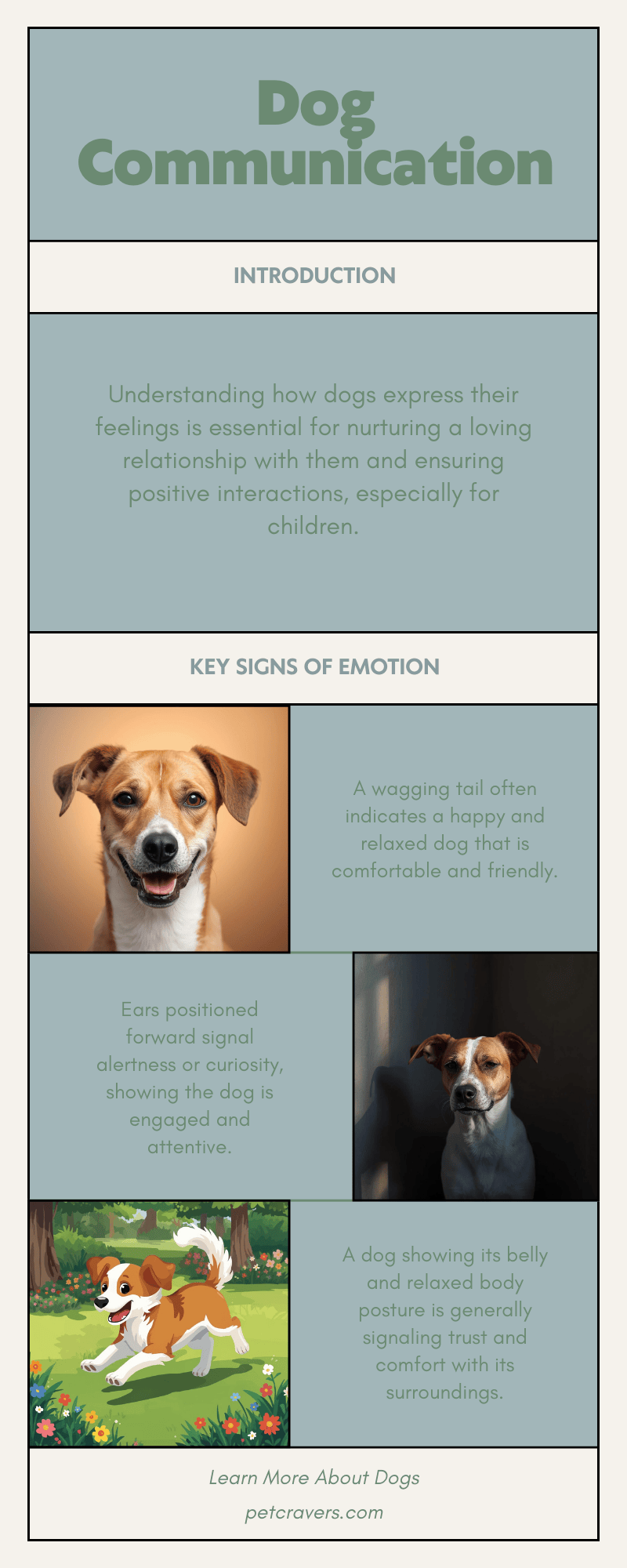
1. Body Language
- Tail Position and Movement: A wagging tail does not always mean happiness; speed, height, and direction convey different emotions.
- Posture: A relaxed dog will have loose muscles, while a tense or stiff posture may signal discomfort or stress.
- Facial Expressions: Raised lips, bared teeth, yawning, or blinking can indicate stress, fear, or playfulness.
2. Vocalizations
- Barking: Dogs bark for attention, alert, play, or anxiety. The pitch, tone, and frequency reveal meaning.
- Growling: Often misunderstood, growling can be a warning, playful signal, or excitement cue.
- Whining or Whimpering: Indicates distress, desire, or a need for attention.
3. Eye Contact and Ear Signals
- Direct eye contact may be a challenge or curiosity, while a soft gaze shows relaxation.
- Ear position reflects mood: upright for alertness, back for fear or submission.
4. Canine Sensitivity to Humans
- Dogs are highly attuned to human emotions, tone, and gestures. They can sense excitement, anger, or calmness and adjust their behavior accordingly.
- Understanding a dog’s signals allows humans—especially children—to interact safely and positively.
Research Insight
Scientific research suggests that dogs have evolved remarkable communication skills that allow them to understand and respond to human social cues. In the paper Human–Dog Communication: The Co-Evolution of Cooperation, Ádám Miklósi and József Topál explain that dogs are exceptionally skilled at interpreting human gestures, facial expressions, eye contact, and vocal tones. This unique ability has developed through thousands of years of living alongside humans. For children, learning to communicate in ways that dogs naturally understand—such as using calm body language, predictable movements, and gentle voices—can strengthen trust, reduce confusion, and encourage positive interactions.
Key Takeaway
Dogs communicate through subtle, multi-layered cues that require careful observation. Learning to interpret these signals is essential for safe, respectful interactions, particularly with children who may not intuitively recognize a dog’s body language or mood.
Understanding these signals is the first step toward improving dog and child interaction and helping children recognize when a dog feels relaxed, playful, or uncomfortable.
Recommended Resource: Learn More About Dog Body Language
To deepen your understanding of canine communication, consider reading Doggie Language: A Dog Lover’s Guide to Understanding Your Best Friend by Lili Chin. This illustrated guide explains dog body language in a clear, engaging way, helping readers recognize common signals such as stress, relaxation, fear, and playfulness. For parents, caregivers, and older children, it serves as an excellent companion to the concepts discussed in this article, making it easier to interpret a dog’s behavior and encourage safe, respectful interactions.
Learning to recognize canine signals is much easier when you first understand dog body language.
How Children’s Communication Affects Dog and Child Interaction
Children communicate differently from dogs, primarily relying on verbal language, gestures, facial expressions, and emotions. Understanding how children express themselves helps explain why miscommunication with dogs can occur.
1. Verbal Communication
- Children use words to express needs, feelings, and intentions.
- Younger children may have limited vocabulary, which can lead to frustration or unclear communication.
- Older children can articulate emotions more clearly but may still misinterpret dog signals.
2. Non-Verbal Communication
- Gestures, body posture, and facial expressions play a significant role, especially in toddlers and preschoolers.
- Children often express excitement physically—jumping, flailing arms, or loud exclamations—which dogs may misinterpret as threatening or overly stimulating.
3. Emotional Expression
- Children display emotions outwardly and may have intense reactions that dogs perceive differently than intended.
- Fear, excitement, or anger can influence a child’s approach to a dog, sometimes triggering a defensive response.
4. Cognitive Development and Understanding
- Young children may not understand cause and effect in interactions with dogs.
- They may not recognize a dog’s warning signals or signs of discomfort, increasing the risk of miscommunication.
Key Takeaway
Children communicate in ways that are mostly verbal and emotional, while dogs rely on physical and vocal cues. Recognizing this difference is essential for safe, positive interactions between dogs and children, preventing misunderstandings and promoting mutual respect.
Recognizing how children express themselves helps create better dog and child interaction by reducing confusion and encouraging respectful communication.
Key Differences Between Dogs and Children’s Communication
Successful dog and child interaction depends on understanding that dogs and children communicate in fundamentally different ways. Recognizing these differences is essential for fostering safe, positive interactions.

1. Reliance on Body Language vs. Words
- Dogs: Communicate primarily through body posture, gestures, facial expressions, and vocalizations.
- Children: Depend mainly on verbal language, supplemented by gestures and facial expressions.
- Implication: A child may not notice subtle signs of discomfort from a dog, while a dog may not understand a child’s words.
2. Emotional Expression Differences
- Dogs: Express emotions physically—tail wagging, ear position, posture, growls, or whining.
- Children: Express emotions verbally and through facial expressions, sometimes in exaggerated ways.
- Implication: Dogs may misinterpret loud excitement or sudden movements as threatening or overstimulating.
3. Attention Span and Focus
- Dogs: Attention can be influenced by training, stimuli, and energy levels.
- Children: Younger children often have short attention spans and may struggle to follow instructions consistently.
- Implication: Both may misinterpret each other’s signals due to distractions or fleeting focus.
4. Interpretation of Social Cues
- Dogs: Highly sensitive to tone, gestures, and body posture, quickly reading subtle signals.
- Children: May lack the ability to recognize or respond to non-verbal cues from dogs.
- Implication: Misreading or ignoring cues can increase the risk of stress, fear, or defensive behavior from the dog.
5. Response to Communication
- Dogs: Respond instinctively based on learned behavior and instincts.
- Children: Respond intentionally, but may overreact or misjudge the dog’s signals.
- Implication: Children require guidance to interpret and respond appropriately to dogs.
Key Takeaway
Dogs and children communicate through different channels, interpret emotions differently, and respond in contrasting ways. Understanding these differences is the first step to creating safe, respectful, and enjoyable interactions.
Common Dog and Child Interaction Mistakes and Risks
Many challenges in dog and child interaction arise when children and dogs misinterpret each other’s signals. Miscommunication between dogs and children can sometimes lead to stress, fear, or even accidents. Awareness of these common issues helps parents and caregivers prevent problems.

1. Misinterpreting Play Behavior
- Dogs may play by nipping, jumping, or growling, which children might see as aggression or fun.
- Children may try to imitate or escalate the behavior without understanding the dog’s signals.
- Risk: Dogs may react defensively if play becomes overwhelming.
2. Children’s Overstimulation
- Loud voices, sudden movements, or rough petting can overwhelm a dog.
- Young children may not recognize signs of discomfort, such as tucked tail, lip licking, or retreating posture.
- Risk: Stress or fear in the dog, increasing the likelihood of a defensive reaction.
3. Ignoring Warning Signals
- Dogs often give subtle cues—stiffening, averting gaze, or backing away—to indicate discomfort.
- Children may interpret these as ignoring them or refusing to play.
- Risk: Escalation to snapping or barking if the dog feels threatened.
4. Overenthusiastic Approaches
- Children may rush to hug or chase a dog without giving it space.
- Dogs need time to acclimate to new interactions and may not tolerate sudden closeness.
- Risk: Defensive reactions, stress, or accidental bites.
5. Misreading Emotional States
- A dog expressing anxiety or discomfort may be mistaken for excitement.
- Children expressing fear or anger may inadvertently trigger stress in the dog.
- Risk: Mutual misinterpretation can escalate tension, leading to unsafe situations.
Key Takeaway
Understanding common misunderstandings and risks allows adults to supervise interactions, guide children appropriately, and teach dogs to respond safely, creating a positive environment for both.
How to Improve Dog and Child Interaction
Improving dog and child interaction requires patience, education, and consistent guidance for both children and dogs. Teaching both parties how to interpret and respond to each other’s signals ensures safe, positive interactions.

1. Teach Children to Read Dog Body Language
- Explain common cues:
- Tail positions: high for alertness, low or tucked for fear.
- Ear posture: upright for attention, back for stress.
- Facial expressions: lip licking, yawning, or growling.
- Encourage children to stop or give space when a dog shows signs of discomfort.
2. Teach Dogs to Respond to Gentle, Predictable Commands from Children
- Simple commands like “sit,” “stay,” or “gentle” can be taught to respond to children’s voices.
- Keep commands consistent and use positive reinforcement for compliance.
3. Supervised Interactions
- Always supervise playtime, especially with young children or new dogs.
- Step in if play becomes too rough or if either the child or dog shows signs of stress.
4. Encourage Calm, Respectful Behavior
- Model slow, gentle approaches and calm interactions.
- Teach children to avoid sudden movements, shouting, or hugging that may startle the dog.
5. Gradual Socialization
- Allow dogs and children to interact in controlled environments, gradually increasing exposure.
- Positive, short interactions build confidence and trust on both sides.
Research Insight
Scientific research supports the value of teaching both children and parents how to recognize canine communication. In the study Teaching Children and Parents to Understand Dog Signaling by Kerstin Meints, Victoria Brelsford, and Tiny De Keuster (2018), researchers found that educational interventions significantly improved participants’ ability to identify dogs’ behavioral and emotional signals. The study suggests that learning to recognize signs of stress, fear, relaxation, and friendliness can help prevent misunderstandings, reduce the risk of dog bites, and promote safer, more positive interactions between children and dogs. These findings reinforce the importance of educating families about dog body language as part of responsible pet ownership.
Key Takeaway
Improving communication between dogs and children requires education, consistent commands, supervision, calm behavior, and gradual exposure. With these strategies, both can understand each other better, reducing stress and preventing accidents.
Using calm words and a gentle tone is similar to the techniques discussed in our guide on how to talk to your dog, where consistent verbal communication helps build trust.
Activities That Strengthen Dog and Child Interaction
Interactive activities are an excellent way to strengthen dog and child interaction while teaching communication and mutual respect. Engaging in structured activities can help children and dogs learn to read each other’s cues, respond appropriately, and enjoy safe, positive interactions.
1. Games That Teach Cues and Body Language
- “Freeze and Observe” Game: Have children and dogs pause and observe each other’s body language. Discuss what each signal means.
- “Match the Emotion” Game: Children guess the dog’s emotional state based on tail, ears, or posture and receive guidance on correct interpretation.
2. Training Sessions Involving Children
- Children can participate in simple training exercises like “sit,” “stay,” or “come.”
- Emphasize gentle commands, calm tone, and positive reinforcement with treats or praise.
- Helps children understand the importance of consistent communication and rewards for correct behavior.
3. Controlled Playtime
- Structured play, such as fetch or tug-of-war with rules, teaches both dog and child boundaries.
- Children learn to recognize when the dog wants to stop or take a break.
- Dogs learn to follow commands even in exciting situations.
- You can also include scent games for dogs, which provide mental enrichment while encouraging children to participate in calm, supervised activities.
4. Positive Reinforcement Techniques for Both
- Teach children to reward appropriate dog behavior with praise, gentle petting, or treats.
- Helps children feel empowered and fosters trust between child and dog.
5. Role-Playing Scenarios
- Simulate common interactions, such as approaching a dog calmly or reading warning signals.
- Children practice safe responses, while dogs practice tolerating new situations in a controlled way.
Key Takeaway
Activities that emphasize reading cues, structured training, controlled play, and positive reinforcement strengthen the bond, understanding, and mutual respect between dogs and children, leading to safer and more enjoyable interactions.
Interactive activities can also strengthen your relationship. Try these games that strengthen your bond with your dog to encourage teamwork and communication.
Safety Guidelines for Dog and Child Interaction
Safe dog and child interaction begins with close supervision, clear boundaries, and teaching children to respect a dog’s signals. Ensuring safety is essential when dogs and children interact. Following clear guidelines protects both and fosters positive experiences.
1. Always Supervise Interactions
- Never leave young children and dogs alone together.
- Monitor play and intervene if either shows signs of stress, fear, or overstimulation.
2. Set Boundaries for Both Children and Dogs
- Establish rules for children: gentle petting, no pulling on ears or tail, and no sudden movements.
- Give dogs safe spaces to retreat, such as a crate or quiet area, where they are not disturbed.
3. Teach Appropriate Approaches
- Encourage children to approach dogs calmly, extending a hand slowly for sniffing.
- Avoid hugging or crowding a dog that is uncomfortable.
4. Use Clear, Consistent Commands
- Children should use simple, predictable commands that dogs understand, such as “sit,” “stay,” or “gentle.”
- Reinforce positive behavior consistently to strengthen learning.
5. Recognize Stress or Warning Signs
- Teach children and caregivers to watch for signs like growling, stiff posture, lip licking, yawning, or retreating.
- Respond immediately by pausing interactions or giving the dog space.
6. Gradual Introduction to New Situations
- When introducing a dog to a new child or environment, proceed slowly.
- Short, supervised sessions help both adjust without stress.
Key Takeaway
Supervision, clear boundaries, consistent commands, and awareness of warning signals are essential for safe and positive interactions between dogs and children. Following these guidelines minimizes risks and fosters trust and enjoyment.
Benefits of Positive Dog and Child Interaction
Positive dog and child interaction helps build trust, confidence, empathy, and lasting companionship between children and dogs. When dogs and children learn to communicate and understand each other, the rewards are significant for both safety and relationship building.
1. Builds Trust Between Dogs and Children
- Dogs become more comfortable around children who respect their signals.
- Children gain confidence in approaching and interacting with dogs safely.
- Mutual trust reduces fear, anxiety, and defensive behavior.
2. Reduces Stress and Anxiety
- Clear communication and predictable interactions help dogs feel secure.
- Children feel more confident and less likely to misinterpret dog behavior.
- Reduces the likelihood of accidents or negative experiences.
3. Encourages Empathy and Responsibility in Children
- Children learn to recognize and respect a dog’s emotions and boundaries.
- Teaches responsibility through caring, feeding, training, and gentle play.
4. Promotes Safe and Enjoyable Play
- Understanding cues allows both parties to engage in positive, fun interactions.
- Helps avoid misunderstandings that could lead to biting, snapping, or other defensive behaviors.
5. Strengthens the Bond
- Positive interactions and mutual understanding deepen the emotional connection.
- Children and dogs develop lifelong relationships built on trust and respect.
Key Takeaway
Mutual understanding fosters trust, safety, empathy, positive play, and strong bonds, making interactions enjoyable and rewarding for both children and dogs.
Strong communication is one of the foundations of building a lasting bond with your dog, helping both children and dogs feel more confident around each other.
Recommended Reading
If you’d like to learn more about fostering safe, positive relationships between dogs and children, Living with Kids and Dogs…Without Losing Your Mind by Colleen Pelar is an excellent resource. The book offers practical advice on understanding canine body language, teaching children how to interact respectfully with dogs, preventing common misunderstandings, and creating a safe home environment. It complements the strategies discussed in this guide and provides parents and caregivers with real-world tips for building trust and lifelong friendships between children and their canine companions.
Conclusion
Positive dog and child interaction is built on understanding how dogs and children communicate. While dogs rely on body language, posture, and vocal cues, children primarily use words, gestures, and emotions. These differences can sometimes lead to misunderstandings, stress, or even unsafe situations if not properly managed.
Understanding these differences is key to fostering safe, positive interactions. Teaching children to read dog signals, guiding dogs to respond to gentle, predictable commands, and supervising interactions creates an environment of mutual respect and trust. Structured activities, consistent routines, and gradual exposure help both dogs and children learn to interpret each other’s cues effectively.
By emphasizing education, patience, and awareness, parents and caregivers can ensure that interactions are safe, enjoyable, and rewarding. When dogs and children understand each other, they develop a stronger bond, greater empathy, and lifelong friendship, while reducing stress and the risk of accidents.
Final Thought: Mutual understanding is the foundation of a harmonious relationship between dogs and children. With careful guidance and consistent practice, children can grow up respecting and communicating with their canine companions, and dogs can thrive in a safe, loving environment.





Leave a Reply