Introduction
A happy dog is more than just a playful companion—it’s a mentally engaged one. Just like humans, dogs need activities that challenge their minds, stimulate their senses, and encourage problem-solving. Without adequate mental stimulation, even well-fed and exercised dogs can become bored, anxious, or exhibit destructive behaviors such as chewing furniture, excessive barking, or digging.
Mental enrichment is a key factor in overall canine happiness. By engaging their brains through interactive toys, scent games, training exercises, and new experiences, dogs develop confidence, curiosity, and a sense of accomplishment. These activities not only improve behavior but also strengthen the bond between dogs and their owners.
In this post, we’ll explore the powerful connection between mental stimulation and dog happiness. You’ll learn how cognitive engagement impacts mood, behavior, and well-being, discover types of mentally stimulating activities, recognize signs of a happy, engaged dog, and get practical tips for keeping your furry friend mentally active and joyful every day.
Understanding Mental Stimulation
Mental stimulation is the process of engaging your dog’s brain through activities that challenge their problem-solving skills, senses, and cognitive abilities. Just as physical exercise keeps a dog’s body healthy, mental enrichment keeps their mind sharp, alert, and balanced.
1. What Mental Stimulation Entails
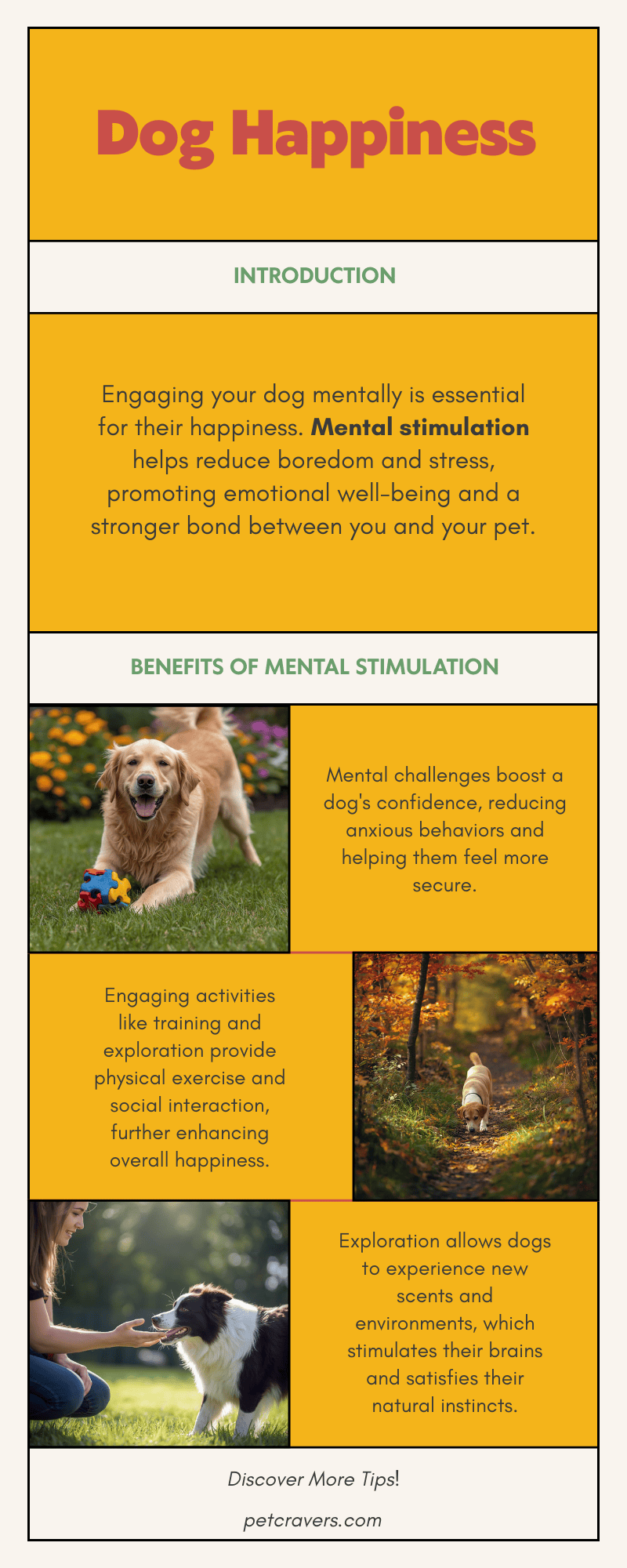
- Activities that require focus, decision-making, or problem-solving.
- Engagement of one or more senses—smell, sight, hearing, and touch.
- Encouraging natural instincts such as foraging, sniffing, and exploration.
2. Examples of Mentally Stimulating Activities
- Puzzle Toys: Toys that require manipulation or problem-solving to access treats.
- Scent Games: Hiding treats for your dog to find, encouraging natural sniffing behavior.
- Training Exercises: Teaching new commands, tricks, or obedience skills.
- Interactive Play: Engaging games like hide-and-seek, tug-of-war with rules, or fetch with problem-solving elements.
3. Cognitive Benefits
- Keeps the brain active and reduces boredom-related stress.
- Encourages independent thinking and confidence-building.
- Enhances memory, learning ability, and overall mental agility.
By understanding what mental stimulation is and how it impacts your dog, owners can intentionally provide activities that not only keep their pets busy but also improve their overall happiness and quality of life.
How Mental Stimulation Affects Happiness
Mental stimulation has a profound impact on a dog’s emotional well-being and overall happiness. Engaging your dog’s brain through activities and challenges supports positive behaviors, reduces stress, and strengthens the bond between you and your furry companion.
1. Reduces Stress and Anxiety
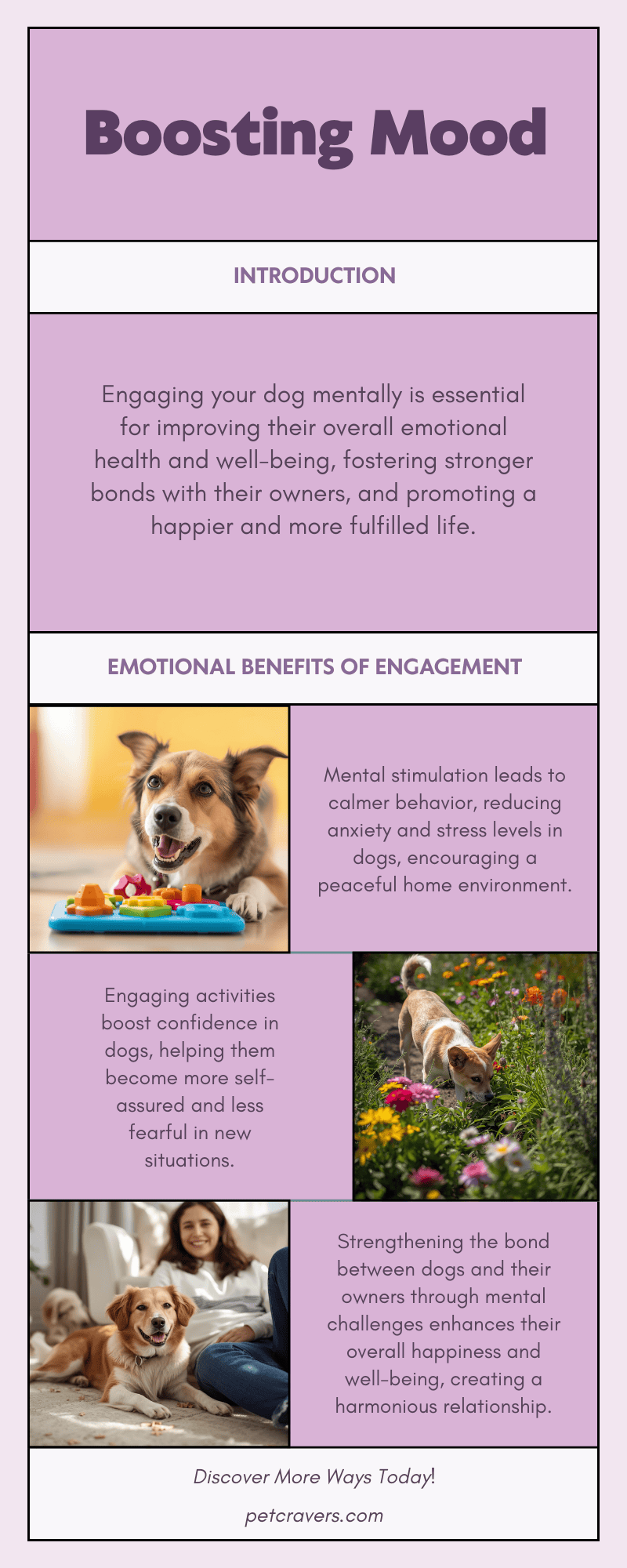
- Mentally active dogs are less prone to anxiety-related behaviors such as excessive barking, pacing, or destructive chewing.
- Cognitive challenges provide a constructive outlet for energy, preventing frustration and promoting calm behavior at home.
2. Provides a Sense of Accomplishment
- Completing a puzzle, finding a hidden treat, or learning a new command gives dogs a rewarding sense of achievement.
- This success boosts confidence and encourages continued curiosity and engagement.
3. Increases Engagement with the Environment
- Dogs that are mentally stimulated are more attentive and curious about their surroundings.
- They explore, interact, and respond positively to new stimuli, which enriches their daily experiences and prevents boredom.
4. Strengthens the Human-Dog Bond
- Interactive activities, training sessions, and games enhance communication and trust between you and your dog.
- Positive reinforcement during mentally stimulating activities creates a joyful, cooperative relationship that contributes to overall happiness.
5. Improves Overall Quality of Life
- Regular mental engagement keeps dogs sharp, confident, and adaptable to new situations.
- A mentally stimulated dog is more likely to exhibit balanced behavior, emotional stability, and contentment, contributing to a long-term sense of happiness.
By prioritizing mental stimulation, owners can directly influence their dog’s emotional health, creating a happier, more confident, and well-rounded companion.
Types of Activities That Boost Mental Engagement
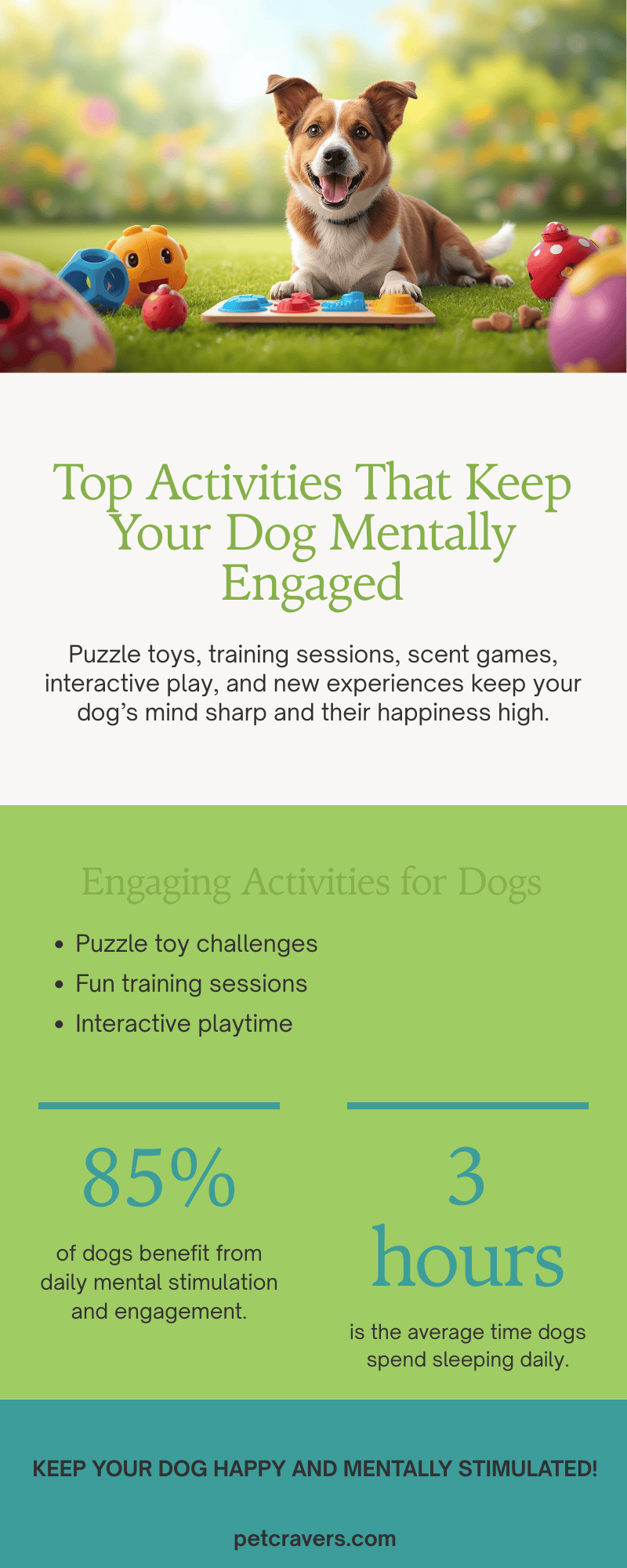
Providing your dog with a variety of mentally stimulating activities is key to maintaining happiness, curiosity, and cognitive health. Here are some of the most effective ways to engage your dog’s brain:
1. Puzzle Toys
- Toys that require problem-solving to access treats or kibble.
- Examples: treat-dispensing balls, interactive puzzle boards, or DIY puzzle boxes.
- Benefits: Encourages critical thinking, patience, and focus while rewarding your dog with treats.
2. Training and Obedience Exercises
- Teaching new commands, tricks, or advanced obedience skills.
- Incorporate short, fun sessions multiple times a day.
- Benefits: Strengthens memory, cognitive function, and communication between you and your dog.
3. Scent and Foraging Games
- Hide treats around the house, yard, or in snuffle mats.
- Encourage dogs to use their sense of smell to locate rewards.
- Benefits: Stimulates natural instincts, promotes problem-solving, and provides a satisfying sense of accomplishment.
4. Interactive Play
- Games like hide-and-seek, tug-of-war with rules, or fetch with obstacles.
- Make playtime slightly challenging to encourage thinking and decision-making.
- Benefits: Enhances mental engagement while combining physical exercise and bonding.
5. Novel Experiences
- Introduce new environments, objects, or sounds safely, such as visiting a park, walking new routes, or exploring safe outdoor areas.
- Benefits: Builds confidence, adaptability, and mental stimulation through sensory exposure.
By rotating these activities and introducing new challenges regularly, owners can keep their dogs’ minds active, prevent boredom, and promote long-term happiness and well-being.
Signs Your Dog Is Mentally Engaged and Happy
Recognizing when your dog is mentally stimulated is crucial for ensuring their activities are effective and enjoyable. Mentally engaged dogs display specific behaviors and cues that reflect both cognitive involvement and emotional satisfaction.
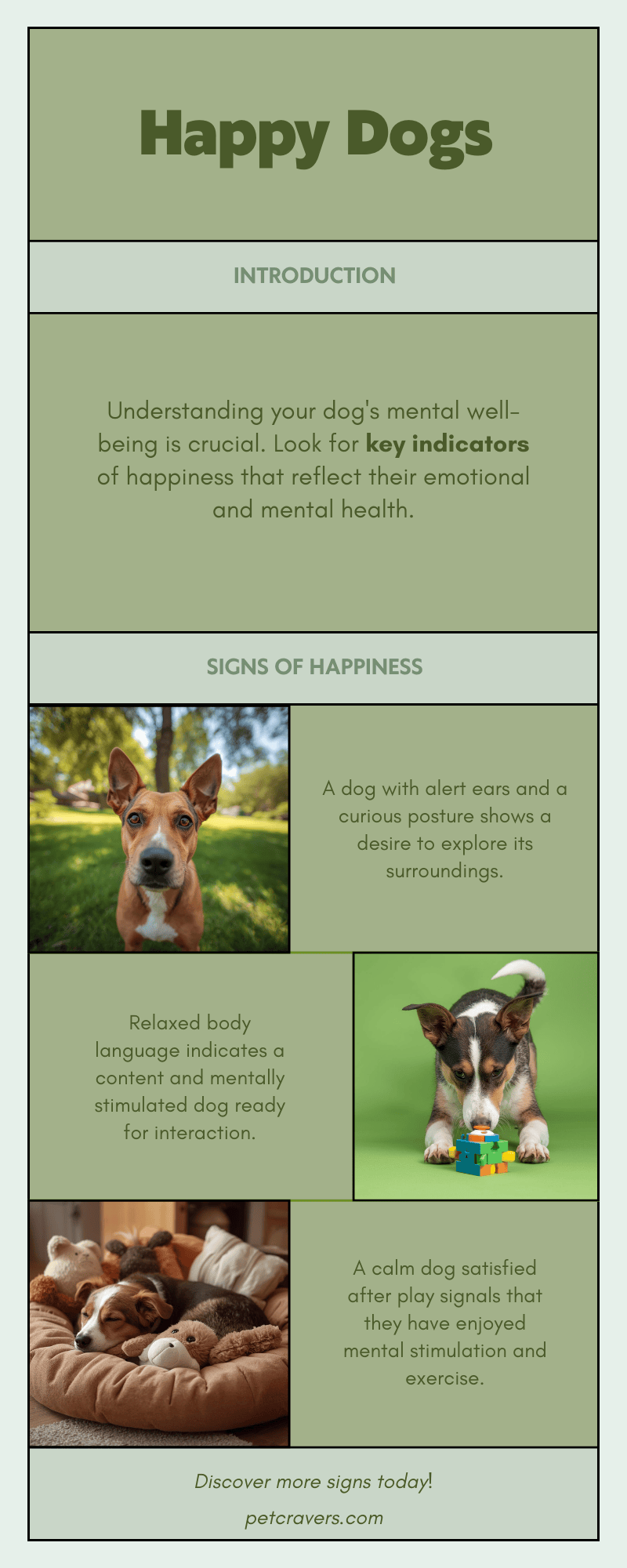
1. Alertness and Curiosity
- Dogs show interest in their surroundings, investigating new sights, smells, and sounds.
- They may tilt their heads, perk up their ears, or approach objects with deliberate attention.
2. Focused Problem-Solving Behavior
- Dogs engage with toys, puzzles, or training tasks in a purposeful way.
- Pawing, nudging, circling, or manipulating objects before achieving a goal demonstrates active thinking.
3. Positive Body Language
- Relaxed posture, wagging tail, and calm yet attentive demeanor indicate mental engagement and enjoyment.
- Overexcitement or excessive hyperactivity may suggest overstimulation, while lethargy can indicate disinterest or boredom.
4. Willingness to Interact
- Mentally stimulated dogs actively participate in games, training, or exploration.
- They respond to cues, follow instructions, and seek engagement with their owner.
5. Satisfaction After Play
- Dogs often exhibit calm and content behavior following mentally stimulating activities.
- Signs include resting peacefully, relaxed body language, and a general sense of contentment.
By observing these cues, owners can assess whether their dog is enjoying mental enrichment activities, adjust the difficulty or type of activity, and ensure the dog remains happy, confident, and engaged.
Tips to Enhance Mental Stimulation for Maximum Happiness
Maximizing your dog’s mental engagement requires variety, creativity, and observation. Implementing these strategies ensures your dog remains curious, confident, and happy.
1. Rotate Activities Regularly
- Avoid repeating the same activity every day.
- Introduce a mix of puzzle toys, scent games, training exercises, and interactive play.
- Rotation prevents boredom and keeps the dog’s brain challenged.
2. Match Difficulty to Your Dog
- Start with simple challenges and gradually increase complexity.
- Consider age, breed, and skill level when selecting toys or activities.
- Overly difficult tasks can cause frustration, while too-simple activities may not stimulate the brain enough.
3. Combine Mental and Physical Exercise
- Pair training or puzzle activities with walks, fetch, or agility exercises.
- For example, hide treats along a walking route or create simple obstacle courses at home.
- This dual approach strengthens both cognitive and physical development.
4. Observe Preferences and Engagement
- Pay attention to which activities your dog enjoys most and adjust accordingly.
- Watch for signs of focus, enthusiasm, and problem-solving to gauge engagement.
5. Make Playtime Interactive and Rewarding
- Use praise, treats, or affection to reinforce participation.
- Encourage curiosity and exploration with positive feedback.
- Interactive enrichment strengthens your bond and makes activities enjoyable for both dog and owner.
6. Introduce Novel Experiences Safely
- Introduce new environments, sounds, or objects gradually.
- Positive exposure helps build confidence, adaptability, and mental resilience.
By following these tips, you ensure that mental enrichment remains effective, fun, and rewarding—leading to a happier, more confident, and well-rounded dog.
Safety Considerations
While mental stimulation is essential for your dog’s happiness, safety should always be a top priority. Ensuring that activities are safe protects your dog from injury, ingestion of harmful materials, or undue stress.
1. Use Safe, Non-Toxic Materials
- Only provide toys and enrichment items made from dog-safe, non-toxic materials.
- Avoid small parts that could be chewed off and swallowed, which may pose a choking hazard.
- For DIY toys, use durable fabrics, untreated cardboard, or pet-safe glue.
2. Supervise Playtime
- Always monitor your dog during puzzle games, interactive play, or DIY enrichment activities.
- Supervision helps prevent accidents and allows you to step in if your dog becomes frustrated or aggressive with a toy.
3. Avoid Overstimulation
- Mental enrichment should be challenging but not overwhelming.
- Signs of overstimulation include frantic behavior, excessive barking, or refusal to engage.
- Gradually increase difficulty and vary activities to maintain engagement without causing stress.
4. Adjust for Age, Breed, and Health
- Puppies, senior dogs, or dogs with health issues may require simpler or shorter sessions.
- Avoid strenuous physical activity alongside complex mental challenges for dogs with mobility or health concerns.
5. Inspect Toys Regularly
- Check puzzle toys, ropes, and other enrichment items for wear and tear.
- Replace damaged items promptly to prevent ingestion of loose pieces or injury.
By prioritizing safety, you ensure that mental stimulation remains a positive, enjoyable, and beneficial experience, helping your dog stay happy, confident, and secure.
Conclusion
Mental stimulation is one of the most important factors in creating a happy, confident, and well-balanced dog. Engaging your dog’s brain through puzzle toys, scent games, training exercises, and interactive play not only provides entertainment but also reduces stress, prevents boredom, and promotes positive behavior.
A mentally engaged dog experiences a sense of accomplishment, builds confidence, and interacts more positively with their environment and family members. By observing your dog’s reactions, rotating activities, and gradually increasing challenges, you can ensure that enrichment remains both enjoyable and effective.
Safety is key: always use dog-safe materials, supervise play, and adjust activities according to your dog’s age, breed, and health. With mindful enrichment, you strengthen the bond with your dog while enhancing their overall quality of life.
Ultimately, prioritizing mental stimulation isn’t just about keeping your dog busy—it’s about fostering genuine happiness. By incorporating a variety of cognitive challenges into your dog’s routine, you provide them with the tools to thrive, explore, and enjoy life to the fullest. Every game, puzzle, and training session becomes an opportunity to create a joyful, engaged, and mentally sharp companion.




Leave a Reply