
Introduction
Walks are often thought of as just a way for dogs to get exercise, burn off energy, or relieve themselves—but they are so much more than that. Every walk is a rich, sensory experience that engages your dog’s brain, encourages curiosity, and provides countless opportunities for mental stimulation. From sniffing new scents and navigating unfamiliar terrain to observing sights and sounds, walks help dogs learn about their environment, improve problem-solving skills, and stay mentally sharp.
Beyond physical exercise, walks offer dogs a chance to explore, investigate, and make decisions. Even simple activities like choosing which path to sniff or figuring out how to cross a small obstacle activate their cognitive abilities. For dogs that spend most of their time indoors, walks can be essential for preventing boredom, reducing anxiety, and curbing destructive behaviors.
In this post, we’ll explore how walks stimulate your dog’s brain, the cognitive and behavioral benefits of regular outings, and practical ways to make every walk a mentally enriching experience. You’ll learn how to turn ordinary walks into exciting adventures that challenge your dog’s mind, support healthy behavior, and strengthen the bond between you and your furry companion.
Mental Stimulation Through Walks
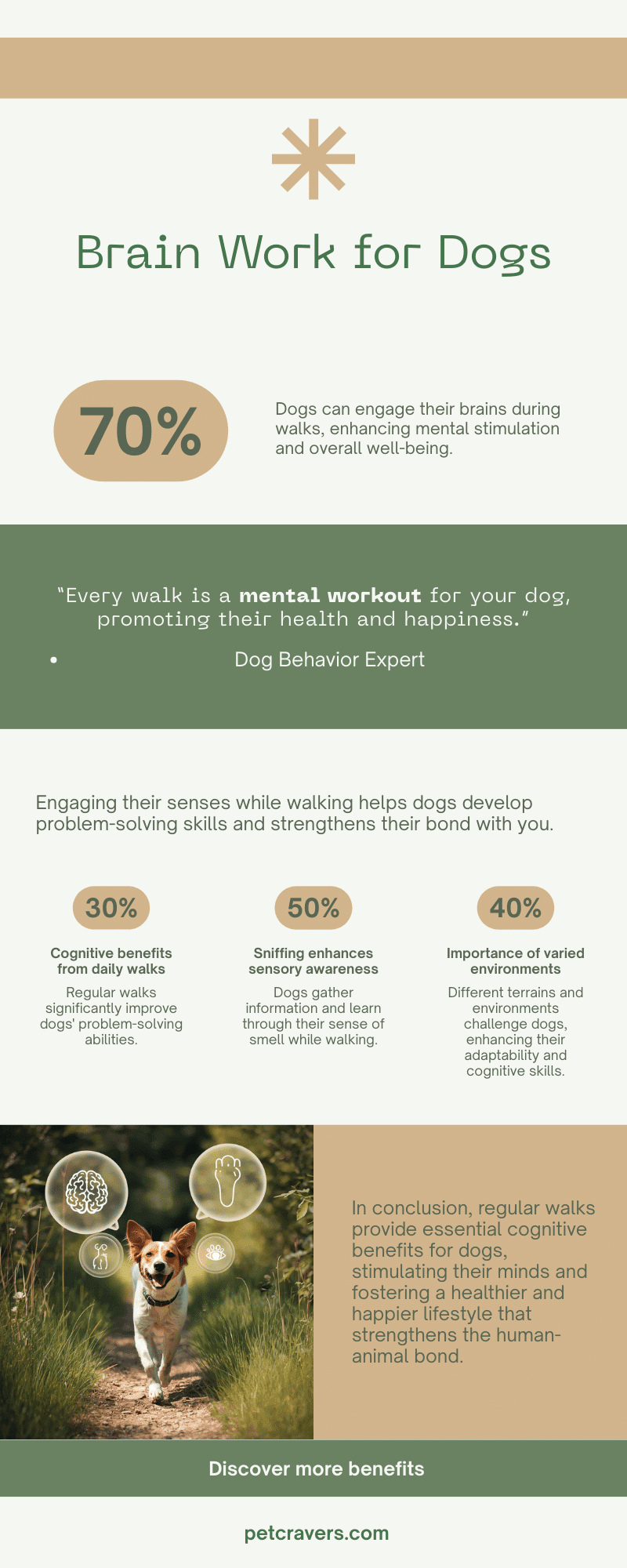
Walks are not just physical exercise—they are a powerful tool for mental enrichment. Dogs experience the world primarily through their senses, and every outing provides a unique opportunity for brain stimulation.
1. Engaging the Senses
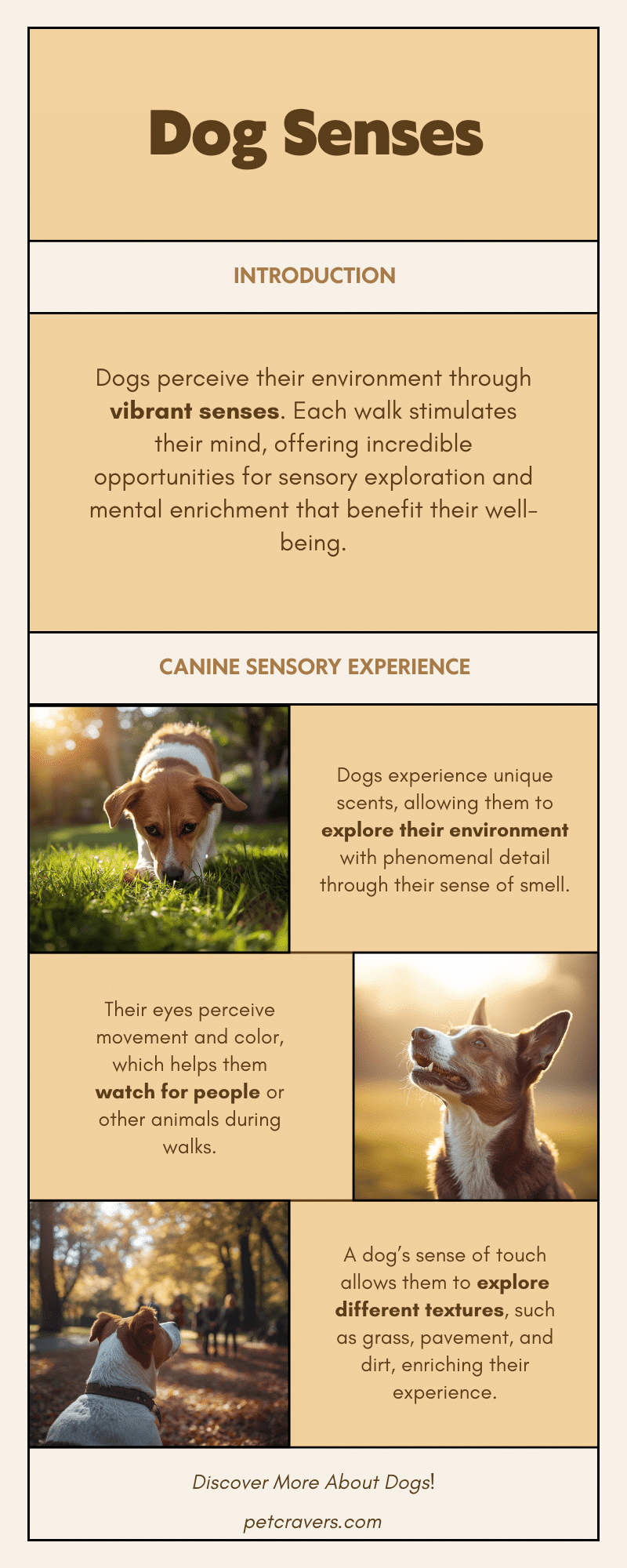
- Smell: Dogs’ sense of smell is thousands of times more sensitive than humans’. Allowing your dog to sniff around activates their olfactory receptors, stimulates their brain, and satisfies natural foraging instincts.
- Sight: Observing new objects, people, other animals, and changing environments helps dogs process visual information and adapt to new stimuli.
- Sound: Exposure to different sounds, from cars to birds to other dogs barking, enhances auditory processing and helps build confidence in various situations.
- Touch: Walking on different surfaces—grass, gravel, pavement, or sand—provides tactile stimulation that helps dogs learn about textures and navigate safely.
2. Problem-Solving Opportunities
Walks offer subtle challenges that encourage cognitive development:
- Deciding which path to take or which area to explore first.
- Figuring out how to navigate obstacles like steps, curbs, or uneven terrain.
- Interacting with objects, such as sniffing a new plant or investigating a safe discarded item.
3. Exploration and Curiosity
Allowing your dog time to explore during walks promotes curiosity and independent thinking. Instead of rushing, give your dog the freedom to investigate scents, sights, and sounds at their own pace. This type of active engagement keeps their mind sharp and prevents boredom, anxiety, and frustration.
4. Incorporating Interactive Cues
Mental stimulation is enhanced when you introduce training and problem-solving during walks:
- Practicing commands like “sit,” “wait,” or “leave it” in real-world settings.
- Using scent-based games, like hiding a treat along a path and encouraging your dog to find it.
- Introducing minor challenges, such as weaving through poles or navigating around obstacles, keeps your dog’s brain engaged.
By intentionally making walks more than just a routine stroll, you turn everyday outings into rich, stimulating experiences that promote cognitive growth, confidence, and curiosity.
Physical Activity Enhances Cognitive Function
While mental stimulation is a key benefit of walks, the physical exercise involved also plays a crucial role in supporting your dog’s brain health. Movement and cognition are closely linked, and regular walks help improve mental sharpness, alertness, and overall well-being.
1. Connection Between Exercise and Brain Health
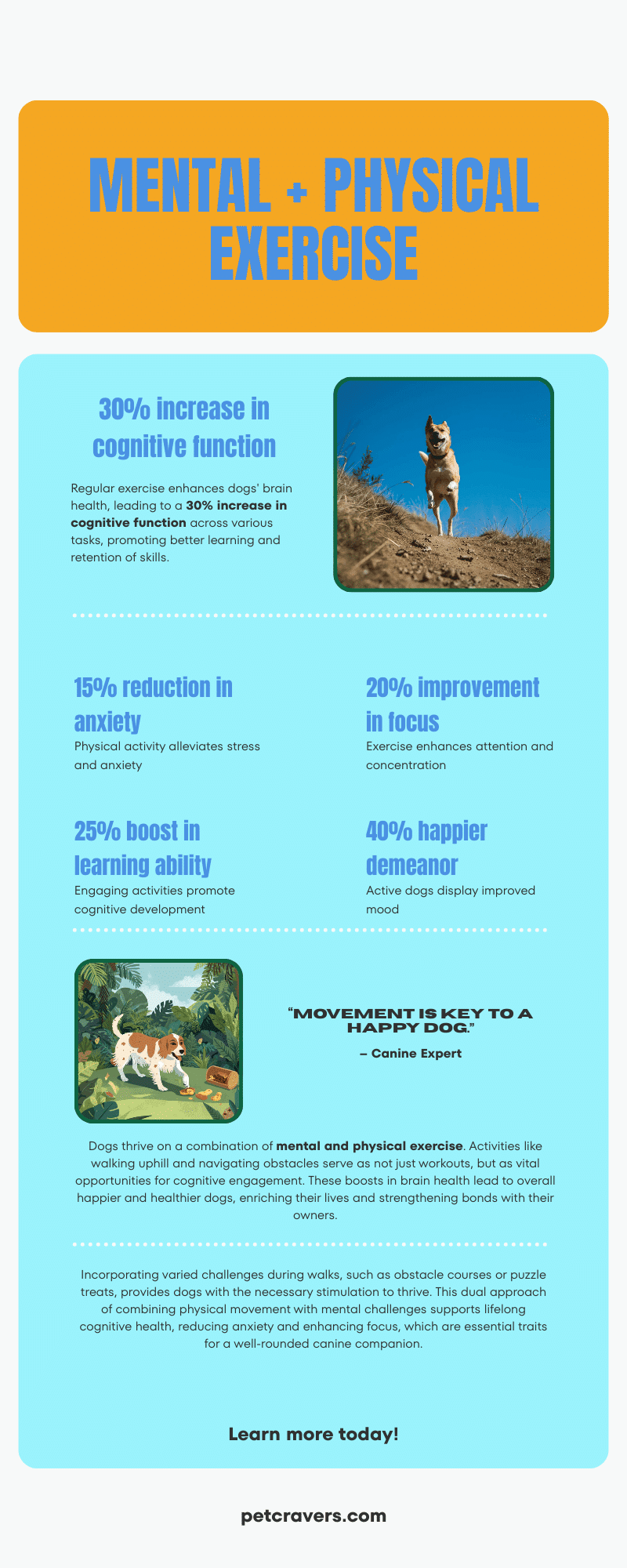
- Physical activity increases blood flow and oxygen to the brain, which enhances cognitive function and neural development.
- Active dogs are more alert, better able to process new information, and often demonstrate faster learning during training or problem-solving activities.
2. Boosting Mood and Reducing Stress
- Exercise triggers the release of endorphins, which help reduce anxiety and stress in dogs.
- A well-exercised dog is calmer at home, less prone to destructive behavior, and more receptive to learning and mental challenges.
3. Combining Mental and Physical Challenges
- Walks offer the perfect opportunity to pair cognitive stimulation with physical activity.
- For example:
- Treat-dispensing games during walks engage the mind while promoting movement.
- Navigating obstacles, hills, or uneven terrain challenges coordination and decision-making.
- This combination improves overall brain function, strengthens muscles, and keeps your dog engaged on multiple levels.
4. Supporting Lifelong Cognitive Health
- Regular walks can help prevent cognitive decline in aging dogs by keeping their brains active and stimulated.
- Physical exercise paired with novel experiences maintains mental agility, memory retention, and problem-solving skills over time.
By understanding the link between physical activity and cognitive function, dog owners can make each walk an opportunity for both mental and physical enrichment. Even a short, well-planned walk can provide meaningful stimulation that benefits your dog’s body and brain.
Behavioral Benefits of Walks
Walks are not only great for physical and mental stimulation—they also have a significant impact on your dog’s behavior and emotional well-being. Regular, engaging walks help prevent common behavioral issues while encouraging positive habits.
1. Reducing Anxiety, Boredom, and Destructive Behaviors
- Dogs that lack mental and physical stimulation often develop behaviors like chewing furniture, excessive barking, or digging.
- Walks provide a constructive outlet for energy and curiosity, reducing stress and helping your dog stay calm at home.
- Exposure to new environments and stimuli during walks keeps the brain active, lowering the likelihood of boredom-induced misbehavior.
2. Encouraging Confidence Through New Experiences
- Exploring different environments—parks, streets, trails, or new neighborhoods—helps dogs build confidence.
- Facing mild challenges, such as crossing a busy sidewalk or navigating a narrow path, teaches your dog to adapt to change.
- Confident dogs are more resilient and better equipped to handle unfamiliar situations without fear or aggression.
3. Improving Social Skills
- Walks offer opportunities for safe socialization with other dogs and humans.
- Positive interactions during walks help dogs learn social cues, appropriate greetings, and calm behavior around others.
- Regular socialization reduces fearfulness, promotes friendly behavior, and strengthens your dog’s overall emotional health.
4. Reinforcing Training and Discipline
- Walks provide an ideal setting for practicing obedience and commands in real-world environments.
- Commands like “sit,” “stay,” or “heel” during walks reinforce good manners and improve self-control.
- Consistent practice outside the home makes your dog more adaptable and responsive to cues.
By making walks a regular and stimulating part of your dog’s routine, you support not only their mental and physical health but also promote balanced, confident, and socially well-adjusted behavior.
How to Maximize Mental Stimulation on Walks
Walks can be transformed from a simple routine into a mentally enriching experience that challenges your dog’s mind, encourages exploration, and strengthens their problem-solving skills. Here are practical strategies to get the most out of every outing:
1. Vary the Route
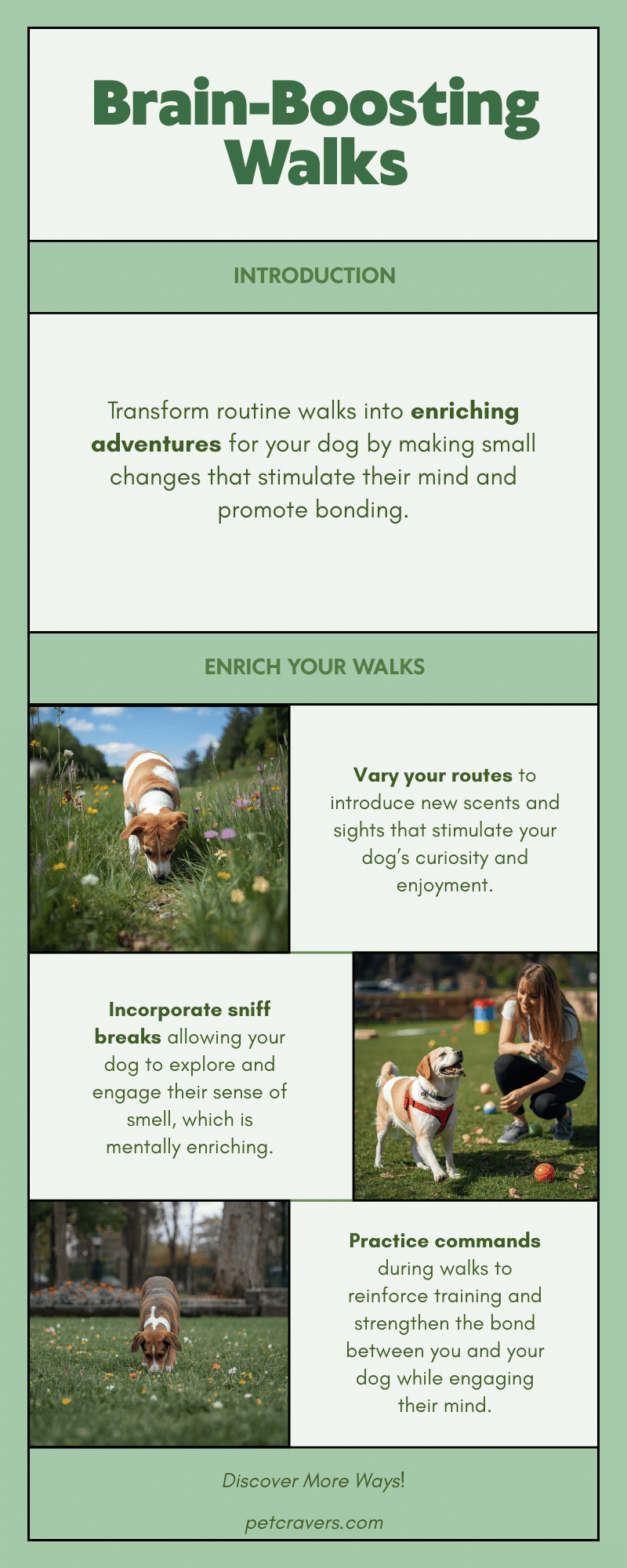
- Avoid taking the same path every day. Introduce new streets, parks, trails, or neighborhoods.
- New environments provide fresh sights, smells, and sounds, keeping your dog engaged and curious.
- Even small variations, like crossing different intersections or exploring side streets, can stimulate cognitive function.
2. Incorporate Training During Walks
- Use the walk as an opportunity to practice commands such as “sit,” “stay,” “leave it,” or “heel.”
- Introduce challenges that require problem-solving, like asking your dog to wait before entering a doorway or navigate around an obstacle.
- Positive reinforcement with treats or praise strengthens learning and encourages engagement.
3. Allow Safe Exploration and Sniffing
- Sniffing is a natural behavior that stimulates the brain and satisfies instinctual needs.
- Give your dog time to explore grass patches, trees, or safe objects with their nose.
- Resist the urge to rush; slow, exploratory walks provide far more cognitive stimulation than hurried strolls.
4. Use Interactive Toys or Treats During Walks
- Hide small treats along the path or in safe locations for your dog to find.
- Carry a small puzzle toy or treat dispenser for short stops in the park.
- Incorporating games into walks keeps your dog actively engaged and mentally challenged.
5. Let Your Dog Lead (Safely)
- Occasionally allow your dog to choose the path, sniff route, or pace.
- This autonomy encourages decision-making and boosts confidence.
- Supervise carefully to maintain safety while giving them some control over their experience.
6. Observe and Adjust Based on Engagement
- Pay attention to your dog’s body language and interest levels.
- If your dog seems bored or fatigued, modify the walk with new challenges or shorter distances.
- Adjust the intensity and stimulation to match their age, breed, and energy level.
By intentionally adding variety, challenges, and sensory experiences, you can turn every walk into a rich cognitive exercise. This approach not only strengthens your dog’s brain but also reinforces positive behavior, builds confidence, and makes walk time an enjoyable bonding experience for both of you.
Signs Your Dog Is Mentally Engaged
Recognizing when your dog is actively using their brain during walks helps you gauge whether the outing is truly stimulating. Mentally engaged dogs exhibit specific behaviors that indicate curiosity, problem-solving, and focus.
1. Active Sniffing and Exploration
- Dogs that pause to sniff the ground, trees, or objects are engaging their sense of smell—a primary way they gather information.
- Repeated sniffing of new areas or revisiting familiar spots shows that your dog is processing scents and making cognitive connections.
2. Alertness and Curiosity
- Mentally stimulated dogs are attentive to their surroundings, observing sights, sounds, and movement.
- They may tilt their heads, perk up their ears, or move closer to investigate unusual stimuli.
- A curious dog demonstrates engagement with the environment rather than simply walking mechanically.
3. Problem-Solving Behavior
- Look for behaviors such as figuring out how to reach a treat, maneuver around obstacles, or interact with a new object.
- Pawing, nudging, or circling an item before interacting with it shows cognitive effort and active thinking.
4. Moderate Excitement Without Overstimulation
- A dog that is mentally engaged often shows enthusiasm—wagging tail, focused gaze, and purposeful movement—without becoming overly hyperactive or anxious.
- Signs of overstimulation, such as frantic barking or pulling excessively on the leash, may indicate that the challenge is too intense.
5. Slow, Deliberate Movements
- A dog that takes time to explore, sniff, and investigate demonstrates deliberate engagement rather than rushing through the walk.
- Slow, methodical behavior often indicates deep mental processing and interest in the environment.
6. Positive Feedback Response
- Dogs that respond to praise, treats, or cues during a walk are mentally present and learning.
- Active participation in commands or games reinforces that the dog is cognitively stimulated and enjoying the challenge.
By paying attention to these signs, you can ensure your dog is gaining maximum mental benefit from walks. Adjust the environment, pace, or challenges if your dog seems bored, disengaged, or overstimulated, and gradually increase cognitive complexity as they become more confident and skilled.
Safety Considerations
While walks provide excellent mental and physical stimulation, safety should always be a priority. Keeping your dog protected ensures that every outing is enjoyable, stress-free, and free from unnecessary risks.
1. Choose Safe Walking Areas
- Avoid busy roads, construction sites, or areas with heavy traffic.
- Parks, trails, and quiet streets are ideal for both physical activity and mental exploration.
- Be mindful of hazards such as broken glass, sharp objects, or toxic plants.
2. Use Proper Leashes, Harnesses, and Identification
- A sturdy leash and a well-fitted harness provide control while keeping your dog comfortable.
- Collars should include an ID tag with up-to-date contact information.
- Consider microchipping your dog for added safety in case of accidental escape.
3. Monitor Weather and Environmental Conditions
- Avoid walking during extreme heat or cold. Pavement can burn paws, and ice or snow may pose slipping hazards.
- Bring water for hydration during long walks, especially in warm weather.
- Protect your dog from insect bites or ticks in grassy or wooded areas.
4. Pay Attention to Your Dog’s Physical Limitations
- Puppies, senior dogs, or dogs with health issues may require shorter or slower walks.
- Adjust walk length and intensity according to your dog’s age, breed, and fitness level.
5. Supervise Interactions with Other Dogs and Humans
- Always monitor your dog when encountering unfamiliar dogs or people.
- Be aware of body language and intervene if a situation looks unsafe.
- Reward calm, positive interactions to reinforce good behavior.
6. Avoid Overstimulation
- While mental engagement is important, excessive sensory input or too many new experiences can overwhelm some dogs.
- Gradually introduce new environments, sounds, or challenges to prevent anxiety or stress.
By following these safety considerations, you can make every walk a rewarding and secure experience. Balancing mental stimulation, exploration, and safety ensures your dog remains happy, confident, and healthy during every outing.
Tips for Success
Maximizing the benefits of walks requires intentional planning and observation. By following these tips, you can make each outing both mentally stimulating and physically rewarding for your dog.
1. Walk Consistently to Build Routine
- Regular walks help establish a predictable schedule, reducing anxiety and promoting better behavior at home.
- Consistent exercise and mental stimulation support cognitive function and overall well-being.
2. Adjust Walk Difficulty Based on Your Dog
- Tailor walk length, pace, and challenges to your dog’s age, breed, and energy level.
- Puppies and senior dogs may need shorter walks, while high-energy breeds benefit from longer or more complex routes.
3. Incorporate Variety and Novelty
- Change routes, explore new environments, and introduce different surfaces or obstacles.
- Varying walks keeps your dog curious, engaged, and mentally challenged.
- Even simple changes like taking a different street or visiting a new park provide new sensory experiences.
4. Combine Mental and Physical Stimulation
- Include training exercises, scent games, or obstacle navigation during walks.
- Treat-dispensing toys or interactive games can be integrated into rest stops along the route.
- This combination improves brain function while maintaining physical fitness.
5. Observe Your Dog’s Reactions
- Pay attention to body language, engagement, and fatigue.
- If your dog seems bored or stressed, adjust the walk by slowing down, adding sniffing opportunities, or introducing manageable challenges.
- Gradually increase the complexity of mental tasks as your dog becomes more confident.
6. Make Walks Interactive and Rewarding
- Praise your dog, give small treats, or encourage play during walks to reinforce positive behavior.
- Allowing controlled independence, such as sniffing or choosing the path occasionally, fosters decision-making and confidence.
By following these strategies, walks become much more than a daily obligation—they turn into enriching experiences that stimulate your dog’s mind, support physical health, and strengthen your bond.
Conclusion
Walks are far more than just a way for your dog to burn energy—they are a vital form of mental enrichment, cognitive exercise, and emotional well-being. Every outing provides opportunities for sniffing, exploring, problem-solving, and interacting with the world in ways that engage the brain and encourage curiosity.
By intentionally adding variety, incorporating training exercises, and allowing safe exploration, walks become a full-spectrum enrichment activity. Dogs benefit not only from physical exercise but also from improved mental sharpness, confidence, and social skills. Regular, stimulating walks can help reduce anxiety, prevent destructive behaviors, and promote overall happiness and balance.
As a dog owner, you can maximize the cognitive benefits of walks by:
- Varying routes and environments
- Integrating interactive games or scent-based challenges
- Observing your dog’s engagement and adjusting accordingly
- Maintaining safety while encouraging exploration
Ultimately, walks are an opportunity to strengthen the bond between you and your dog while supporting their mental and physical health. By making walks interactive, engaging, and enriching, you help your dog live a more fulfilling, confident, and joyful life. So, grab that leash, step outside, and turn every walk into a brain-boosting adventure for your furry companion!




Leave a Reply