 Skip to content
Introduction
Separation anxiety is a common behavioral issue in dogs that occurs when they experience distress upon being left alone. While many dogs can comfortably spend time apart from their owners, those with separation anxiety may display destructive behaviors, excessive barking, pacing, or even self-harm. This can be stressful for both the dog and the owner, leading to damaged property, strained relationships, and a worried pet.
Understanding separation anxiety is crucial because early recognition and intervention can significantly improve your dog’s comfort and behavior. By learning the causes, signs, and effective management strategies, owners can help their dogs feel safe, secure, and calm even when left alone.
In this guide, we’ll explore what separation anxiety is, why it occurs, how to recognize it, and practical strategies for prevention and treatment, ensuring your dog can develop confidence and independence without stress.
What Is Separation Anxiety?
Separation anxiety is a behavioral condition in dogs characterized by distress when they are separated from their owners or primary caregivers. Unlike typical independence or mild stress, separation anxiety leads to intense emotional and physical responses that can be disruptive and harmful.

Key differences from normal behavior:
- Normal dogs may show mild signs of missing their owner, such as waiting at the door or occasional whining.
- Dogs with separation anxiety exhibit persistent, severe behaviors whenever they are left alone, even for short periods.
Common signs and symptoms include:
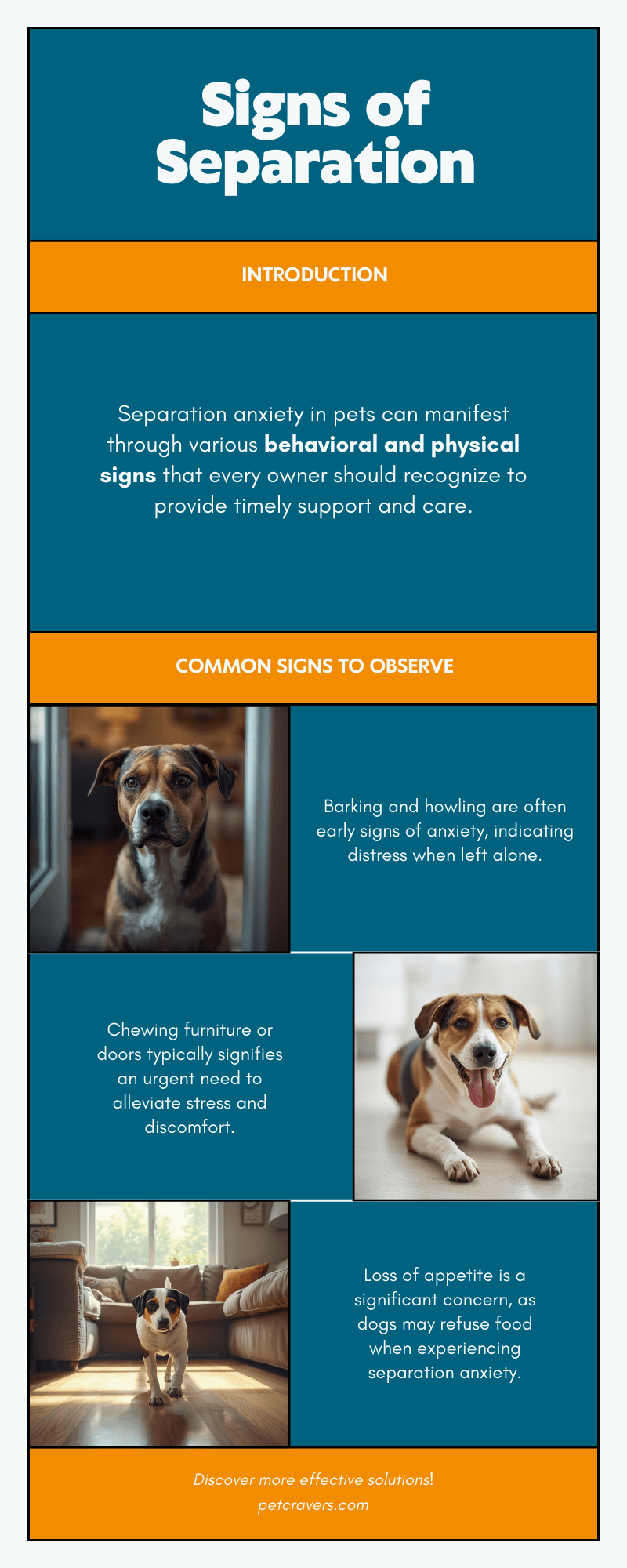
- Excessive barking or howling when alone.
- Destructive behavior, such as chewing furniture, doors, or walls.
- Pacing or restlessness, often in a repetitive pattern.
- House soiling despite being house-trained.
- Attempting to escape from confinement areas.
- Drooling, panting, or shaking due to stress.
Recognizing these signs early is crucial for effective management and treatment, as prolonged anxiety can impact both the dog’s physical health and emotional well-being.
Causes of Separation Anxiety
Separation anxiety in dogs can develop due to a combination of genetic, environmental, and emotional factors. Understanding the root causes can help owners implement targeted strategies to prevent or manage anxiety effectively.

Common causes include:
- Genetic predisposition:
- Certain breeds or individual temperaments are more prone to anxiety.
- Dogs naturally more sensitive or attached to their owners may develop stronger separation distress.
- Early life experiences:
- Puppies that were reared without sufficient socialization or abandoned/rehomed may struggle to cope with being alone.
- Traumatic events during formative weeks can influence emotional responses later in life.
- Changes in routine or environment:
- Moving homes, adding or losing family members, or changing schedules can trigger anxiety.
- Dogs thrive on predictable routines, and sudden disruptions can cause distress.
- Loss or abandonment:
- Dogs that have experienced previous abandonment or the loss of a companion may fear being left alone again.
- This heightened sensitivity can lead to clingy or anxious behavior whenever the owner is absent.
By identifying potential causes, owners can tailor prevention and treatment strategies, helping their dog feel more secure and confident when alone.
Recognizing the Signs
Early recognition of separation anxiety is essential for effective intervention. Dogs may exhibit a variety of behavioral and physiological signs when experiencing distress, which typically occurs shortly after the owner leaves.
Behavioral signs:
- Excessive barking, whining, or howling when left alone.
- Destructive behavior, such as chewing furniture, doors, or household items.
- Pacing or repetitive movements, often in a fixed pattern.
- House soiling, even if the dog is fully house-trained.
- Attempting to escape from confined spaces like crates or rooms.
Physiological signs:
- Panting, drooling, or shaking due to stress.
- Increased heart rate or restlessness.
- Loss of appetite or refusal to eat in the absence of the owner.
Timing:
- These behaviors typically start within minutes of separation and cease when the owner returns.
- Dogs may show anxiety even with brief absences, indicating a more severe case.
By carefully observing these signs, owners can differentiate separation anxiety from normal independence and begin targeted management strategies before behaviors worsen.
How to Prevent Separation Anxiety
Preventing separation anxiety begins with gradually teaching your dog to feel comfortable when alone. Early intervention and consistent routines can help your dog develop independence and reduce stress.

Effective prevention strategies include:
- Gradual desensitization:
- Start with short absences and slowly increase the time apart.
- Practice leaving for just a few minutes initially, then gradually extend the duration.
- Creating a safe and comfortable environment:
- Provide a designated space, such as a crate or a specific room, with cozy bedding.
- Include toys, chew items, or interactive feeders to keep the dog occupied.
- Providing enrichment and mental stimulation:
- Engage your dog with puzzle toys, treat-dispensing toys, or training games.
- Mental stimulation reduces boredom, a major contributor to anxiety.
- Maintaining predictable routines:
- Consistent feeding, walking, and play schedules help dogs feel secure.
- Dogs are less likely to become anxious if they know what to expect throughout the day.
By implementing these strategies early, you can reduce the likelihood of separation anxiety developing and help your dog feel safe and confident when alone.
Treatment and Management Strategies
For dogs already showing signs of separation anxiety, targeted interventions can help reduce stress and improve behavior. A combination of behavioral training, environmental adjustments, and professional support often yields the best results.
Effective strategies include:
- Behavioral training:
- Counter-conditioning: Associate being alone with positive experiences, such as treats or toys.
- Gradual departures: Practice leaving for short periods and slowly increase time apart.
- Avoid dramatic departures or returns, which can reinforce anxiety.
- Environmental adjustments:
- Create a safe, comfortable space for the dog with toys, blankets, or interactive feeders.
- Limit access to areas that may encourage destructive behavior.
- Exercise and mental stimulation:
- Provide physical activity and training sessions before absences.
- A tired, mentally engaged dog is less likely to display anxious behaviors.
- Professional support:
- Certified dog trainers or behaviorists can design customized programs for severe cases.
- Veterinary behaviorists may recommend specialized behavioral therapy or interventions.
- Medication (if necessary):
- In severe or persistent cases, veterinarians may prescribe anti-anxiety medication.
- Medication should always be used in conjunction with behavioral training.
With patience and consistency, these strategies help dogs feel more secure and develop independence, reducing the intensity of separation anxiety.
Coping Mechanisms for Owners
Managing a dog with separation anxiety can be stressful for owners, but adopting coping strategies can reduce frustration and support your dog’s progress.
Helpful coping mechanisms include:
- Managing expectations and stress:
- Understand that separation anxiety takes time and consistent effort to improve.
- Avoid feeling guilty or frustrated, as your stress can impact your dog’s anxiety.
- Monitoring your dog remotely:
- Use cameras or pet monitoring apps to observe behavior while away.
- This helps you assess progress and intervene if needed.
- Avoiding punishment or scolding:
- Punishing a dog for anxious behavior can worsen anxiety and damage trust.
- Focus on positive reinforcement for calm, independent behavior instead.
- Structured routines:
- Establish predictable departure and return routines to help your dog feel secure.
- Short practice absences during the day can build confidence gradually.
By maintaining calm, consistent management and monitoring, owners can support their dog’s independence, reduce destructive behavior, and foster a healthier relationship.
Conclusion
Separation anxiety is a common but manageable condition in dogs. Recognizing the signs early, understanding the causes, and implementing consistent prevention and treatment strategies can significantly improve your dog’s comfort and behavior.
By combining gradual desensitization, environmental adjustments, exercise, mental stimulation, and professional guidance when needed, owners can help their dogs feel secure and confident when alone. Avoiding punishment and maintaining predictable routines are equally important for success.
With patience and dedication, dogs can learn to cope with being alone without stress, allowing both pets and owners to enjoy a happier, calmer, and more balanced life together.





Leave a Reply